Article
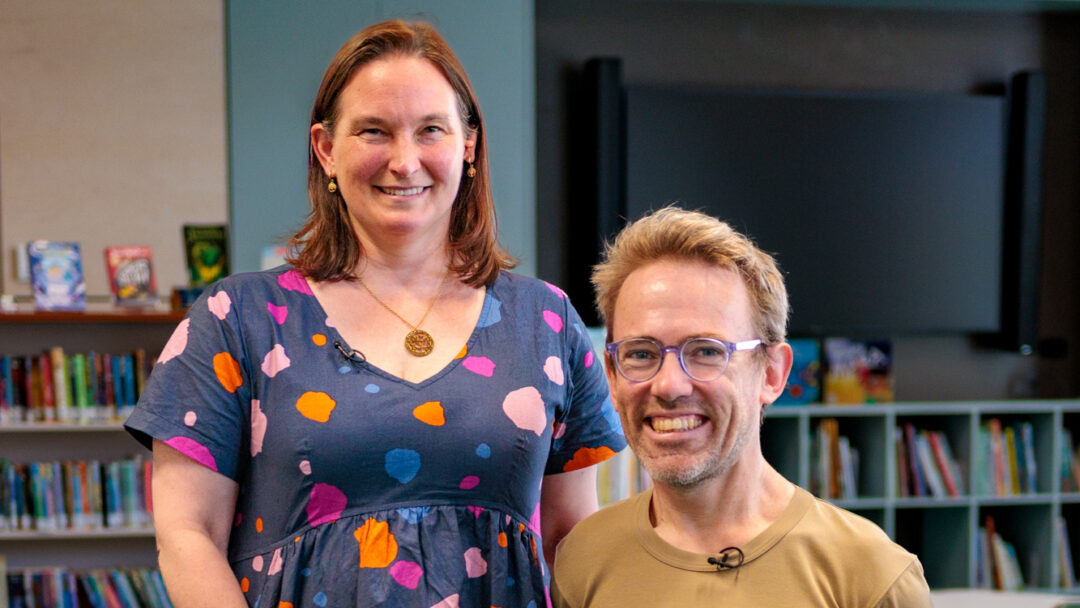
This episode explores ‘Education and Learning’, highlighting how the right supports and environments can enable people with disability to learn, connect, and thrive alongside their peers.
Sam Drummond speaks with students from Toowong State School in Queensland, a school leading the way in inclusive practice through bilingual education in English and Auslan. Josh Fletcher, a Year 5 student who is hard of hearing, and Lefroy, a Grade 3 student who is Deaf, share their experiences of learning in an environment where communication access is built in and valued.
He also speaks with Deputy Principal Elizabeth Fletcher, who explains the school’s unique and inclusive approach.
Also joining the conversation is Dr Kathy Cologon, Senior Lecturer in Inclusive Education at the Department of Educational Studies, Macquarie University, who discusses the importance of inclusive education from early childhood. She reflects on how inclusive classrooms benefit both disabled and non-disabled students, and why systemic change is essential to creating truly accessible and equitable education environments.
Listen now wherever you get your podcasts:
Education and Learning
Sam Drummond 00:01
This episode of building inclusion was recorded on the lands of Aboriginal and Torres Strait Islander peoples across Australia. I acknowledge the traditional custodians of the lands on which this podcast is recorded and listened to, and I pay my respects to elders past and present. I'm Sam Drummond, lawyer, writer and disability advocate, and your listening to building inclusion, a podcast about Australia's Disability Strategy presented by powerd media. Each episode, we explore one of the strategy's priority areas. This episode, we're focusing on education. Education is about far more than the classroom. It's about opportunity, confidence, curiosity, belonging. In Australia, students with disability continue to face significant barriers to education. Many experience exclusion, low expectations, inadequate supports and environments that aren't designed with access. In mind, I visited Toowong state school in Queensland, an everyday public Primary School. Toowong is a bilingual school, meaning that the curriculum is taught in two languages. And while there are other bilingual schools around the country, what makes this school unique is that the language that sits next to English isn't a spoken language, it's Auslan. So any student who is zoned to Toowong can enrol whether they use Auslan or not. But there is also a high percentage of students who are deaf or hard of hearing and use Auslan as their first language. The students I met were some of the most switched on and articulate kids you could ever meet. One of them was Josh Fletcher, who is hard of hearing. Josh, what grade are you in?
Josh Fletcher 02:11
Year five
Sam Drummond 02:12
And what's your favorite subject?
Josh 02:15
Maths.
Sam Drummond 02:16
Maths. Wow. Why?
Josh 02:18
just I don't know. I've just always liked maths for some reason.
Sam Drummond 02:23
So we're here at Toowong State School, which is a bilingual school with Auslan. Do you learn maths with Auslan?
Josh 02:32
Yes, our math teacher is actually full deaf and he only signs, and it's sometimes a bit harder, but it can actually be the same hardness, like, it's just sometimes harder, because he sometimes signs stuff. Like, we don't really know the vocab, but we usually have, like, the what's it called, slide show on the screen, so he can point to the word and tell us a sign, and then we just remember it for future reference.
Sam Drummond 03:02
Is this the only school that you've been at?
Josh 03:04
No, I went to different school when I was in prep, but I moved up here when I was in in 2021, for so year one for me.
Sam Drummond 03:11
What was the difference between the two schools that you noticed
Josh 03:16
This one is a lot more bilingual, friendly, obviously, and the teachers here are a lot more aware of like disabilities and how some people need different needs than others, while my other school wasn't really aware of that, like, for example, here we use FM's mic.
Sam Drummond 03:43
FM speakers are devices designed to help students who are hard of hearing. They're worn like a small necklace with a microphone at the bottom. The teacher or speaker talks into the microphone, and the sound is transmitted directly to the student's hearing aids.
Josh 03:59
You need to wear it a specific way to the teacher, so the sound actually goes through. But my old teacher, she didn't really know how to use it properly, and she might sometimes face the mic to her chest, which means we couldn't hear what she was saying. I couldn't.
Sam Drummond 04:20
How many kids in your class are deaf or hard of hearing?
Josh 04:27
10 kids.
Sam Drummond 04:28
10, yeah, how do you think the other kids cope? Is it a benefit for them to learn Auslan and understand about all those different things that you need to be able to learn as well as you can?
Josh 04:47
its actually pretty good for them, because they really enjoy learning Auslan. And it's like nearly it's like they, most kids, are fluent in, in Auslan, and so it's not really been a trouble, apart from sometimes when new kids come and they have a bit of difficulty learning, but we've always managed to cope.
Sam Drummond 05:42
Sounds like there's a real sense of community at this school.
Josh 05:47
Yes, there is
Sam Drummond 05:48
And people work together to make sure everyone feels included.
Josh 05:52
Yeah.
Sam Drummond 05:52
How do you think we make sure that everyone feels included everywhere in society? Do you think there's lessons that everyone can take from this school?
Josh 06:03
Yes, most kids in my class, I'm not sure about the other classes, but most of the kids in my class are really empathetic, and they like know if someone's feeling a bit down or unsure, and the teachers know to check with certain people, because they might know that this student isn't so strong in Auslan, so they need the interpreter to come and speak to them while the Deaf teacher signing or something like that.
Sam Drummond 06:31
Josh, thanks for talking to me.
Josh 06:32
Thank you.
Sam Drummond 06:34
This is Lefroy. Lefroy is in grade three. He is deaf, and his first language is Auslan. He is speaking here through an Auslan interpreter. Hi Lefroy, thanks for joining me. What grade are you in?
Lefroy (through Auslan interpreter) 06:52
Grade three.
Sam Drummond 06:52
The school bell I heard just ring.
Lefroy (through Auslan interpreter) 06:56
I didn't hear it.
Sam Drummond 06:57
How do you know when it's time for lunchtime or the end of school?
Lefroy (through Auslan interpreter) 07:03
so I know the time and I can see the clock, but there's also a flashing light that goes blue and red.
Sam Drummond 07:11
And so in class, do all the teachers speak Auslan to you?
Lefroy (through Auslan interpreter) 07:16
Yes
Sam Drummond 07:19
and how many people are in your class?
Lefroy (through Auslan interpreter) 07:23
There's 25 of us.
Sam Drummond 07:25
How many would be deaf or hard of hearing in grade three?
Lefroy (through Auslan interpreter) 07:30
I'm not sure. I think it's about eight.
Sam Drummond 08:21
So for people who are hearing and they live in the outside community, is there something that you think that they don't know about what your life is like, and you'd really want them to know?
Lefroy (through Auslan interpreter) 08:34
Yeah, yeah, yeah.
Lefroy (through Auslan interpreter) 08:36
I think it's really good for them to learn, because sometimes they look at Deaf people and think we're different, but we're really the same, and it's so easy to teach them and educate them, like here they have Auslan as a subject. It would be great if it was taught at other schools and they could learn Auslan too.
Sam Drummond 08:51
That was Lefroy from grade three, speaking through an Auslan interpreter. Elizabeth Fletcher is the deputy principal of Toowong state school. She's incredibly proud of her students, but also the staff who work closely with the Deaf community to make a meaningful impact on the next generation of people who are deaf or hard of hearing. A lot of people would be, I think, familiar with bilingual schools in a verbal sense, but what does a bilingual school that is English and Auslan look like in the classroom?
Elizabeth 09:27
So at our school, we have four staff members in the classroom, and two of them are teachers, and one teacher is fluent in Auslan, Australian Sign Language, and the other teacher is either fluent or working towards that. And then there are an educational interpreter and an ALM and our ALMS are Auslan language models, so it's sort of like a deaf teacher aide, yeah. So they all work together. They have a really important meeting in the morning where they sit down and go through the day and how they're going to support all of their diverse learners. And so from nine o'clock onwards, it sort of looks like they're mind reading each other, because they know exactly what to do. How to support kids in all the different subject areas.
Sam Drummond 10:03
So what are some of the adjustments to classrooms that other schools wouldn't wouldn't have thought of, or wouldn't have
Elizabeth 10:12
Well, well, I actually have only worked at Toowong for 20 years. I went straight from university here, but I can have a guess about what makes us unique, the number one thing and the success of our program is direct teaching from a teacher to a student. And so rather than to go through an interpreter, the teacher straight to student, so the student gets immediate feedback when a student delivers an answer. There's no delay. You know, if you imagine going through an interpreter, there's that delay there. There's a delay of the question being asked and of the student having a chance to respond, and by that stage, another student may have already answered the question. So their language is valued. Deaf students who use Auslan their first language, or even codas who are hearing students with deaf parents, their first language is equally valued to English. So I think that gives them a real sense of belonging and community, and they feel they're on an equal playing field with other students in the classroom. And the other thing is our hearing students all learn to sign, so a deaf student has the whole class to choose from, for peers and for friends, so they're not restricted.
Sam Drummond 11:16
How important is not just language as a concept, but also culturally deaf and the culture that that brings within the school. How does that play out?
Elizabeth 11:30
So I think that that's what sometimes is missed by other people and other schools. Is that huge importance and valuing of culture. So deaf people need to feel valued. They need their culture understood and respected, and it's simple things like how to get attention of a deaf person, just how to be deaf aware. So if we have we have relief teachers who need to come in, and they might not be teachers of the deaf or fluent Auslan users, but you the kids know the distinct difference if they understand deafness and the deaf community in the way they get their attention. They face them when they're talking. They make sure they access a person who can sign. They don't turn their back to them. We in our Auslan languages program, which is an extra curriculum for all the whole school, even the non bilingual classes. We go into Deaf Sports, Deaf community, International Sign Language important days in the deaf community, we get really excited about our Deaflympics. We've just had a teacher go off and compete in Japan. We've had a parent go off and compete in Japan. The kids got to go to Deaf parliament. And so all of these things that hearing people get are normalised and valued, but from a Deaf perspective. So their opinions are seen. We're always asking for what's your opinion on this? Or as a deaf person, how do you set that up in your home? So I think they feel seen, and feeling just as important as their hearing classmates are.
Sam Drummond 12:53
Are there still barriers that you find, or ideas that are coming through that you're you're implementing within the school now, let alone 20 years ago.
Elizabeth 13:04
Yeah we are always learning Absolutely. So next year, we're really excited to get screens up in our assembly hall so that we can project the interpreter, so that, you know, you don't have to restrict where the deaf student or staff member sits in the assembly, so that it's just there. And that's that, you know, we're always learning and you know, sometimes there's budget issues, so we're improving all the time. Next year, we're also getting video phones for all the bilingual classes so our deaf staff can FaceTime the people in the office, rather than having someone run up to say, Oh, you need to send a student down. We're always, always learning and developing. Captioning is always an issue if we access outside resources, often they don't have captions. So we're trialing something. We've got a virtual space, and at the moment, we're trialing captioning up in the room, so if a hearing person walks in who can't sign, they can pop on a mic and it'll come up for all the deaf staff in that room. So every year we get better.
Sam Drummond 13:56
It seems clear to me why the family of a deaf student or a student who's hard of hearing would seek this school out. Why are the other kids coming here?
Elizabeth 14:08
So at the moment, well, there's actually catchment rules, so they have to come here a lot of the hearing kids, but there are different streams, so I'll put it more that way. So there's a bilingual stream and a non bilingual stream, and we have many hearing kids who have no connection to deaf families choose to be in that stream. My son included, and the benefit I see my daughter's been through as well. They leave year six with an intact second language and a huge understanding of inclusion and diversity. And I just think what that teachers children is huge, and how they're going to take that out into the community. We often get reports that when kids go to high school, their ability to do another language, such as Spanish or Chinese, is is very easy.
Sam Drummond 14:54
And do you think it influences community attitudes around the area as well?
Elizabeth 14:58
One thing I absolutely. Absolutely love hearing stories from from Deaf families in this area is they might go down to the coffee shop. They move into the area, they might go down the coffee shop and they're ready with their notepad and pen to give their coffee order, and the student behind the counter signs and says, Oh, no, you know, I can sign. I went to Toowong like that's huge for me, that people can live in an area and access services because of ex students at the school and because of the program. And we now have all these specialist areas. We've got OT's, speeches, people becoming psychologists who are very good Auslan users, because they came out of this school, even if they've gone off to private schools from year seven to 12, because they had it here before that critical sort of year nine level, age nine level, they've got this intact language, and they're taken into occupation. So I think it's going to have a great ripple on effect.
Sam Drummond 15:48
Amazing. Well, Elizabeth, it's 330 the school bells around. Sorry, I better let you go off to your staff meeting. But thanks very much for joining us.
Sam Drummond 15:59
I taveled to regional New South Wales, where I spoke with Dr Kathy Cologon, one of Australia's leading experts in inclusive education. It was clear from the moment I met her that this isn't just a job for her. It's a passion. This comes across from a warmth of character that shows deep commitment to inclusive education for all young people with disability.
Elizabeth 16:01
No worries. Thanks.
Dr Kathy Cologon 16:22
Hi, Sam, lovely to meet you.
Sam Drummond 16:23
Thanks for bringing us here.
Dr Kathy Cologon 16:25
Yeah, no worries. It's a great spot.
Sam Drummond 16:27
Should we have a chat?
Dr Kathy Cologon 16:28
Yeah, sounds good.
Sam Drummond 16:29
It seems to me, in a lot of department policies and research that it emphasises consultation with family and parents with that underlying assumption that maybe the child can't provide feedback that's useful. How do you talk to a child, and particularly a child with a disability, and ensure that you're hearing their voice?
Dr Kathy Cologon 16:58
That's a great question. Sam, there are so many different ways that we can communicate effectively with children, and one of the most useful ways that we do so in research is through arts based methodologies, so combining arts and AAC so augmentative and Alternative Communication strategies and then making sure that children are within a safe space and they feel comfortable and they've got a rapport with the person that they're engaging with, so that we can get beyond, you know, the that those barriers that are that are often at the start, particularly for children who haven't had the opportunity to be heard very often you need to take the time. So for example, I had the great privilege of doing some research along with colleagues recently with 24 children who experienced disability and their families, and the children all communicated in different ways. So they communicated with their bodies and they communicated. Some of them communicated with their hands through sign language. Some of them were speaking. There was lots of different ways of communicating. All of them communicated through their behavior, and that was part of part of the process, but it was a very in depth research process. So we didn't just rock up and say, Hi, my name is Kathy. Tell me what you think. Great. See you later. It was that process of actually being in the moment together, so being beside and just creating those opportunities. So for example, you know, getting the chalk out, and the child wants to be outside, and he's sitting down, drawing with the chalk alongside the child, and then creating those spaces until the child feels comfortable to actually share about themselves and their life. Things like making maps is really helpful, because you can make a map of a school or a map of a preschool or a map of the community, and then there's all of those points to begin, you know, to open that, that communication around what's important to the child, what are the things that happen to them? What do they wish for? We we had lots of fun making magic wands, and it was very, very cool. And you know, I was appreciative that when I was turned into a frog, I got turned back into a person, but or else I'd be speaking to a frog, right? That's right. And not one of the children mentioned that they wanted to change anything about themselves. Everything that they wished for was about the world around them.
Sam Drummond 20:06
When the children are allowed to give that input, how does the shape of an education change?
Dr Kathy Cologon 20:14
A really great example from some some other recent research, I was very fortunate to work with an amazing preschool, and there were six teachers and educators and 26 children in this setting who went on this experience together with me, where I was supporting practitioner led research. So the teachers were the researchers, and I was supporting them in the process, and they were allowing the children to lead the process within the research. So it was child led, practitioner led, and I was, you know, holding up in the wings, and the children often noticed that when they went to the local playground. So that was something, you know, out of the gate. Excursions are a common thing in early childhood settings these days. So the children would go to their local playground, and one of the children used a mobility aid, so a walker to get around, and therefore couldn't get up on the fort in the playground. So the children were asking their teachers why, and noting that it wasn't fair that the playground wasn't made for everyone. So that was the journey that they took. So they explored how to make play spaces more accessible for everyone, and it was fantastic, because as they unpacked it, they were thinking about their grandparents, and they were thinking about, you know, all of the people in their community and how the playground could be accessible. And then they negotiated with their teachers and educators changes within the preschool setting itself to be more inclusive for everyone. When we create spaces for children to think about equity, children are quite remarkable with what they come up with, because the sense of what's fair and not fair is often very strong.
Sam Drummond 22:14
When we think of inclusive education, quite often we're thinking about maybe a diagnosis within a primary school setting or later or a secondary school setting, and we're just trying to keep that kid in school, if not trying to give them a really good education to achieve their potential. Is there a period of time where it's really too late to achieve full inclusion at what age do you have to get get to inclusive education?
Dr Kathy Cologon 22:51
That that's a that's a really good question Sam and I think one of the really important things is we know from research that children begin being inculturated into discriminatory, prejudiced, ableist and et cetera beliefs from a very young age. So as young as two, children can actually start to identify symbols of otherness, and by the age of five, children can actually voice, you know, repeating those enculturated understandings of humans and diversity and what's valued in humanness. So it does start very young, and continues to build from there. And that does make early childhood particularly important for facilitating inclusion. I had a remarkable opportunity to go and research inclusive education in Italy a number of years ago now, and I don't know if you know much about the Italian education system, but Italy in the aftermath of the war, they actually closed all segregated settings, and they made a decision in the 1970s that they were going to have schools for everyone, and that was how it would be. They did some very important things, like at the time, they had two fully qualified teachers in every class, and that was a really big part of that transition process. And there's lots of complexities around the Italian education system, and there are many ways in which in Australia, we're very, very lucky to be much more resourced. But I went to a secondary school, so I did research in early childhood, primary and secondary schools in Italy, because I was extremely interested in seeing what things were like in this, this famous, you know, inclusive education system. And I arrived at this high school, first of all, in Australia, at this time, we didn't have so many, you know, big high fences around schools. So arrive in this in. Only seven foot fence at this school and get someone to let you in, and I'm going, Oh, God, this is like
Dr Kathy Cologon 25:05
a prison.
Sam Drummond 25:05
Cathy quickly realised that this was nothing like a prison. In fact, the school was inclusive and accessible for everyone, welcoming both students with disability and those without. Curious to understand the experience first hand. She asked to sit down with the student representative to hear what it was like to study there.
Dr Kathy Cologon 25:27
We sat down, and we started talking. And he, you know, wanted to talk about the soccer, or the football, as it's correctly called, and you know, how Ronaldo was going in Australia, and all these things. And then we got into talking about what the research was about, why I was there, and when I told him that in Australia, we have schools for disabled students and schools for everyone else, and he talked about the fact that some of the teachers at his school struggled to be genuinely inclusive because they didn't grow up with that inclusive notion, but that the younger teachers, they'd always grown up together, and they were very comfortable with it. So he was absolutely adamant to me that if we want inclusion in society beyond school, in secondary school, in primary school, we have to start from early childhood and continue all the way along, and it was a remarkable thing to hear from this guy who'd gone through his schooling and had always been together with the full diversity of humans and saw it as such an important, such a critical, such a fundamental part of his education, for him and for everyone else. And he talked about the fact that if we want people to go to work and be comfortable working with all of us in all our diversities, then we need to make sure children are together in school. So he made a great deal of sense. And from that, that experience, you could say, Okay, well, if we don't start in early childhood, it is too late. I would say, though it's never too late. And I would say that it is harder. The the longer exclusion goes on, the harder inclusion is because we are more and more and more entrenched in our ableist ways of thinking, whether we experience disability or not, we're more entrenched in our ableist ways of thinking the longer they're not challenged. So to say to someone, oh, look, you're ableist. It never goes down very well, but it is true that we have to be able to challenge our ableist beliefs and how they inform our systems and structures if we want to achieve inclusion. Because one of the most difficult things with Inclusive Education is when we have this myth of the normal child, and we think there's such a thing as a normal child, and then we target all our education like everything's planned for this mythical normal child, then nobody's getting an optimal education. But if instead, we use universal design for learning and approach our planning and all of our pedagogy and our environments from the idea that humans are diverse, that's simply reality, and we can plan for a lot of aspects of diversity before we even know who our students are, because we know all these different forms of diversity that exist. So if we begin with universal design for learning and then implement from that point, we stop having to retrofit everything all the time so it's actually faster and easier and more efficient for everyone, and we become more skilled as educators.
Sam Drummond 29:07
You mentioned that Australia is fairly well resourced in education compared to a country like Italy, and sometimes it's not about money. What are the things that we can be doing that don't involve a big rollout of expenses to to make an inclusive education.
Dr Kathy Cologon 29:29
There are so many things. And I think, you know, people sometimes, I guess, roll their eyes a bit when you talk about attitudes. But it really, really matters. So our beliefs and our attitudes really matter. And if we start with the notion of presuming competence, then we're a long way into making it work. If we combine that with Universal Design for Learning, again, that really helps, and resourcing does matter. And. And we know that teachers are too stretched. We know that if we had more teachers to the number of children within each class, we would have such a better opportunity for every teacher to get to know all of the best ways to teach every child. But universal design for learning does give us like a shorthand, in a way for doing that. So implementing universal design for learning addressing our attitudes and being genuinely Critically Reflective, professional learning opportunities cost money. So again, it does come to resourcing, but professional learning opportunities are offered all the time for teachers. We just need to make sure that instead of having sort of, you know, a one stop shop where it's like, you get this little come and learn about neuro diversity for two hours, and then you're set off you go. We actually need to go on a journey with teachers. We actually need to engage teachers and build on what teachers know now and keep on building forward. So we need professional learning that is sustained and targeted to what teachers need to know. In this context, Australia's education system is so diverse and so complex, so we need to avoid the one size fits all and be able to have the flexibility within professional learning so that we can target what teachers need to know, what are the touch points right here and right now in this school, and target that professional learning there. The other thing is, we need to listen to children. If we listen to children and we engage children in helping us bring inclusion to a reality within our education settings, we can do so much
Sam Drummond 31:48
if a student experiences a fully inclusive education from the very start, like you've talked about, and they go through primary school and high school and possibly into university. What are the benefits for that person that flow on through their life?
Dr Kathy Cologon 32:08
So so many I mean, if we come at that from the perspective of opportunities, if we think about the Disability Strategy and the fact that, you know, with employment and health and all of those issues, all the outcomes are all interconnected. Every single one of them is more possible if a person has had that inclusive education all the way through. We know from the research that employment outcomes are so much better for people who've had an inclusive education.
Sam Drummond 32:38
Through Kathy's research, she's found that inclusive education benefits not only students with disability but also their non disabled peers.
Dr Kathy Cologon 32:47
In actual fact, what we know from the research is worst case scenario, it will just stay the same. There'll be no there's no downwards impact. Best case scenario, actually it's going to increase the quality of education for everyone. So we're going to end up in a situation, and it's really interesting to see what happens with the way that teachers engage with students once they go into that genuinely inclusive journey. Because teachers engage with students more frequently end at higher cognitive levels when they're engaging inclusively, and that's for all children. So actually, we get high quality education for everyone, with all being, you know, all the spin offs, the domino effect of that.
Sam Drummond 33:33
if you will, look to look ahead five years. Where would you want to see Australia's education system in their inclusive education journey.
Dr Kathy Cologon 33:42
We can't close all segregated settings at all specialist schools and specialist units and classes. We can't close them all tomorrow, because it is, it is a journey, and it would be actually cruel to take you know, children who've gone through that journey separate to each other all the way through, and suddenly just dump them all together and expect everyone to swim, right? But if we stop creating new segregated settings, then we can start from the start with all of the children coming in to education now. So I would love us to be in a place where we've stopped creating new segregated settings, and we've stopped taking new enrolments into segregated settings, so that we can begin from early childhood all the way through. I would also love us to have significantly increased our focus on inclusive education in teacher education and professional learning for teachers, I'd like to see us genuinely providing teachers with the time that they need to plan for children in all their diversities, so everyone can get the best outcomes at school. And I'd like us to be remembering. Saying that inclusive education is about all of us, and in doing so, removing those invisible question marks that some of us carry around with us every day.
Sam Drummond 35:13
Kathy, thanks for talking to me.
Dr Kathy Cologon 35:14
Thanks Sam
Sam Drummond 35:15
You've been listening to the building inclusion episode on education. I absolutely loved visiting Toowong state school and seeing firsthand how they create an inclusive environment for deaf and hard of hearing students. These conversations remind us that building inclusion in education allows young people, both with and without disability, to thrive. This has been Building Inclusion Australia's Disability Strategy podcast, hosted by me Sam Drummond, presented by Powerd media, produced by Eliza hull, recorded by ascent media. Thanks for listening.
Host – Sam Drummond
Produced by Eliza Hull for Powerd Media
Audio Edited by – Honor Marino for Print Radio Tasmania
Audio Record – Ascent Media
This podcast by Powerd Media is supported by funding from the Australian Government Department of Health, Disability and Ageing under the Inclusion and Accessibility Fund: Australia’s Disability Strategy (ADS) – Community Attitudes grant program.