Article
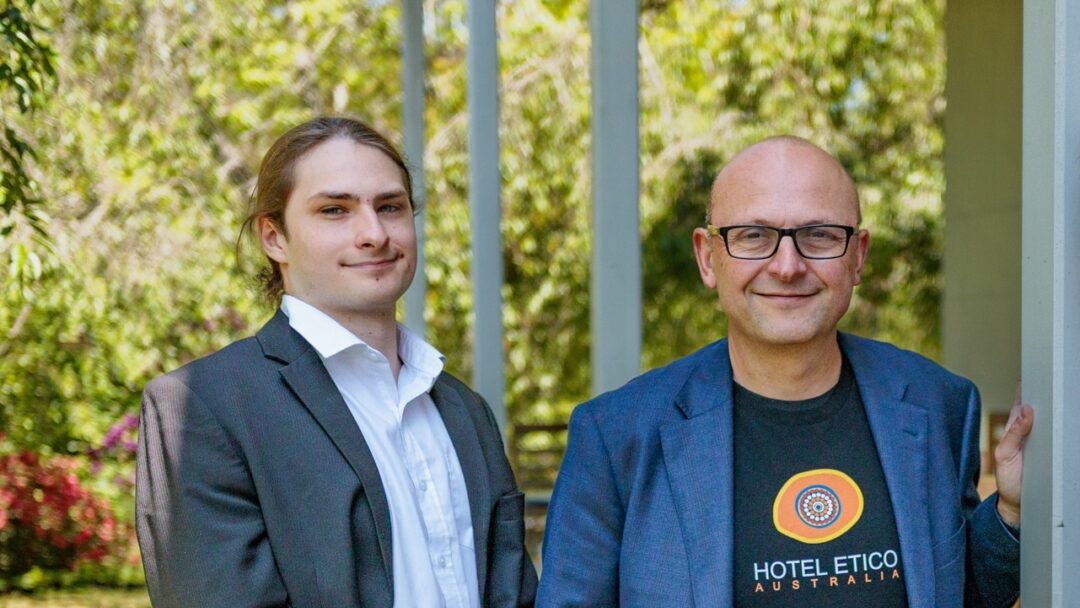
In this episode, Sam Drummond travels across the country, amplifying the voices shaping the future of disability inclusion in Australia.
In the Blue Mountains, Andrea Comastri speaks about Hotel Etico, the social enterprise he co-founded and leads as CEO. Hotel Etico supports people with disability to gain training and employment in the hospitality industry. Graduate Quinn Jones shares how the program gave him the confidence and skills to grow his career in hospitality.
Joining the conversation is Tanya Pederick, Program Coordinator at YouthWorX NT in the Northern Territory, alongside Caitlin, a participant in the program. YouthWorX NT provides young people with disability the skills they need for employment, leadership and financial security.
Also featured is Vaughn Bennison in Hobart, Tasmania. After graduating from university, he spent thirteen years trying to find work. More than a decade later, he finally secured employment. Walking into his first job interview, Vaughn worried he would face discrimination because he is blind.
Listen to the podcast on your preferred platform:
Building Inclusion: Employment and Financial Security
Sam Drummond 00:01
This episode of Building Inclusion was recorded on the lands of Aboriginal and Torres Strait Islander peoples across Australia. I acknowledge the traditional custodians of the lands on which this podcast is recorded and listened to and I pay my respects to elders past and present. I'm Sam Drummond, lawyer, writer and disability advocate, and your listening to Building Inclusion, a podcast about Australia's Disability Strategy, presented by Powerd Media.
Sam Drummond 00:30
First introduced in 2010 and renewed in 2021, Australia's Disability Strategy is a national roadmap, guiding governments, businesses and communities to work together to build a more inclusive Australia. At its heart, the strategy exists to ensure people with disability can fully participate in Australian life with equal rights, real opportunity and respect. This episode, we're focusing on employment, where the strategy aims to support people to find and keep real jobs. Employment is about far more than a job. It's about independence, financial security, purpose, dignity, belonging. We'll explore what inclusive employment can look like when it's done well. To do that, I traveled to the Blue Mountains surrounded by some of the most breathtaking scenery you can imagine. Bush stretched out around me, wild and cinematic. I pulled up outside an old villa, birds calling from the trees, as if welcoming me in.
Sam Drummond 01:33
Walking into Hotel Etico felt like stepping back in time a grand space that once might have only opened its doors to royalty, but waiting inside were Andrea and Quinn, ready to show me something far more powerful, what employment looks like when inclusion isn't just an afterthought but the foundation. Hello, hi. You must be Andrea.
Andrea Comastri 01:54
I am. I certainly am very good to meet you, Sam
Sam Drummond 01:54
Please meet you.
Andrea Comastri 01:54
Very good to meet you.
Andrea Comastri 01:56
What a place you've got here.
Andrea Comastri 01:59
Beautiful, hey?
Sam Drummond 02:01
Can you show around?
Andrea Comastri 02:01
Yes, absolutely, please come in.
Sam Drummond 02:03
The hotel is closed, quiet and still, but you can almost hear it, the hum of conversation, glasses clinking, people gathered around tables sharing hearty meals and stories.
Andrea Comastri 02:15
So the building was built by John Fairfax of the Fairfax family in 1876 so I think next year will be 150 years
Andrea Comastri 02:27
Through the century. It was used as a hotel, as a guest house, as a school, and then five years ago, we took it on as a lease to establish Hotel Etico, which is Australia's first social enterprise hotel here in Australia. We're based on an Italian model, and we've adapted it to the to the local context. And what we do is employ and train young men and women with disability, and we train them in hospitality and independent living skills, and then help them find further employment in the tourism and hospitality industry. And, yeah, we've been here for five years, and it's a beautiful, beautiful place.
Sam Drummond 03:06
You can really feel the
Sam Drummond 03:09
The old architecture and the old feel come in
Andrea Comastri 03:12
Absolutely
Sam Drummond 03:13
it looks like you've done a lot of work to preserve that.
Andrea Comastri 03:16
Yes, we were very lucky to take it, take it on from landlord who did a beautiful job at preserving the feel of the history.
Sam Drummond 03:25
Andrea Comastri is the CEO and co-founder of Hotel Etico. He was born in Spoleto in Italy and migrated to Australia in 1995
Sam Drummond 03:37
He is passionate about social impact, including supporting people with disability to live their best lives.
Andrea Comastri 03:43
Well, I'll walk you through the rest of the building. The we're walking to the restaurant
Andrea Comastri 03:51
Our restaurant is dedicated to the first trainee in Italy. His name is Niccolò, and he's a young man with Down Syndrome who started the entire movement. So he approached a chef by the name of Chef Antonio, and asked for a job, and then expressed his dream of working eventually in a hotel. And Antonio and Niccolò just started this movement that sort of now unstoppable. In Italy, there are now six hotels with the name of Hotel Etico, or Albergo Etico, with using the Italian word, and yeah, we adapted it to the local context, and we're really lucky to find this place.
Sam Drummond 04:34
The hotel employs groups of 15 adults with disability at a time on a one year residential training and work program.
Andrea Comastri 04:41
The most beautiful thing is witnessing the conversations and interactions that happen between our trainees and the general public, because that's where the inclusion happens. That's where the exchange happens. And there's a lot of barriers that get knocked down. There's a lot of.
Andrea Comastri 04:59
Um interactions that the trainees themselves become the change agent to change perspectives about disability, and so, yeah, this is where it all happens. And then there's two on this left wing of the of the hotel, there's two apartments that are dedicated to the trainees, so they live there. And that's one of the unique elements of the of the program, the trainees, we call them trainees because they're part of a training program, but they're they're employees for all intents and purposes.
Sam Drummond 05:22
Trainees live at Hotel Etico for 12 months while the program runs employees learn transferable skills that apply to life and work.
Andrea Comastri 05:38
We talk about the hotel as a big home, the big house. And so whatever you learn at home and whatever you learn at work is perfectly transferable. So you learn how to make a bed, you learn how to clean, how to cook, how to shop, how to interact with others, and that transfer to work and vice versa. And then at the end of the 12 months, they graduate formally, we have a big event, big function, and they graduate from our program, and we help them find employment in the tourism and hospitality industries.
Sam Drummond 06:12
So far, 53 people have participated in training with 42 graduates. 34 of them have been employed in the hospitality industry after completing the program.
Sam Drummond 06:22
And your employees have a full wage from day one?
Andrea Comastri 06:22
Absolutely yes, they're paid full award wages from day one under the hospitality award, and they work and train while they're here. There's not one day that they're not paid from day one. So it's a great experience. And and we train them, and we train them with a combination of hospitality staff, Disability Support staff.
Sam Drummond 06:22
How are you making sure that that's sustainable? I think there's been a lot of discussion around those, the supported wages and disability enterprises around the country, and the future of the of the industry.
Andrea Comastri 06:22
One of our key element of our success is that we partner very deeply with the tourism and hospitality industry, hotels, restaurants, other venues, businesses and we we ensure that they can offer jobs and prospects of careers within their within their establishments, and they learn in a very experiential way, very hands on, very, you know, making mistakes, learning by doing. And then we work with the employers to build their capacity to to work with people with disability. So we work both on the supply side, but also on the demand side, and that matching secures employment, secures opening up barriers and and really a society that is more inclusive. But in Australia, I think with we, we've sort of hit it right on the head in terms of maximising the opportunity that the NDIS provides and the desire to employ people with disability.
Andrea Comastri 07:08
It's very tough. It's a very difficult I mean, we've chosen every possible difficult bit to be part of our business. We are a charity. We are not for profit. We are a registered social enterprise and a registered NDIS provider
Sam Drummond 07:21
And is the sort of inclusion that you're going for? The idea that somebody can walk in here for a meal and not know that this is, that this a place for disability employment.
Andrea Comastri 08:33
I sort of quite enjoy surprising people sometimes. You know, some disabilities are not visible. So it also takes a little bit of time for people to realise what they walked into, but ultimately, they want to receive a service for which they want to come back. And so the quality needs to be there. But there's a there's a certain
Andrea Comastri 09:00
organic sort of attitude of everyone that sort of, once they realise what, where they are, they just, I wouldn't say they're more forgiving, but then, sort of it humanises the experience when, nowadays, when you go into a hotel, you tend to receive very similar service everywhere, like you expect, you know, high quality standards, all the same, blah, blah, blah. You complain if that doesn't happen here, there's a, there's a, there's a certain familiarity, and there's a there's a human element to it, which is really the way it should be. And that's what we try and influence our hotel partners to do as well, you know, to bring it down to human level, because that's what the community should be like.
Sam Drummond 09:44
Should we go down to the grass and perhaps find a spot to have a chat to Quinn?
Andrea Comastri 09:50
Yeah, sure.
Sam Drummond 09:51
Quinn Jones is 23 and has finished his hospitality training at Hotel Etico. Hi, Quinn, Nice to meet you.
Sam Drummond 09:59
Should we have a seat and have a chat? Ehen you first walked in here, had you ever done any cooking?
Quinn Jones 10:06
No, I hated cooking. I really hated cooking. I thought it was messy. I thought it took forever, and then I would just eat the food in like 30 seconds. And I spent an hour cooking that, and I ate it in like 30 seconds. But also, when I first started in this kitchen,
Quinn Jones 10:23
the chef at the time said, Do you like cooking? And I said, No. He says, I'll change that. And he did. He did change that. I loved cooking after that.
Sam Drummond 10:32
What a promise. So what was your employment journey before this? Had you applied for jobs?
Quinn Jones 10:38
I think I started when I was 16,
Quinn Jones 10:43
but I wasn't working. I was doing volunteer work,
Quinn Jones 10:47
just for experience. Started doing volunteer work. I started helping people clean, and then out of nowhere, I got this chance to come to Hotel Etico. So I had really no experience, but the jobs I did have, I struggled with,
Quinn Jones 11:04
but coming to Hotel Etico ah was completely luck, just out of nowhere, I think I was the very first application.
Sam Drummond 11:12
Quinn is autistic and has a learning disability
Sam Drummond 11:15
So when you walked in here, this was your home, your new home, your employment, your social circles for
Sam Drummond 11:25
at least a year. What did that feel like at the start?
Quinn Jones 11:29
Horrible, because this place was the opposite of me at the time. I was very shy, and I had never worked in hospitality before, and so it was, and I was, it was very nerve wracking, but also it was a chance for a change in my life and improvement. And so even though I was very nervous, it was, to be honest, it was,
Quinn Jones 11:57
I was very motivated to come here every day, and I tried my absolute best in everything I did. And after about the first week all of that,
Quinn Jones 12:09
all of that nervousness, went away, because I learnt that this place is very easy going, and the people were really fun and like friends to me. So in the end, I was nervous at the start, but very quickly this became, this came like a second home. You know.
Sam Drummond 12:25
That's nice sometimes people with disabilities
Sam Drummond 12:32
subject to this soft bigotry of really low expectations, that idea that you can't do something difficult and so people expect less of you. Did they expect less of you? Or were things quite hard?
Quinn Jones 12:47
The staff were so motivated to help and to teach. It did not feel like that, at that time. It felt like they were motivated to teach me, especially since I was one of the first they wanted me to succeed, and they wanted me to improve. So I didn't feel anything like that. It was more of like we were working together to improve my skills.
Sam Drummond 13:10
What was the feeling like when you graduated from Hotel Etico?
Quinn Jones 13:13
I wanted to push my skills to the next level every time I came here, and I wanted to improve and improve and improve, and I was addicted to learning. And when I came to my graduation, it felt like I could
Quinn Jones 13:30
basically succeed my learning of here to my next job. it felt like a graduation, but it wasn't meaning that I'm done learning. It meant that I'm just ready for the next level of learning. And so I was so happy, and everyone, a few people cried.
Sam Drummond 13:47
Are there skills that you learnt here that you've been able to apply outside work, like in
Sam Drummond 13:55
in your in social settings, or in when you're in your own home, just, cleaning up or anything like that?
Quinn Jones 14:03
I've learnt so much from this place, but I would say the two most important things I've learnt is I've learnt how to learn and I've learnt how to
Quinn Jones 14:17
push myself, and confidence. Actually, that's a third thing I've learnt confidence, and that confidence has helped me improve my learning and just learning how to learn, just knowing that, knowing what I struggle in, and knowing how I how I'm different to other people. You know, there'll be people trying to teach me something, and I just don't understand, but I know that there's a way to learn this, and from my experience here, I'm able to sort of use the techniques that I've learnt here to sort of sort of translate what some people are telling me, and it helps me more easily learn
Sam Drummond 14:53
What advice would you have for other people with disability who might not have that confidence?
Sam Drummond 15:00
They they haven't found that passion yet and struggling to get a job. Is there anything that you would say to them?
Quinn Jones 15:11
When I think back to what how I was,
Quinn Jones 15:15
it was
Quinn Jones 15:18
one day my life was just really horrible, and nothing was great and nothing was good. And when I saw Etico, when I saw an opportunity, I thought to myself,
Quinn Jones 15:32
this is the if I want to turn my life around,
Quinn Jones 15:38
I should do this and do it to the absolute limit. And I would say to my past self, is just if you do do something, do it to your absolute limit, try your absolute best. Because even if you don't think you can do it, you won't know until you try, and only by pushing yourself to do something, even if you have no passion, to me, passion doesn't mean much. It's about learning through process and the things I learnt created passion. And so by pushing myself to learn Hotel Etico, it created these passions.
Sam Drummond 16:17
Fantastic. Well, Quinn, thanks very much for having me today, it's just been an absolute pleasure.
Quinn Jones 16:22
Thank you for coming.
Sam Drummond 16:23
I hope you can cook for me one day.
Quinn Jones 16:27
Always invited.
Sam Drummond 16:30
I headed to Darwin to visit YouthWorX a program that helps young people with disability gain work experience and skills to prepare them for meaningful employment. Young people were heading off to a variety of jobs across Darwin, learning and contributing in real workplaces. I felt lucky to spend a few minutes with them and hear their stories. This was inclusion in action. Hi, Tanya. I'm Sam. This is YouthWorX.
Tanya Pederick 16:56
This is YouthWorx
Sam Drummond 16:58
Cool.
Tanya Pederick 16:58
And you're here to meet Caitlin as well.
Sam Drummond 17:00
Yeah, out the back. Hi, Caitlin. I'm Sam.
Sam Drummond 17:04
Hi Sam, I'm Caitlin. Nice to meet you.
Sam Drummond 17:06
How are you going?
Caitlin 17:06
I'm good. Thank you.
Sam Drummond 17:08
Can you show me around?
Caitlin 17:09
Yeah, sure. This is the front of the house. Pretty much.
Sam Drummond 17:14
Caitlin is a young person with disability from Darwin
Caitlin 17:17
YouthWorx banner here and then around here we have the hangout area
Sam Drummond 17:24
Cool. And should we come in here? Alright,
Sam Drummond 17:28
So how long have you been at YouthWorx?
Caitlin 17:30
I've been at YouthWorx since the start of this year. Pretty much. I just joined YouthWorx for volunteering,
Caitlin 17:41
workshops and trying to make some new friends, get out of home. That's, yeah, it's been very good for me, and I've been a bit stressed since leaving school because I didn't know what I was going to do. I still don't know what I'm going to do, but I have hopes to become a barista. So what sort of opportunities is Youth Works offered you? Well, they've offered me life skills, workplace skills,
Caitlin 18:11
different opportunities, like places where I could hang out for free. And yet learning about I've been learning about budgeting, finance, money, stuff and
Caitlin 18:24
employment opportunities. We've been going to industry tours,
Caitlin 18:30
workplace learning about workplace skills. For example, how to act in a workplace, how to what you're responsible for, what an employee or employer is, and yeah, that's pretty much it.
Sam Drummond 18:45
Caitlin has been passionate about the cafe industry since year 10. From that early interest, she set her sights on becoming a barista, and was even able to complete a barista course while still at school, putting her skills into action.
Caitlin 18:59
But unfortunately, I had a car accident in the middle of it, but luckily, I was able to finish all my all my coffees after I recovered from my accident.
Sam Drummond 19:11
What about the other life skills? Say,
Sam Drummond 19:15
going through to the back of YouthWorx. There's some renovations going on, and they're setting up a kitchen and and a space to just sit and hang out.
Sam Drummond 19:27
It seems like YouthWorx isn't just about employment, but about broader life skills that you can you know, do your everyday business, like cooking, cleaning, all that stuff. There's some some things that you've learnt that you take home and and, you know, do every day?
Caitlin 19:46
Pretty much, I've actually learned how to cook here. YouthWorx has opened my mind to broaden my cooking and life skills. I actually brought a few of those tips home.
Caitlin 20:00
I've learned how to cut up a salad and then I've cooked chicken before I've even made fried rice. It's just helped me improve my skills and my and being able to feel comfortable around cooking
Sam Drummond 20:17
At Youthworx programs like these are not just about learning a specific skill, they're building confidence in everyday life. For participants like Caitlin, she feels her confidence carries beyond the program changing the way she navigates the world, interacts with others and approaches everyday situations outside of YouthWorx. Are there particular adjustments that you need to do work save you when you become a barista, are you going to ask for, I don't know, flexible working hours, or is there something an employer needs to know when they employ you that might make it easier to do the job?
Caitlin 20:58
It would. I would need a few more, a few breaks in between shifts. And yes, flexible working shifts would be acceptable, and a few breaks. I get really tired when I stand on my feet for too long. I just need those breaks. Yeah
Sam Drummond 21:18
Is there a secret that employers, all employers, should know to make sure that everyone feels they belong?
Caitlin 21:27
Well,
Caitlin 21:29
that's a hard question.
Caitlin 21:32
Well, I would say they should not judge a book by its cover.
Sam Drummond 21:38
I think that's a good lesson,
Sam Drummond 21:42
Caitlin. I need to let you get on with your work today, but all the best, and I want to come back here in five years time and order a coffee from you, if that's alright?
Caitlin 21:53
Yeah.
Sam Drummond 21:56
After spending time with Caitlin, I spoke with Tanya Pederick, program coordinator, to get her perspective on the program. Tanya, thanks for having us at YouthWorkx. How long have you been here?
Tanya Pederick 22:06
I have been here for seven years.
Sam Drummond 22:08
And what do you see as the major challenges for people with disability looking for work in Darwin?
Tanya Pederick 22:15
I think just people having an open mind and being open to accepting someone who may have a few differences to the rest of the team, but just accepting that everyone has their differences, and that shouldn't actually be a problem. I think it's just being being accepted for who they are, then being having an open open mind, yeah
Sam Drummond 22:34
And are there some adjustments that
Sam Drummond 22:39
the people here
Sam Drummond 22:41
ask for or required to do a job that are really easy to implement for employers?
Tanya Pederick 22:46
Yeah, absolutely. So a lot of our young people can't take too many instructions all at one time. So that's one of the biggest things we do when we put young people into employment, or even just right from the start at work experience is just asking them how they want to learn.
Sam Drummond 23:03
So Caitlin's gone off this morning to
Sam Drummond 23:06
run a grocery program with cheaper, cheaper groceries than you'd find in the other supermarkets.
Sam Drummond 23:15
Is that the main activity that Youth Works is doing? Or are there other programs as well that you
Tanya Pederick 23:20
No so that food bank activity, volunteer activity is just one of many activities that we bring into our programs. So the program that Caitlin is in is called Encompass, and it's for young people with a disability with an NDIS plan. And then we have another program which almost mirrors it, but very similar for young people without an NDIS plan, but majority of all our programs here run very similar to a same formula. So we do coaching one on one, which helps them
Tanya Pederick 23:50
set their goals, their aspirations, tell us about what they want to do, what they want to achieve, and we work with them to build steps into there and help them move towards their goals. Then we have our workshops, which run once a week, and those workshops are around skill building independence, life skills, adulting everything that they need to know to be independent young adult in the big, wide world.
Sam Drummond 24:12
At YouthWorx, the focus isn't just on gaining work experience. It's also on building work readiness skills. Participants practice mock interviews, writing cover letters, presenting themselves confidently, and learning about body language and first impressions. The program helps young people get used to workplace behaviours, so by the time they step into a new job, they're work ready. This is complimented by coaching sessions, workshops and volunteering opportunities.
Tanya Pederick 24:40
So going to places like Food Bank, St Vinnie's, RSPCA, we help out a lot of the local festivals when they need help setting up events and things like that. And we find that helps with building those work skills. So like team, team building, communication, work ethic,
Tanya Pederick 24:58
just, just understanding
Tanya Pederick 24:59
what it means to be at work and being supervised, that kind of thing.
Sam Drummond 25:03
That seems to be a really important lesson that sometimes we think certain industries are the ones to go to for people with disability, but then you're listening to a young person and listening to his interests and saying, well, maybe this would work instead. Is that? Does that does that happen organically, or you've got
Sam Drummond 25:24
measures around it?
Tanya Pederick 25:26
Sort of does. Yeah, it's sort of, you know, we're always open to,
Tanya Pederick 25:30
we want young people to come here and be able to follow their dreams and their goals. If they've had a passion for something, let's give it a go. And we never tell somebody they can't do something. If they want to try it, we will help them try it. So we talk to the community, we talk to the industry about what areas they're needing people trained up to be, and then we will then create a program, whether it's three months, six months, to address that need.
Sam Drummond 25:59
When you're working so closely with industry and other employers. Have you seen a shift in community attitude while you've been here?
Tanya Pederick 26:07
Yeah, absolutely, it was quite challenging at the start to find employers that would take people on to do work experience. And being a small community, everyone knows each other as well, so that's actually works in our benefit, because then they can say, Oh yeah, no, we had somebody and it went really well, or they might talk at an industry event. And, you know, word starts to get around, and I think that we've built up a good reputation that when we do bring somebody in for work experience or employment, we support them all the way, right from the start and post as well. We don't just drop them and run.
Sam Drummond 26:41
Well thanks for having me at YouthWorx and showing us a bit about what you're all about.
Tanya Pederick 26:47
No worries. You're welcome. Thank you for coming.
Sam Drummond 26:51
I've just arrived in Hobart Tasmania, and I'm here to meet Vaughn Bennison.
Sam Drummond 26:55
Vaughn has had a long career in community broadcasting and leads me down the side of his house and straight into his pride and joy, a fully equipped recording studio tucked away in his backyard. We decide it's a perfect day to sit on his patio, soaking up the Tasmanian sun. I instantly regret not slathering on sunscreen.
Sam Drummond 27:16
Hi Vaughan
Vaughn Bennison 27:17
Hi Sam
Sam Drummond 27:18
Thanks for having me.
Vaughn Bennison 27:19
Good to meet you
Vaughn Bennison 27:20
Yeah
Vaughn Bennison 27:20
Come out.
Vaughn Bennison 27:21
When I was working full time in broadcasting, I used to do a lot of live reads using braille reading magazine and newspaper articles, recording programs.
Sam Drummond 27:21
We're going up the stairs. All right. Vaughn is blind and uses braille to read.
Vaughn Bennison 27:37
One of my great joys is production and audio editing, audio production. Now I mostly use digital technology. So
Vaughn Bennison 27:48
in my working life, technology is a must,
Vaughn Bennison 27:52
and I'm also the chief technology person for the organisation that I work for.
Sam Drummond 27:57
Vaughn is the CEO of disability voices Tasmania, a cross disability organisation building capacity of Tasmanians with disability to ensure their voices are heard by government and the broader community.
Vaughn Bennison 28:10
It's really important that we develop strategies, and strategies have, in fact, been developed to make sure that people aren't left behind throughout this digital revolution.
Sam Drummond 28:21
Are you able to separate the person you are at work from the person
Sam Drummond 28:27
you are at home?
Vaughn Bennison 28:28
My wife, at the moment, works as an executive with a major disability organisation, but has always been a disability advocate, so we struggle to
Vaughn Bennison 28:41
not talk about work. We that the whole concept of not bringing work home for this family just doesn't exist. But it's what we enjoy, and it's, it's what we do. So we're not, I'm not suggesting we don't have a good work life balance.
Vaughn Bennison 28:55
We are each other's.
Vaughn Bennison 29:00
You know, we in many respects, we're each other's whiteboard. You know, we throw ideas off each other and see what sticks and what have you, and we provide that level of support.
Sam Drummond 29:10
Emma Bennison Vaughan's wife is also blind. She's a nationally recognised disability rights leader and advocate who has worked for decades in the disability sector
Vaughn Bennison 29:20
We have different variations of the same issues, and through our work and our home existence, we have very different expressions of the same of the same issues. So no, I think the answer to your question is that our home and work life is actually surprisingly similar,
Vaughn Bennison 29:39
and disabled people who come into our house feel right at home because we are constantly talking about disability stuff and making jokes about different about disability stuff, and you know, so it's very irreverent.
Sam Drummond 29:53
You've talked about leadership, and you have managed
Sam Drummond 30:00
more than 100 people at one time. You're leading change. You're leading organisations. That's not always the reality for people with disability.
Sam Drummond 30:12
How do you think we break that glass ceiling where people with disability move beyond entry level jobs?
Vaughn Bennison 30:23
Well, you say, move beyond entry level jobs, and there's,
Vaughn Bennison 30:28
as you as you sort of intimate, there's a lot of there's a lot of that. There's a lot of disabled people in entry level jobs, but, you know, there's more disabled people who aren't at jobs at all.
Vaughn Bennison 30:38
So really, what that's about is modeling. It's, it's modeling on behalf of disabled people, so bringing people along with you as a leader,
Vaughn Bennison 30:47
you know, lifting other people and giving them the skills they need and the confidence, more than more than skill, it's confidence they need to be able to develop their own style of leadership and their own career path. But it's also recognising that for some people, an entry level job, as you put it, might be what they aspire to, that might be all they feel they can deal with. And
Vaughn Bennison 31:14
I mean, as much as I would like to say to everybody, do better. You know, always strive to be improving your situation. I remember what it was like to be in a position I was when I first came out of university. I was unemployed for quite a long time about 13 years.
Sam Drummond 31:34
During that time, Vaughan did contract work and trained in broadcasting and assistive technology, but it wasn't until 13 years after finishing university that he finally secured full time work.
Vaughn Bennison 31:41
To this day all I can do is thank the universe for what happened. You know, I mean, I applied for a management level position at a radio station down here in Hobart, and you could have knocked me down with a feather when they actually gave me the position, because I'd had very small business management experience, and I'd had plenty of broadcasting experience, and of course, I had my disability advocacy and disability life experience, but I
Vaughn Bennison 32:14
didn't have any formal management experience, and when I did my interview, they said, Is there anything else you want to talk about? And I don't disclose my disability before I go to job interviews. A lot of people do. I choose not to.
Vaughn Bennison 32:29
A lot of people will say that if you disclose ahead of time when they see you, they're not confronted and they're not shocked. I don't care if they're confronted or shocked, because I am who I am, and I'm proud of it, and I'm not going to make any excuses for it, so that's just my view. I don't expect others to hold that view. When I walk into a building and people see me with a guide dog or a cane or what have you, if they're shocked, so be it. Let's deal with that right then and there. Let's not give them the opportunity to exclude me from the process because they can't imagine how a blind person could, for example, manage a radio station. When I did the interview, I said to them, after an hour of talking, I said, you realise I'm blind, right? And the President of the station actually said to me, and these were his words, yes, do you think that matters?
Vaughn Bennison 33:15
And I couldn't answer the question. I
Vaughn Bennison 33:18
don't usually get emotional about things, but I did that day, and I remember thinking, and I said to him,
Vaughn Bennison 33:26
Well, actually, I think it could be an advantage. I said, but as far as negative implications go, if you don't think it matters, then it
Vaughn Bennison 33:32
doesn't. That was the first time I'd had that experience. Prior to that, my job interviews had always been about, oh, but how could you use a computer? How could you do this? How could you do that?
Vaughn Bennison 33:43
And even though I could prove it, they still didn't believe it. Well, you can use your own computer because it's all set up for you, but you can't use ours because it's not set up for you. What happens we've got stairs in our building. You might fall down. Well, how do you think I've managed all my life without using stairs? We have to meet people where they are. We have to meet other disabled people where they are and find out what really gets them going, what enthuses them, what sort of career path they envisage for themselves, and then start to work with them about how to get there. But more than that,
Vaughn Bennison 34:17
we need, we need non disabled people to understand
Vaughn Bennison 34:23
that employing disabled people is the best way to make sure that your products and services and your offerings, whatever they might be, are accessible and inclusive to all people and all disabled people. So it's and when you think about the fact that,
Vaughn Bennison 34:44
as I said before in Tasmania, about 26 plus percent of people are disabled, it's an important step to take, and by making those positions available and making it very clear that you not only are open to the
Vaughn Bennison 34:59
idea of employing disabled people, but that you actively want disabled people working for you, so that your products and services can be better, then that will start to make an impact, and you will see more disabled people working in those environments
Vaughn Bennison 35:16
that will give those individuals better employment opportunities and better employment roles, and that will then model further developments and further
Vaughn Bennison 35:27
inculcation of that throughout the community, both from the professional sector and from the disability community, because they will start to see organisations wanting their input, wanting them to be a part of that organisation. It's no longer okay just to exclude people on the basis that you can't imagine how they would do the job. So I think that's what I would say there get more disabled people into organisations, through programs, through mentoring opportunities, and through just general we want disabled people working for us so that we can make our products and services better. And then what will happen is the flow on effect will then develop further out, past the government sector, the non government sector, into the private and business sector, and we will start to see significant change in the employment statistics for disabled people in this country.
Sam Drummond 36:20
You've been listening to the Building Inclusion episode on Employment. From spending time in the Blue Mountains at Hotel Etico and heading across to Darwin to meet Caitlin at YouthWorx, this episode has taken us across the country to see what inclusive employment looks like in action.
Sam Drummond 36:37
These conversations remind us that building inclusion isn't just about policy, it's about people. It's about opportunity, dignity and creating workplaces where everybody belongs. This has been Building Inclusion. Australia's Disability Strategy podcast, hosted by me Sam Drummond, presented by Powerd Media, produced by Eliza Hull, recorded by Ascent Media. Thanks for listening.
Credits
Host – Sam Drummond
Produced by – Eliza Hull for Powerd Media
Audio Edited by – Honor Marino for Print Radio Tasmania
Audio Recorded by – Ascent Media
This podcast by Powerd Media is supported by funding from the Australian Government Department of Health, Disability and Ageing under the Inclusion and Accessibility Fund: Australia's Disability Strategy (ADS) – Community Attitudes grant program.