Article
This episode explores Personal and Community Support for people with disability in Australia, highlighting how the right supports can empower people to lead meaningful, connected, and fulfilling lives.
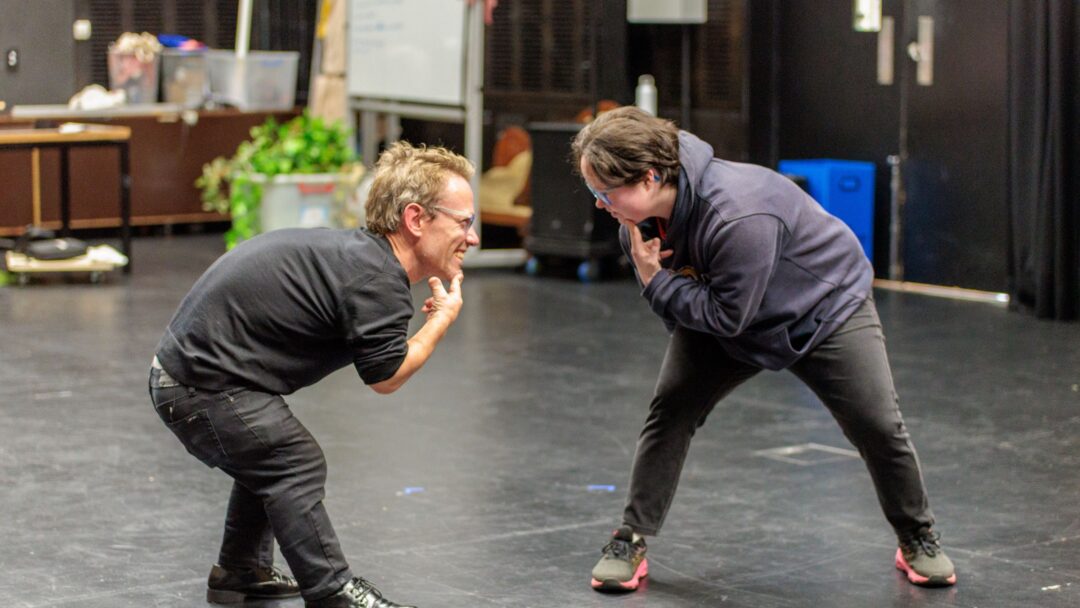
Sam Drummond speaks with Paralympian and disability advocate Kathleen O’Kelly Kennedy about founding the Red Dust Heelers, a program creating opportunities for First Nations people with disability to participate in sport and community life. He also speaks with rapper and musician Grace Kenny (GK), and Liam McKennie from Back to Back Theatre, who share how a supported theatre company can open pathways to employment, skills development, and creative expression.
Also joining the conversation is First Nations Artist Abigail from Free Space Studio in the Northern Territory, who reflects on how the support she receives enables her to sell her artwork, build confidence, and strengthen her connection to culture and community.
Listen now wherever you get your podcasts:
Personal and Community Support
Sam Drummond 00:01
This episode of building inclusion was recorded on the lands of Aboriginal and Torres, Strait Islander peoples across Australia. I acknowledge the traditional custodians of the lands on which this podcast is recorded and listened to, and I pay my respects to elders past and present. I'm Sam Drummond, lawyer, writer and disability advocate, and you're listening to building inclusion, a podcast about Australia's Disability Strategy presented by Powerd media. Australia's Disability Strategy is a national roadmap guiding governments, businesses and communities to work together to build a more inclusive Australia. Each episode, we explore one of the strategy's priority areas. This episode, we're focusing on personal and community support. These supports are vital because they enable people with disability to fully participate in all aspects of life, from joining sporting groups and arts programs to engaging in local community events. I'm in the Northern Territory on a hot, steamy day, there's a smell of paint wafting through the air of free space studio, an inclusive Visual Arts Studio project based in Darwin that supports and develops artists with disability. The free space studio is run through Arts Access Darwin in partnership with Darwin Community Arts. I'm here to meet Abigail, who is a First Nations artist with a disability. Hi
Abigail 01:27
Hello.
Sam Drummond 01:27
How are you going? I'm Sam.
Abigail 01:29
Hello, Sam
Sam Drummond 01:31
Can I have a seat?
Abigail 01:32
Sure.
Sam Drummond 01:32
Thank you. Is this your painting?
Abigail 01:37
Yes, it is.
Sam Drummond 01:39
Tell me about it, what's I can see some turtles.
Abigail 01:43
It's my mothers
Abigail 01:45
totem. So I'm doing turtles and little turtles and some fishes and crabs. It's a story of my mum's, yeah
Sam Drummond 02:04
It's clear that her art represents a deep part of herself and her community, including her own experiences with disability. And how long does it take for you to paint something like this?
Abigail 02:15
So, two, yeah. two weeks.
Sam Drummond 02:19
Two weeks. Wow, there's so much detail in here. Yes, do you learn the story from your mum?
Abigail 02:29
Yes, I do my my dad do painting. He's an artist too, but my dad do it to painting anymore. I was little kid. I saw my Nanna do painting. I was four years old, so that's why I got my talent from my Nanna and my my Dad.
Sam Drummond 02:59
You've been practicing since you were four. Yes, yeah, incredible. How many exhibitions have you been in?
Abigail 03:07
Lots, lots.
Sam Drummond 03:10
And when you walk in and see your art on the wall, what do you think?
Abigail 03:15
Happiness. Some happiness make me smile.
Sam Drummond 03:21
Yeah, so you're in a group with other artists, yes. How do you work together to encourage each other?
Abigail 03:31
People talk like happy together.
Sam Drummond 03:37
Have you made friends through that group?
Abigail 03:39
Yes, I'm so happy and I'm proud of myself. I'm so proud of myself, yes.
Sam Drummond 03:51
I can see that everyone around you is proud of the stuff that you're doing as well. So yes, it's just fantastic. Well, thank you very much. Thank you so much. Thank you.
Support worker 04:08
I've known Abby since she was at preschool. That was beautiful.
Sam Drummond 04:14
Was she drawing in preschool too?
Sam Drummond 04:21
Abigail's support worker, who is also a close family friend, has been one of her strongest champions, enabling her to fully engage and thrive within her arts practice. Eve Pawlik is a passionate advocate for Abigail and her artistic practice, providing ongoing guidance and facilitation at the studio. She plays a vital role in supporting artists with disability to develop their skills, explore their creativity and bring their ideas to life.
Eve Pawlik 04:52
We are currently in murrumah art studio, so it's our art studio, part of Darwin community arts we run. a disability arts program is one of our main projects out of here, and that's called free space studio. And it's this great collective of artists, 18 artists all up that have been coming for well, some of the artists, yeah, over, over five years, have been coming on these regular days and making with the same kind of peer group of artists together. So it's probably one of the longest standing, like consistent art programs for artists of disability in Darwin.
Sam Drummond 05:29
And why was it started?
Eve Pawlik 05:30
Well, Amina McConville, so she's kind of the main person who worked, founded it and brought it to Darwin community arts. She'd been working in disability like Disability Support Services and day programs where art was an element, but it sort of stayed in this craft space of beading and cards and sort of there, and she sort of saw so many talented people who really just the gap between it being a craft and a professional arts practice. And she was like, let's there's a space here where people who really love art, there's an opportunity for them to really grow their practice and see it come to a different area and potentially be an income stream when especially access and independence, is so hard for people with disability to have that autonomy.
Sam Drummond 06:27
You've talked about access. What are some of those barriers?
Eve Pawlik 06:32
Well, definitely financial barriers. I think there's, again, arts generally is so devalued as a genuine thing that brings and we know that, you know the impact it has on people's lives in terms of sharing story, in terms of self worth expression, regulation, like there's endless things that we can talk to about why it's so important, but it often gets undervalued. That's a big prohibition, is that financial access. But also I feel like a lot of the time people's lives get so controlled by external forces in that disability space. And why coming I guess here is so important is they get to have independence. So it's this very it's guided arts practice, but really, the artists are with their peers. They're with their friends. It's a time where they're actually able to, yeah, have autonomy in a space when they don't often get autonomy.
Sam Drummond 07:33
What are the benefits outside of the studio?
Eve Pawlik 07:37
Well, in terms of the peer group, so for instance, Thursday art group as part of free space studio that has been a consistent group of artists now for I've been with the program over five years, and I've worked with the same crew on a Thursday for that time, and to watch, I guess, for those artists to be peers and see each other grow and be there for the highs and lows. It's so much more than coming and making art when they're here. It's like the social catch ups, the check ins, the bolstering each other up. But some of those artists are like, constantly walking around being like, what are you doing? Like guest encouraging. So I think having that sense of community and not that isolation, has been really huge for a lot of those artists. And then just confidence, like I've seen Abby grow so much and perform as well like she has, like theatre performance elements, and I think just the safety that this baseline can give has meant she's able to really come out of us her shell and thrive.
Sam Drummond 08:48
It can probably be a trap trying to put a financial value on artistic practice, but Abby made a sale today, it showed that there's a pathway to financial independence as well, as well. Yeah, is that a consideration, or you're trying to focus more on the arts.
Eve Pawlik 09:09
Definitely, I think that's a bit of a point of difference to being art therapy alone, and that's not really what our focus is, because it is about these artists working within an industry and having, you know, some of the work that they make, it's like, outshines so much of what you can see in these big institutions. And it's just about opportunity and access. And I think trying to be that connecting point where, yeah, there's opportunities for sales for I guess, I think Abby spoke to like the idea of for her work to be seen in someone else's house, and that making her feel joy.
Sam Drummond 09:51
Are there particular benefits and barriers as well for First Nations people in expressing their art when they have a disability?
Eve Pawlik 10:01
I think one thing that we've noticed, and we've been able to do a couple of connection to country projects, is because of the lack of services in remote communities, a lot of people who have either become part of a guardianship and don't have, I guess, connection back to country, they end up being in Darwin or Catherine or Tennant Creek and Alice Springs. So these main hubs that are actually so far removed from the country that they are connected to. And so that's a really big barrier, I guess, in terms of ongoing cultural learning and embeddedness, because you're just not with family full time, because those services and the resourcing remotely isn't there. So there's definitely huge barriers around that, yeah, disruption of cultural practice within disability,
Sam Drummond 10:57
and what about when you see exhibitions happening in the community, and there's murals everywhere. Have you seen a shift in community attitudes when it comes to the ability of artists with disability to do really quality work.
Eve Pawlik 11:16
So one of the projects we were doing involved us being out on site on the Nightcliff foreshore, which is a really popular walking spot for everyone, or walks of life. And so there is like three picnic tables along there that we were painting for about we were on site for over a month, and in that time, it was artists out on site painting, and we had so many people coming and approaching us and the curiosity and the engagement and the conversations, and it was really great to sort of step back and let the artists just be, I guess, taking all these people under the wing. And they just were like, come on in, bringing these strangers in, showing them through the art that they're making in the process. And I think being able to bridge that, like curiosity or avoidance, potentially, of some of the general public, and to have the artist, just like, take away any boundaries there, and just bringing these the general public in, was really cool to see. And so I feel like a lot of our work is kind of in this advocacy space. Of like, No, this is genuine arts practice. These are adults. This is like, I think unpacking some of this, those assumptions from the general public, has been a big part of alongside this work.
Sam Drummond 12:38
Fantastic. Thanks for allowing us into the space.
Eve Pawlik 12:41
Your welcome
Sam Drummond 12:42
I'm at La Trobe University sports stadium in Melbourne to speak with Kathleen O'Kelly Kennedy. Kathleen is an Australian Paralympic athlete who is an amputee. Hi, Kathleen. I'm Sam.
Kathleen O'Kelly Kennedy 12:57
Nice to meet you.
Sam Drummond 12:58
Thanks for having me down here. It's great.
Kathleen O'Kelly Kennedy 13:00
Yeah, I hope you're enjoying it so far?
Sam Drummond 13:01
Yeah, it's brutal.
Kathleen O'Kelly Kennedy 13:02
It's unreal.
Sam Drummond 13:03
It's an absolute brutal sport.
Kathleen O'Kelly Kennedy 13:05
Yeah, it's tricky, yeah.
Sam Drummond 13:07
Well, do you want to have a seat here?
Kathleen O'Kelly Kennedy 13:08
Perfect. Yeah, I love that. Thank you.
Sam Drummond 13:11
I arrived just as competition was hotting up in the wheelchair AFL footy State of Origin, competition was intense, so Kathleen took us outside for a chat. It's a brutal game. But one thing that I noticed was there's a really you talked about diversity. There is a diverse range of disabilities playing that. If you mentioned identifying as having a disability and being within the community quite young. Do you remember when that happened?
Kathleen O'Kelly Kennedy 13:41
The big change for me happened when we were invited to a camp for the kids, or kids with missing bits, that was funded by the Paul Newman foundation. There was Melissa Carlton, Tim Matthews, Don Elgin, present as well. So these Paralympians, and up until that point, I'd been living, I didn't really know many people with missing a leg or just with disabilities in general. So I think that camp. It was the it was the first little it lit a little spark, because I was watching these Paralympians. They just they seemed to be proud of their disabilities. I thought that was quite bizarre, to be honest. Like I really was like, how can you I was it was confronting for me how they just didn't seem bothered. They, you know, they were wearing shorts. I always wore long pants, and they worked really hard as well on getting me out of my shell and the other kids there too. So I think the first my plan for the weekend was that I was going to stay inside the cabin and not do anything. And I was being a very I was just being a typical teenager.
Sam Drummond 14:50
Like, how old were you at this age?
Kathleen O'Kelly Kennedy 14:53
I think I was 13, like, maybe 12, going on 13. I was, yeah, and, and my mum was just nagging me to go outside and just participate, just do something. She's like, come on. And I had all these excuses. The only way I'm going to get her off my back is if I go outside for a bit. So I just went to the pool with my brother and sister, and at the pool was this girl called her name's Shelley tunks, and she'd just, more recently, in the last six months, I think, lost her leg in a train accident, and this was the first time that she was going to try and swim, seeing her in that moment, I knew how to get in and out of a pool. I'd done that before. I'd stopped doing it because I didn't want people to see my leg, but I wanted to help her more than I was worried about that in that moment, so I just gently, kind of took, showed her, just introduced myself, got to know her. We got in the pool and and had a great time. But then we also both had these beautiful mentors that were just in the background, just doing their thing, like they were coming up and chatting with and stuff, but they were just role modeling that life can look different to how we were experiencing it, and life can feel different to how we're experiencing it.
Sam Drummond 16:18
This was a pivotal moment for Kathleen, highlighting just how transformative community support can be in shaping the path of a young person with a disability that life changing camp set her on a journey that led to being exposed to Paralympic sports at the 2000 Paralympic Games.
Kathleen O'Kelly Kennedy 16:35
Wheelchair basketball. My goodness, Sam, it was like the stadium was packed. It was electric. You know, you go back to school, life goes on, and it that that beautiful, those beautiful moments that were created at that camp. Like it's harder to obviously keep that feeling going as you back to being sort of feeling like the outsider again.
Sam Drummond 16:58
So in those moments where you've experienced the camp you've experienced the Sydney Olympic Games, which for anyone around at that time, particularly those growing up, was a massive moment, yeah, and also a massive moment for the Paralympic as well. You go back to your community. How do you think community can best recreate that?
Kathleen O'Kelly Kennedy 17:22
What, what was magic about, what is magic about the Paralympic Games is there's a lot of people without disabilities that are just frothing over it like, for what it is, like, the the athleticism, the the commitment it is, it is magic. They can there's a lot more people without disabilities that I think could become fans. But also, as a result of that, they're going back into their communities, and they're just like, Well, why isn't what? Why doesn't this community feel like that? And I think it is happening because it's very different to what it was like when I was a kid growing up, there's definitely changes going on, but the key is emboldening people without disabilities as well to come with us on that
Sam Drummond 18:14
Kathleen went on to represent Australia in the wheelchair basketball at the 2008 Beijing Paralympic Games.
Kathleen O'Kelly Kennedy 18:20
Well, everyone should have a be able to have an opportunity to have a go at things. It's that because look at what they can do, and not just in sport as well. That's the important part, like the Paralympics, and that's where it can be dangerous. It's like sometimes when people just come up to me on the street and say, Hey, what sport do you do? I want to say, none. I'm a rocket scientist or something, you know, like, I want to say that doesn't, this doesn't mean, like, so there's been a shift, and it's quite it's, it's got pros and cons to it, right? Like, they're not looking at me and necessarily feeling sorry for me straight away, so that's great, but they're looking at me and thinking, Well, you've got a disability, so the only thing you could be doing then is sport and going to a Paralympics. That's got to change right
Sam Drummond 19:06
Through the support she was given in her career as a Paralympian, Kathleen decided it was time to give back. She founded the set no limits charitable organisation, and co founded the red dust heelers program, which uses wheelchair basketball to connect First Nations young people with disability to education, sport, employment and community opportunities.
Kathleen O'Kelly Kennedy 19:29
And I come from a privileged space, so that's why, you know, I'm very conscious of and it was really important to me with with the red dust heelers and and amplifying those voices of First Nations people living with disabilities, because you talk about the barriers that that I face if I were an Aboriginal person right now, 10 times more things to think about as well and work through that when we talk about again. as a community, leave no one behind. We're leaving a community, we're leaving some people behind right now, in our conversations, in the way we're setting things up, and who they're, who they're designed for, and the but the it's even within our own community. It's remembering we want everyone to be able to have a go.
Sam Drummond 20:22
The Red Dust Heelers was founded in 2013 as part of the Outback Academy Australia initiative. The program was developed using a co design approach with remote, regional and urban communities across Australia. Cultural advisors and respected First Nations elders such as Uncle Darrell Kickett in Western Australia have been involved as mentors and guides for the heelers, helping ensure the program's direction resonates with cultural values and community priorities.
Kathleen O'Kelly Kennedy 20:51
If the bar's this low, you're not thinking up here anyway, because you don't know that's possible. And for a lot of people in in First Nations communities and also outside of that, like, if you if you can't see it, if you haven't seen it, how can you dream about it?
Sam Drummond 21:05
And so for red dust heelers on the ground, what does that look like? For First Nations, people with disability?
Kathleen O'Kelly Kennedy 21:13
It depends on where we go. So there's we have some protocols around that. So we have elders like Sid attached to us, who support us into sort of reaching. If a community reach out, reaches out, and what we were recently in Port Augusta, if they reach out and want us to come in and it's, what do you want this to look like? What can what can be the best impact here? So it's often creating opportunities for conversations, especially with the providers, the families, the providers that have like it's sort of it's not enough to be first nations. You also got to understand disability. It's not enough to be have a disability and not be First Nations, but there's a gap at the moment around the voice like there are people with who are living in both, with both, but allow providing that space for them to be able to talk about it and and finding the people that want to be able to talk about it. There are some people some people within the heelers that are working on that, who have who are living First Nations, people living with disabilities, who have these experiences that are so important to be shared, and they're learning how to share that because they want to. But if any point they don't want to, that's they know that's perfectly okay too. So yes, there's those lots of conversations that happen. Then there's an opportunity to, obviously, yes, play sport, like we bring the wheelchairs along, we do it, but that can just look so different depending on the group that we have. I would wear, like, those great big cargo pants that you could fit like a family of five in like the and then, do you remember when it was cool to wear skirts over pants as well? I mean, whatever. I actually think it's still cool,
Sam Drummond 23:07
Yeah I think I'm the same age
Kathleen O'Kelly Kennedy 23:11
Yeah, so yeah, but I would over the cargo pants, have a skirt, and then I'd make sure that if I was at the shops that or anywhere in public, that someone was walking on my right side. Like all of that, I had so many barriers between anyone noticing that I had one leg. So when I, when I say that, that's actually something that I personally, I think it's a little bit it's coming from a selfish place, really, because I remember that, that feeling of when that weight came off me, and it's so powerful, just for life, not for again, like it's not all about the sport, just for how you move around and and see yourself in life, relationships, all of it. Most of the people that have come across the heelers or joined, joined in on the movement, consider themselves part of it. It's those things that I think have had the biggest impact for them, not whether they make a team, or whatever it is and and I've realised, even with my my own career, I was sport, that it coming into my life I did think it was about me being this, you know, the best athlete I could be and and all of that. I don't think that was the purpose it served for me. Now, even I did it for so long, and I've even went into another sport and all of that, and I do love challenging myself. That is a that's something in me so but I think it helped me learn those, those those bigger lessons that I needed around understanding that that I'm just worthy because I'm worthy because everyone's worthy.
Sam Drummond 24:57
I'm in Geelong at Back to Back Theatre a groundbreaking Australian Theater Company and one of the few in the world with a professional ensemble made up entirely of actors with disability. Back to back theater is registered with the NDIS and provides supported employment and training opportunities for people with disability. The company works closely with dedicated support workers and staff to ensure every participant can fully engage in rehearsals, performances and creative development. I was fortunate enough to watch a rehearsal of their upcoming show and then sit down with ensemble members, Liam McKenna and Grace Kenny, aka GK to hear about their experiences and the creative process. Hi, Liam, how are you going?
Liam McKenna 25:44
Sam, nice to meet you.
Sam Drummond 25:46
Yeah, great space you got here. It's enormous.
Liam McKenna 25:51
Yeah, it is.
Sam Drummond 25:53
Should we have a seat and have a chat?
Liam McKenna 25:54
Sure
Sam Drummond 25:55
Seems to me that that's not a performance about disability or just by people with disability, that was a real show of humanity, that disability wasn't central to it. It was just allowing you to bare yourself really and take up space on this floor. What did it feel like for you? Or what does it feel like for you?
Liam McKenna 26:20
Feels very empowering, because we get to basically to show like who we are, and that it is comfortable to talk about things that you would normally not want to tell people about ourselves.
Sam Drummond 26:41
What are the things that you think a space like back to back has allowed you to talk about outside of the theatre environment? Have you seen changes in the way that you interact with the world, in everyday life because of your theatre?
Liam McKenna 26:58
I basically it has made me a lot more confident in talking with other people, especially people who I might not meet on a daily basis, like when I'm working. It has helped me gain a lot more confident in confidence in talking with just like people who I'm serving, or just people on the streets.
Sam Drummond 27:28
What are the barriers in the outside world that you face to, say, employment or just interacting with people in the street?
Liam McKenna 27:38
It was just like I would wouldn't really feel comfortable like looking at people directly in the eyes, or I would just not really feel comfortable doing interviews for jobs that I think I was very qualified to do. But now, after being a part of back to back for over 10 years, I think it has basically like like broadened my horizon and made me feel a lot more confident in myself and with my ability to just like basically speak with others.
Sam Drummond 28:18
There seems to be a real sense of community here as well. Have you made friends within back to back, or that way you see them outside? Or is there just a camaraderie that you have when you're performing together?
Liam McKenna 28:32
We have created a close network of friends, and we do keep in contact with a lot of people, and also just whoever we collaborate with for a day. We always do, like, find ways to stay in touch with them, if it's whether it's through the company itself, or whether it's just just meeting them outside on the street, we will, we would basically just talk to them.
Sam Drummond 29:05
What about people who watch the performances? Do they come up to you and talk about how great it was?
Liam McKenna 29:12
I have had a number of people after like, seeing you perform, they would say, like, they would say that, Oh, there was such an amazing you've done such an amazing job that just that I've done really good and that they enjoyed it. And would definitely like to see me perform in another show.
Sam Drummond 29:37
When people are watching you perform, I think sometimes with people with disabilities, we tend to get watched, but for the wrong reasons. What's the difference when people are watching you perform as part of a theatre show?
Liam McKenna 29:54
I feel when people are watching you like when people are watching me perform, I feel like they're not. watching me as an individual with a disability, watching me as someone who, yes, does have a disability, but also is doing something that normally, that people wouldn't have given the opportunity to do in before. And I think that it is like a massive step within for people with disabilities yeah.
Sam Drummond 30:31
Where do you think your life would be without theater and without back to back?
Liam McKenna 30:37
Probably, probably at home trying to find a job.
Sam Drummond 30:49
But instead, this is something that you seem to love.
Liam McKenna 30:52
Yeah
Sam Drummond 30:53
Where do you see this going in five or 10 years? Where would you like to be?
Liam McKenna 31:02
Probably starring in a TV show or even a movie, just showing people that people with disabilities can.
Sam Drummond 31:16
Liam, thanks for chatting to me. I can't wait to see the whole performance.
Liam McKenna 31:21
No worries. Can't wait for you to see it as well.
Sam Drummond 31:25
GK is a multi disciplinary artist, songwriter and a vibrant member of the back to back theater ensemble. GK has Down Syndrome and brings her full voice and energy to every performance with the assistance of dedicated support workers, enabling her to perform, create music and tour nationally and internationally.
GK 31:44
Hi, Sam
Sam Drummond 31:45
We're here in back to back to back theatre.
GK 31:47
Yeah
Sam Drummond 31:48
You're about to, well, you've just run through the performance before it's released.
GK 31:54
Yeah, this is my first year with back to back theatre, and this is my first performance with this group, yeah.
Sam Drummond 32:02
How do you feel about that? Are you nervous?
GK 32:04
I'm actually more excited. I think the nerves helped me with that. The adrenaline comes in just makes me feel good.
Sam Drummond 32:14
I could see that, watching the run through the people didn't seem to be very nervous but very deliberate in what the performance was, and it seemed like an outlet to express yourself, whereas perhaps maybe, if you're walking down the street, you might find that there's not that space to express yourself. But it seems like through theatre and your music, you've found those outlets to say here, this is what I'm all about. What does that mean for you to have people watch you and listen to you and go, Well, that's GK,
GK 32:58
Yeah well, I guess I'm just getting used to being an actor, because this is only my first year of actually being one. Because I've always, for as long as I've known, I've always been a rapper, like I'm a musician, and it's like, now I'm stepping into the theatre space and I'm becoming an actor, like I'm becoming a different person down here in Geelong. It's like I've been working with back to back for, for nearly a year now, and I feel like they're definitely given me the space that I need to really express myself with. It's like I sometimes find it hard to do that, but I also it's the best way I know how
Sam Drummond 33:55
What are some of the barriers that you come up against in your career as a musician and as an actor, are there things stopping you from progressing?
GK 34:09
Well, I think one barrier will be definitely my disability, because my disability is Down syndrome. I do feel like that's a barrier itself, but, um, I don't. I don't like getting the way. I don't like getting away of myself, because I know that I have it. And it's like there's one song that the Find Your Voice Collective has written. It's called walls come down, and it's really basically about breaking those barriers down.
Song 34:55
Song plays
GK 35:05
And you'll hear me. It's like you'll see me. It's like, there's no barriers at all.
Sam Drummond 35:10
And what that says to me is that the barriers aren't your disability. The barriers are the things that are put up outside. Yeah, we're slowly breaking them down.
GK 35:20
Yeah
Sam Drummond 35:21
Do you think something like back to back theatRE is helping break those walls and those barriers down?
GK 35:27
Yeah, definitely, yeah.
Sam Drummond 35:30
How many friends do you think you've made out of Back to Back theatre?
GK 35:34
A whole lot.
GK 35:36
They're really good people.
Sam Drummond 35:37
Well. GK, thanks very much for sharing your story.
GK 35:40
Thank you
Sam Drummond 35:41
And for being on the podcast.
GK 35:42
Thank you.
Sam Drummond 35:43
You've been listening to the Building Inclusion episode on personal and community support. I love seeing firsthand how assistance from community and support workers enable people with disability to fully participate in all aspects of community life, from experiencing Abigail's incredible art in the Northern Territory to witnessing accessible sport in action, it was a vivid reminder of how connection, inclusion and tailored support make a real difference. This has been Building Inclusion Australia's Disability Strategy podcast hosted by me Sam Drummond, presented by Powerd Media, produced by Eliza hull, recorded by Ascent Media. Thanks for listening.
Host – Sam Drummond
Produced by Eliza Hull for Powerd Media
Audio Edited by – Honor Marino for Print Radio Tasmania
Audio Record – Ascent Media
This podcast by Powerd Media is supported by funding from the Australian Government Department of Health, Disability and Ageing under the Inclusion and Accessibility Fund: Australia’s Disability Strategy (ADS) – Community Attitudes grant program.