Article
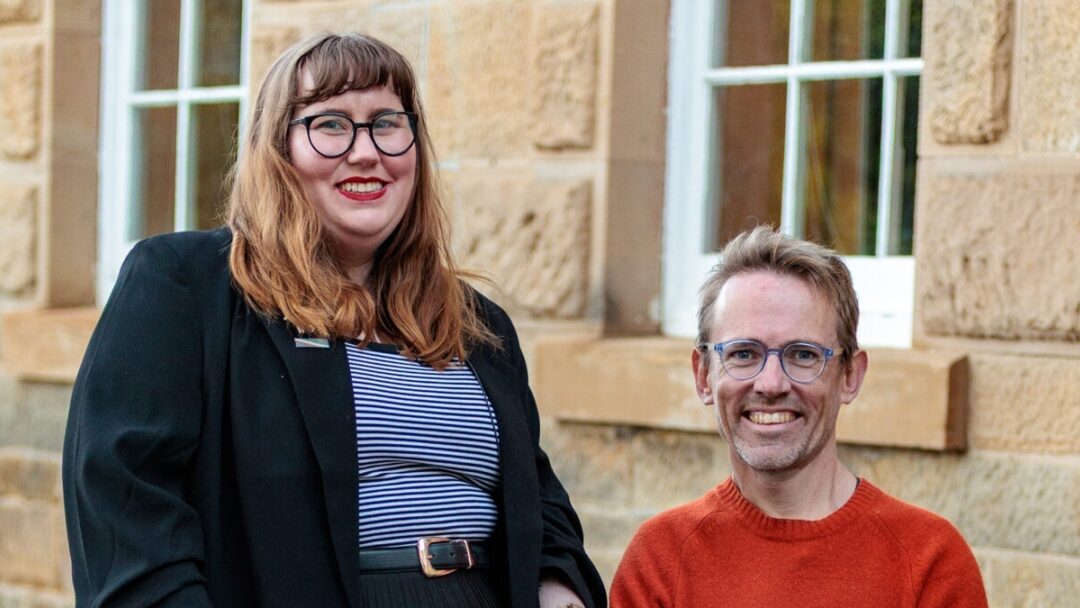
The podcast episode explores safety, rights, and justice for people with disability in Australia, and the urgent need for systems that truly protect and uphold human rights. Sam Drummond speaks with Rosie Putland, an Autistic advocate, who shares her experiences navigating discrimination and the justice system. Rosie reflects on how some supports designed for victim survivors were, at times, more accessible and inclusive for her - highlighting how thoughtful approaches can better serve diverse needs.
Also featured is Kate Eastman SC, human rights lawyer and former Disability Royal Commission Commissioner, who calls for a deeper, rights-based understanding of safety - one that centers dignity, autonomy, and justice for people with disability.
Researcher Jen Hargrave joins the conversation to discuss the prevalence of violence against women with disability, and the critical role of self-advocacy and peer support in driving change.
Listen to the podcast on your preferred platform:
Safety Rights and Justice
Sam Drummond 00:01
This episode of Building Inclusion was recorded on the lands of Aboriginal and Torres, Strait Islander peoples across Australia. I acknowledge the traditional custodians of the lands on which this podcast is recorded and listened to, and I pay my respects to elders past and present. I'm Sam Drummond, lawyer, writer and disability advocate, and you're listening to building inclusion, a podcast about Australia's Disability Strategy presented by Powerd media. Australia's Disability Strategy is a national roadmap guiding governments, businesses and communities to work together to build a more inclusive Australia. Each episode, we explore one of the strategy's priority areas. Today, we're focusing on safety, rights and justice. People with disability experience higher rates of violence, abuse and neglect, and often face discrimination or barriers when accessing police, courts and other justice systems. The strategy aims to improve safety and justice by strengthening protections against violence discrimination and ensuring equitable access to legal processes, it prioritises support for people with disability who are victims, witnesses or defendants, and highlights the particular risks faced by women and children with disability. In this episode, we explore these issues and discuss how governments, services and communities can work together to make Australia safer, fairer and more inclusive for everyone. You must be Rosie, what an amazing building.
Rosie Putland 01:34
I know, look at the sandstone. It's so beautiful, isn't it.
Sam Drummond 01:37
Why don't we go outside? We're in Hobart at print radio Tasmania to talk with Rosie putland, a proudly disabled autistic advocate. Rosie brings deep expertise to her work rooted in her own experiences, and is passionate about ensuring disability policy centers the voices of those it impacts. She's joined us using a walking frame.
Rosie Putland 01:59
Park myself up., Yes, put your brakes on so you don't roll down the hill. Most important thing to learn
Sam Drummond 02:06
Seems to be a thing in Tasmania.
Rosie Putland 02:07
Yes
Sam Drummond 02:08
There's lots of hills
Rosie Putland 02:10
Especially in Hobart.
Sam Drummond 02:11
We are in front of Print, Radio Tasmania, and I understand that this is a place of importance for you and a lot of people around Tasmania. What brings us here? And what brings you here?
Rosie Putland 02:25
Yeah, so we're here at print radio, and you know, there's the yellow sand stone building, and I just feel like it's really iconic. And I kind of feel like, almost like, I'm home. I just think about those audio waves and how they come through this building, but also how they reach out all through Tasmania. And I don't know, I just it feels like a place of importance. Then so many important moments in the last two years of my life have been here.
Sam Drummond 02:57
When did your journey of disability start?
Rosie Putland 03:00
I was born with my disability. I've had experiences of disability and of discrimination all throughout my life. You know, even from things in my childhood with discrimination and with experiences with the justice system as well, they're so deeply connected to my experience as a disabled person. And I think coming into adulthood, it's about connecting all of those pieces and coming to terms with, you know, what it means to be disabled, but also what it means to have been a disabled child as well, without necessarily having that language around it.
Sam Drummond 03:41
So was that a light bulb moment? Then where you realised where the where the issues are, had always been, you just hadn't quite understood it.
Rosie Putland 03:52
Yeah, it's so interesting because it's like it's slowly, slowly, but then it's all at once, at the same time. I don't know if there was quite the light bulb moment. But you know that slow rolling in of that self realisation or that self actualisation? You know, it sounds so high and mighty, but you know that is kind of how it feels in a lot of ways.
Sam Drummond 04:14
Was that difficult or helpful for you?
Rosie Putland 04:19
I think it was helpful for me. I remember being at the National Youth Disability Summit, and it was the first time I was in a space where there was just all young disabled people in the room. Everyone had different mobility aids. You know, I remember was sitting in the dining hall, and there was someone playing piano and someone singing and someone signing next to them, and there was the chatter and the hubbub of the room, and like, I get goosebumps thinking about it now, because it was that first moment that I thought, Oh, I. I belong here. I'm in this space, and I'm in this community, and even though I didn't know everyone in the room, there was those threads of connection.
Sam Drummond 05:08
When that happens, who benefits more? Is it that person with the microphone who is finally being heard, or is it the broader community who is hearing those stories for the first time?
Rosie Putland 05:24
That's such a good question. There's benefits, but they're in different ways. You know, I I know what it's like to not be heard, and I know what it's like to have your story questioned at a really, you know, baseline level. And so that that feeling of validation for the first time, or even for times over, you know, it takes you back to that. It reminds you of those times that you haven't been heard. And it's that little sign of progress. And the other part of it is, is that representation side and that broader community side,
Sam Drummond 06:11
When haven't you been heard?
Rosie Putland 06:13
Yeah, so I was having this conversation with someone recently about, like, a conversation that I was having with someone where I wasn't heard, and I said, you know, it brings me back to being a victim survivor, going through court and having, you know, the lawyers on the other side questioning your story and bringing up parts of your life, trying to discredit you as a person who who's been through something and really difficult. And you know, this is not unique. So many disabled people, you know we heard in the disability Royal Commission have faced horrific things in their life, and when we think about is the justice system accessible? Do disabled people? Are they able to receive justice? What do those processes look like? Are they obtainable? I think that's a bigger question, and like, I don't know if we have the answers to that yet.
Sam Drummond 07:26
With your contact with the justice system as a victim survivor, what what would have true justice looked like for you, and how could they have done that differently for anyone with a disability?
Rosie Putland 07:44
I think actually, so many of the things that were put in place for victims did benefit me as an autistic person. So you know, when I was going through the system, I was really fortunate to be able to record my initial interview and statement, and that was something that was able to be played in the court, rather than me having to rego through those sorts of things, you know, in a live trial, for example. And you know, if we think about that in the accessibility lens, and how beneficial that might be for someone who has an energy limiting disability, or someone who's autistic, who you know, may not be able to re go through that experience that is really exerting some of the things that are already in place for victims are actually really beneficial for neurodivergent folks as well. And so I was really lucky, I guess, in that way, that the systems had progressed to that point, and when I testified in court, I was able to do it remotely by like CCTV links. I was able to be in a separate room with a screen, you know, just being able to see the lawyers and the judge, which was really, like, beneficial to me. It's weird to say, oh, it's really great. Like, no, it wasn't great. I was at court. It sucked. And, like, the rooms that were able able to be there for me, there were, like advocates that were able to be there to support you through the process. I was allowed to have as many support people in the other rooms as I needed. There was, you know, puzzles and things around to keep you distracted, and comfort items and things like that, and so, you know, for me, I actually think of that experience, that part of it went probably as smooth as it possibly could, and I felt really supported going, going through that even though, you know, it's a horrific experience, and like, even though, yes, to seek justice, I had to go through that.
Sam Drummond 10:10
What about before then?
Sam Drummond 10:14
Ideally, you wouldn't have to go through that process at all. What are the safeguards? What can we be doing? Yeah, stop you getting to that position?
Rosie Putland 10:25
Yeah I mean, we know that 90% of autistic women and girls have faced some sort of sexual violence, and so, you know, I think it's, it's a it's a huge issue, right? I can meet other autistic women and girls and gender diverse people and know that they've likely been through the same experience, but it's, it's not talked about, like, even within community. And so I think there are steps, you know, going forward, like the National Autism strategy, like Australia's Disability Strategy, that are taking that systemic, overarching look at those issues, and how can we start to address them? You know, unfortunately, to be an autistic woman and girl at the moment means to be a victim survivor like that's the fact at the moment.
Sam Drummond 11:36
And I'm very aware that every time you talk about that, including what you're doing right now, you're sharing a piece of yourself, and that can be really hard when you're a person with a disability, but you're also advocating for so many other people. Can you separate those two parts of you?
Rosie Putland 12:03
I think there's power in sharing my story, because it can open up space, and I think that's to me, the most important part is that, yes, I'm sharing my story, and that's powerful, but it's not about me. It's about welcoming people in. And you know, what's the there's like a metaphor about, like, pulling people up the ladder with you. I don't climb ladders. I don't think that metaphor is really gonna work in
Sam Drummond 12:33
Terms of accessibility, ladder is right down the bottom of the list! ha ha.
Rosie Putland 12:39
But, you know, you know, how can we make space in the room? You know? And I love the conversations about intersectionality when it's about, well, who's at that table, and then, and so who's at that table, but who's not at that table, and then, you know, we go out to the her the table, and it's like, well, who's not at that table? And we keep sort of going out and these concentric circles. And you know, if I can be at one table that can open up some more experiences, more spaces for other people, then that's what I want as an advocate. Like, it's not about me, it's about, how can I make space?
Sam Drummond 13:23
This was an eye opening conversation with Rosie. Her reflections on navigating the court system as an autistic person show just how much access and support can shape a person with disabilities experience of justice.
Kate Eastman 13:37
Hi, I'm Kate Eastman, and welcome to my chambers.
Sam Drummond 13:42
That's Kate Eastman, Senior Counsel, one of Australia's most respected barristers in safety, rights and justice
Voice Over 13:49
That give remedies for discrimination on the grounds of disability and employment.
Sam Drummond 13:55
Kate played a pivotal role in shaping many of the recommendations from the disability Royal Commission, and has extensive experience advocating for disability rights, equality and access to justice. She welcomed me to her impressive offices in Sydney's CBD, with a stunning view of the Sydney Harbour. I asked her what stories stood out for her at the royal commission.
Kate Eastman 14:15
I think it's sort of on one level, every story stood out because everybody has their own unique lived experience, and how they want to tell their story in their own words, was sort of something which I thought was really important. For me, I think some of the stories that really stood out were the stories of some women with disability or the mothers of young people with disability, and just being able to describe the sort of day to day struggles, but in struggle, joy, hope and a sense of future, that the world was going to be better. And so hearing those stories which sort of on one level. Might seem to have a contradiction, because there was a lot of hardship and grief in some cases, but also just that optimism that was there what I think was really quite something, when I was doing the Royal Commission, my number one thing was to ensure that we heard from people with lived experience in their own words, and you would imagine in a Royal Commission, so a lot of formality about that, and all of lawyers sort of circling around who asked the question. So I wanted to try to make it really different to what people might would expect from a court setting, or the way in which evidence would normally be given. So I think the stories, I hope I drew out, and the stories that people remember, is also that we were able to take our evidence and allow people to share their stories in really different ways.
Sam Drummond 15:53
So out of that, 222 recommendations, it's a lot to digest for anyone, whether you're a member of the public or a lawyer working this in this every day, what are the recommendations from that that you see as the most pressing
Kate Eastman 16:13
So that's a tricky one for me as having a role as counsel assisting, because our job was to really base our recommendations on the evidence that we heard and based on the submissions that we received, rather than the commissioners or the council assisting. So saying, this is a really red hot issue, and we want to see that done. We wanted to make sure that those recommendations reflected the community. I think the two pressing areas for me was identifying the need for wholesale systemic change to really achieve true equality, in that sense of substantive equality, as opposed to sort of tinkering around the edges and and the other thing which came through really strongly on recommendations is, how do you change attitudes? And our findings from the royal commission were very much that attitudes were often the sort of key barrier or key block. And so thinking about changing attitudes is about changing culture perceptions. And so perhaps as a lawyer, I default back to often a human rights framework to say sometimes the law should be pushing a little bit ahead, because changes in the law, particularly around the way in which people are treated to achieve equality and non discrimination, can start to change attitudes. And I think our time during the Royal Commission coincided with the release of the respect at work report, and that report, which made a lot of recommendations as well, really galvanised people's attitudes towards sexual harassment in workplaces. And we've seen huge changes in a relatively short period of time. And I was sort of hoping maybe we could sort of capture that spirit of the community, saying we need to do more. We need to change our attitudes, not just change the law. So that's what I was aiming at, and that's why I thought those were the two sort of big recommendations.
Sam Drummond 18:12
One of the core outcome areas for the Disability Strategy is safety, rights and justice. What do you think that means for people with disability?
Kate Eastman 18:26
So safety can be a double edged sword for people with disability, because there should be dignity in risk, and this was a really strong theme that came out of the work of the Royal Commission, is that people with disability are entitled to safe working environments, safe living environments, safe traveling environments, just like everybody else. It's not a different form of safety. But often, I think the those unconscious bias or attitudes that people with disability are vulnerable, people inherently vulnerable, and therefore need special protection and a higher level of safety, is that the objective of achieving safety can often be a way of restricting both rights and identity. So we need to have a proper discussion about what safety means for people with disability that is a rights based focus and understands dignity of risk. So in that, you know that that's, I think we tried, in the Royal Commission to have those discussions, but I think often the attitudes about keeping people with disabilities safe sort of prevailed over their rights, opportunities and expectations, and so low expectations then came with this sense that you need special protection because you're person who lives with disability.
Sam Drummond 19:57
Can you just expand on that? Low expectations? Point, how can low expectations for people with disability be damaging?
Kate Eastman 20:05
Very much so, because the idea of low expectations can be as a result of sort of direct overt bias or discrimination, and that is just that you start with an assumption that people with disability, because of their disability, are not as functionally able to participate in society, be it at school, be it at work, or be it in sort of general activities and life. And so the low expectation means that often decisions are made that people with disabilities sort of check out at particular levels of education, or that whole range of assumptions are just made about a person with disability, that those doors are not open for people with disability, and that it becomes a sort of self perpetuating cycle. So one of the things for me around low expectation is really, how do we tap into those unconscious biases that sit within us, and what is it about the way somebody looks or presents or speaks that somehow does that little trigger in our brain that the person is not going to be qualified to do the job or not able to participate in a particular activity. And so that was a, you know, that's a very strong theme, again, coming out of the Royal Commission, but those low expectations you could often sort of see happen at a deep unconscious level that the person engaged in that was not even aware that they were saying or manifesting that idea of low expectation.
Sam Drummond 21:48
One place that we do see that a lot is the justice system, and in particular the criminal justice system, where people with disability are more likely to be on all sides. How do you think the justice system in general, be it the courts or the legal profession or the police, can get better at accommodating people with disabilities and also having more people involved as police or lawyers or judges.
Kate Eastman 22:25
So it comes back to those attitudes that we're talking about earlier. Is how do we change attitudes around disability? It's difficult in some aspects of the justice system, particularly in the criminal law, because where a person's disability might also account for behavior that's against our social norms or breaches our criminal laws. Finding a way of bringing a conversation of disability into that can be quite tricky and difficult, and we haven't quite got there on the language or the ways in which we do that. So the Royal Commission, again, looked at the justice system a lot, and again, a very profound impact on children and young people with disability. And we've got a lot of work to do there. I would like to sort of see that disability and awareness of disability is almost like a core component of not just what you study at law school, but more specifically, what you study in that work that you have to do between finishing law school and becoming a practitioner. So all that practical training and the learning the craft of being a lawyer, not just the law is the place where it really need to build in some sort of, I think, strong work on improving awareness of disability. I think it's a fantastic initiative that the courts are now bringing assistance animals into the court as therapy and support. That was very much a feature of what we try to do at the Royal Commission, but just having support animals is not enough. There's a wholesale understanding of disability woven into our legal system, so that's a huge area, whether we accomplish that in my lifetime, I'd like to be optimistic about that, but I think this is a very long journey, and it's intergenerational. So it's the next generation of lawyers, I think, who will pick up and take this forward.
Sam Drummond 24:29
Thanks for inviting me up to your chambers.
Kate Eastman 24:31
Very welcome to come up here and see a bit of Sydney from a slight height.
Sam Drummond 24:36
Hi, Jen, thanks for having me. Thanks for having me. I'm at Melbourne University to speak with Jen Hargrave. Jen who has low vision, is a respected disability advocate, researcher and policy specialist focused on safety, rights and justice for people with disability. Through her work with research. Teams at the University of Melbourne. She contributes to studies exploring equity and violence prevention.
Jen Hargrave 25:05
I certainly do remember starting working here some 25 years ago and getting continuously lost on this big campus, and at times, going and standing in a corner and freaking out a little bit because it was very big and overwhelming and inaccessible in lots of ways.
Sam Drummond 25:23
So you've spent a lot of time working in the disability sector, and particularly with women with disabilities. What does safety mean to you as a woman with a disability?
Jen Hargrave 25:39
Oh, no one's ever asked me that before, Sam, feeling comfortable with who you are and not fearing what's around the corner, not having that sense of impending doom. And I think for many of us, it's feeling like other people with disabilities are okay too. I think a lot of us are pretty community minded and are really aware of each other's experiences.
Sam Drummond 26:06
There's been talk, I think, particularly since the Royal Commission, about the experiences of women with disabilities and the prevalence of violence, abuse, neglect and exploitation. Have we come forward in our journey? Are there things that we're doing better than we were?
Jen Hargrave 26:33
It's disheartening because my whole career, we've been stating the same kinds of stats about the same kinds of statistics about the prevalence of violence against people with disabilities, and particularly women and girls with disabilities. And when I do think about safety, and some of the data we have had access to through, for example, Australia's National Safety Survey, Personal Safety Survey, we see safety across different realms of our lives. So there's safety in public spaces like here, which you know, for example, people from the short statute community have been really vocal about their experiences of safety in community, and also Safety Online. And those two things are pretty closely related, sometimes around how footage of us gets shared, and I think how we're treated in public has a big impact on how we feel in private spaces as well, and whether we feel like if we're unsafe in private spaces, we'd be safe to come out in public spaces. And for men with disabilities, violence in public spaces is more prevalent, but also, we're also in private homes where women and girls with disabilities experience more violence than men with disabilities. And then we're also in institutional and service environments which have a high prevalence of violence too. And from some of the things I've looked at, going over court cases and so on, again, we see some gender differences there, because men with disabilities might be more likely to experience violence in public spaces, in service settings, and women more so in private spaces like showers and bathrooms and bedrooms.
Sam Drummond 28:13
Why? What's behind all that
Jen Hargrave 28:18
Massive power structures? Yeah, I think having a power analysis of of how it all works with you know, say staff in service settings being pressured by management, then staff pressuring residents, and then residents having a hierarchy among them.
Sam Drummond 28:37
What does the journey look like for you to address those barriers, and I know you've been doing it for decades now, and maybe that's a really fraught question, because as you say, We're just doing the same thing. We're seeing the same stats where we're saying the same things. How do we get from where we are now to a place of safety and justice for people with disabilities.
Jen Hargrave 29:04
I think awareness has grown a lot for me growing up, I did have disability inclusion on my radar, and knowledge of disability rights came later, but it wasn't till I was in my 30s that I became aware of women and girls rights and feminism. I think younger people today have got much stronger awareness of all those things and in government plans and strategies. I see different groups written about much more women and girls get listed much more in government plans and strategies. But I think I've felt a few cycles now in my career where, and I don't know if you relate to this, but in the beginning, you feel like, oh, maybe this next training program will help, maybe this next Royal Commission, or this next inquiry, or this next piece of law reform, or this next regulation, or. This next pilot program, and we hold out hope that these small things will make a difference, but we're not seeing big moves around increasing equality across the board for Australians. But the thing that has really kept me motivated and interested much of the time has been the work of self advocacy and peer support groups, and here in Melbourne, we've got an amazing legacy from the deinstitutionalisation movement. And I think of Ross house down in Flinders Lane in Melbourne, where a lot of self advocacy groups meet, and there's people who are deaf, blind, people with acquired brain injury, people with intellectual disabilities, who have lost their children to child protection, and they're in their day in, day out, working together, building community, supporting each other, sharing information about how their legal rights might work, how inaccessible public transport timetables might work. What to do if you feel vilified, what to do if you've been abused.
Sam Drummond 31:06
A lot of the stuff that you've talked to me about is relying on self advocacy. Can you talk to me about administrative burden?
Jen Hargrave 31:19
Yeah, administrative burden is a huge thing for people with disabilities and for women with disabilities. If we are hoping to access a family violence refuge and that is not accessible, there's administrative burden on us and our team to then find alternative Crisis Accommodation, and that might end up being something that's not purpose built for family violence, so therefore less safe and less supported, and it's also administrative burden. Was one of the things we found in a University of New South Wales study that becomes a barrier for women and girls to access the NDIS because they're busy doing administration for the other people in their lives and don't have the time and capacity to be prioritising applications for the NDIS, yeah.
Sam Drummond 32:16
How does social media interact with that world? It's it's changed the way that a lot of us have lived, but also changed the way that community community perceptions work with disability. Is social media working in favor of safety or making it harder.
Jen Hargrave 32:36
It's tricky to make a call on on where the balance falls. Some of the things I think about is evidence that the Royal Commission heard around what's unsafe online for people with disabilities, having our images shared and being bullied and so on. And I also think about the connections that we're able to establish for those of us who are housebound or not or will have communication and access barriers to meeting up with people, that's particularly important or geographical barriers, but there's also a massive Digital Divide for people with disabilities, who may not have the financial access to the internet and smart devices or living regionally, may not have connectivity or may have dexterity barriers to using those devices independently. So if they do use them, other people are controlling their use. And some of the most exciting projects I've seen have been around empowering people with disabilities to use technology and that can open up opportunities for social connection, which can create safety as well as risk.
Sam Drummond 33:45
Jen has worked closely with survivors of abuse and violence, ensuring their voices inform research and reform. In one study, she interviewed people who had experienced sexual violence, asking them what justice and recovery would mean in their own terms.
Jen Hargrave 34:00
They have talked about wanting justice and for them that might be having what's happened to them recognised by an authority, whether that was their school or a court or their family or the person that did it to them, apologising and part of what many of them have spoken about wanting is education for the people around them around the impact of what has happened to them as well they want. They want what happened to them not to be lost and to help other people in the long run, but also for the people around them to be able to support them.
Sam Drummond 34:42
That was Jen Hargrave sharing her perspective on the lived realities behind the statistics and what it means for many people with disability who are survivors of violence. You've been listening to the building inclusion episode focusing on safety, rights and justice for people with disability. I learned a lot from Kate Eastman SC in Sydney and Rosie Putland in Hobart talking about her own experiences navigating the justice system. These discussions remind us that listening to the voices of those with lived experience is essential if we want real change. This has been Building Inclusion - Australia's Disability Strategy podcast hosted by me Sam Drummond, presented by Powerd Media, produced by Eliza Hull, recorded by Ascent media. Thanks for listening.
Host – Sam Drummond
Produced by Eliza Hull for Powerd Media
Audio Edited by – Honor Marino for Print Radio Tasmania
Audio Record – Ascent Media
This podcast by Powerd Media is supported by funding from the Australian Government Department of Health, Disability and Ageing under the Inclusion and Accessibility Fund: Australia’s Disability Strategy (ADS) – Community Attitudes grant program.