Article
For most Australians living with disability, personal and community support are a vital resource which allows individuals to fully participate in all aspects of life, from joining sporting groups and arts programs to engaging in local community events.
For Abigail, a First Nations artist from the Northern Territory, her art represents a deep part of herself and her community, including her own experiences with disability. Speaking from the Murrumah Free Space Studio, she reflects on seeing her art on the wall.
Happiness…make me smile. I'm so happy and I'm proud of myself
Abigail
Abigail's support worker, who is also a close family friend, has been one of her strongest champions, enabling her to fully engage and thrive within her arts practice. Eve Pawlik is a passionate advocate for Abigail and her artistic practice, providing ongoing guidance and facilitation at the studio.
She says the inclusive Visual Arts Studio project, run through Arts Access Darwin in partnership with Darwin Community Arts, originated to support artists with disability to develop their skills, explore their creativity and bring their ideas to life.
It's this great collective of 18 artists all up that have been coming for…over five years, coming on these regular days and making with the same kind of peer group of artists together. So it's probably one of the longest standing, consistent art programs for artists of disability in Darwin,” she explains.
Ms Pawlik explains how the project sought to differentiate itself from traditional art therapy.
This is a bit of a point of difference to being art therapy alone, and that's not really what our focus is, because it is about these artists working within an industry. There's an opportunity for them to really grow their practice and…potentially be an income stream when access and independence is so hard for people with disability to have that autonomy.
Ms Pawlik
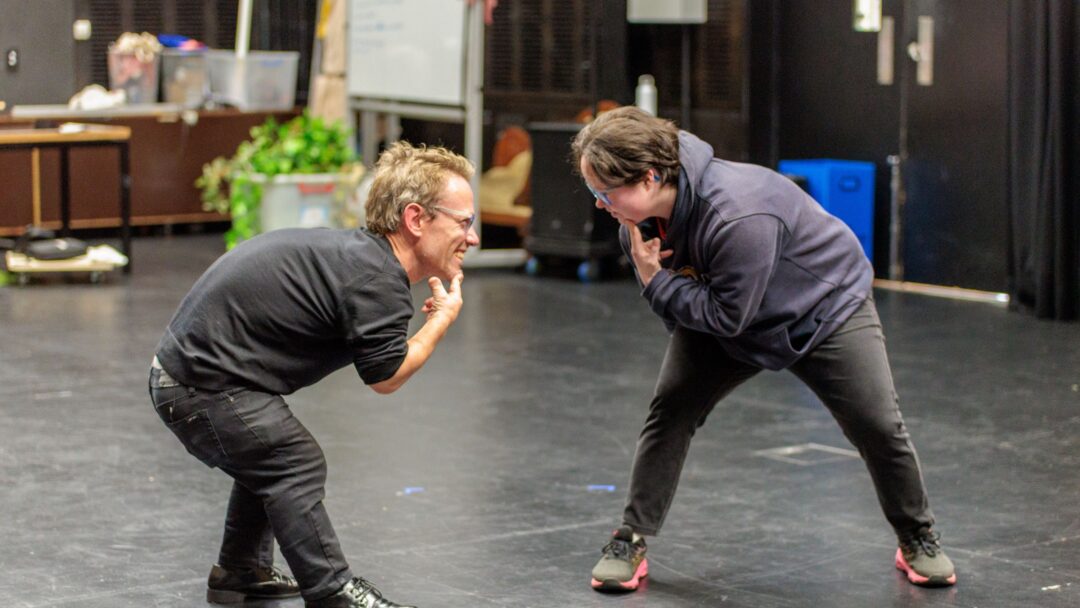
Back to Back Theatre is another avenue of authentic community participation. Boasting a professional ensemble of actors with disabilities, the specialised theatre company encourages performers to showcase their personalities rather than just their disability.
Actor Liam McKenna shares how the creative process has enabled him to build personal confidence, helping him overcome previous barriers to communication and employment.
"I would just not really feel comfortable doing interviews for jobs... it has broadened my horizon and made me feel a lot more confident... with my ability to just…speak with others,” he says.
GK is a multi disciplinary artist, songwriter and a vibrant member of the Back to Back Theatre ensemble. GK has Down Syndrome and brings her full voice and energy to every performance with the assistance of dedicated support workers, enabling her to perform, create music and tour nationally and internationally.
I feel like they've [Back to Back Theatre] definitely given me the space that I need to really express myself. I sometimes find it hard to do that, but also it's the best way I know how.”
GK
Although she acknowledges that having Down Syndrome can present challenges, GK focuses on breaking down social barriers through her art.
“I do feel like that's a barrier itself, but... I don't like getting the way of myself,” she explains.
Paralympic athlete, Kathleen O'Kelly Kennedy, recalls how a childhood camp led by Paralympic mentors helped her come to terms with her limb difference.
“It lit a little spark, because I was watching these Paralympians. They just they seemed to be proud of their disabilities.”
This revelation eventually led her to compete in wheelchair basketball on a global stage, playing in the bronze medal-winning Australia women's national wheelchair basketball team at the 2008 Summer Paralympics in Beijing.
Beyond her athletic achievements, Ms O’Kelly Kennedy is also one of the co-founders of the Red Dust Heelers, an initiative that utilises sport to empower First Nations people with disabilities through education and employment.
If the bar's this low…you don't know that it's possible. And for a lot of people in First Nations communities…if you can't see it, if you haven't seen it, how can you dream about it?
Kathleen O'Kelly Kennedy
“I remember that feeling of when that weight came off me… it's so powerful…just [to] see yourself in life,” she recalls.
It just goes to show that when provided with the right assistance and the tools to thrive, people with disability can fully immerse themselves in all aspects of community life. It is a vivid reminder of how connection, inclusion and tailored support make a real difference.
If you liked this story, you can listen to the full episode of Building Inclusion, a podcast about Australia's Disability Strategy presented by Powered Media, right here.
This podcast by Powerd Media is supported by funding from the Australian Government Department of Health, Disability and Ageing under the Inclusion and Accessibility Fund: Australia's Disability Strategy (ADS) – Community Attitudes grant program.