Article

When cyber security information isn't accessible, staying safe online becomes harder.

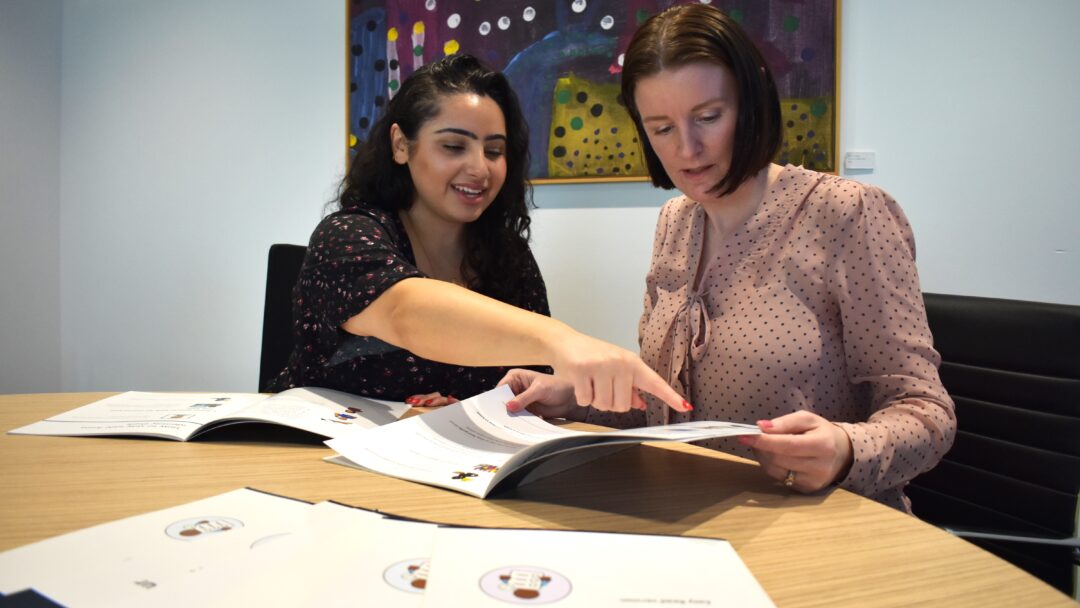
Belinda Hingston (right) discusses Scopes new Easy Read cyber security resources with Ishtar left the Communication Resource Designer who designed them.
Eliza Hull

Oct 9, 2026

For William, navigating the online world is part of everyday life. But understanding some of the information designed to keep people safe online hasn't always been straightforward.
 
William is vision impaired after developing a brain tumour when he was five. He also has lived experience of depression and anxiety and has spent the past seven years working as a consumer tester with Scope's Communication and Inclusion Resource Centre (CIRC).
 
Now, he's helping make cyber security information more accessible for other people with disability.
 
William is one of the people with disability who helped shape a new suite of Easy Read cyber security resources. He tested the information, identified language that was confusing and suggested ways to make complex topics easier to understand.

“I found terms like phishing, passphrases and other cyber security words confusing,” William says.

The need for accessible information is significant.
 
New Australian Bureau of Statistics data shows that 18% of Australians aged 15 and over with disability experienced personal fraud in 2023–24, compared with 13% of people without disability. That's around 1.1 million people with disability. They were also more likely to experience scams, identity theft and online impersonation.
And online harm isn't limited to financial fraud. Research from the eSafety Commissioner found that 79% of Australian adults with disability had experienced at least one negative online experience in the previous 12 months, compared with 70% of adults overall.
 
Yet information about cyber security isn't always available in ways that work for people with different communication, literacy and access needs.
 
That's where Easy Read can make a difference.
 
The new resources cover practical topics including recognising scams and phishing attempts, creating strong passwords, using multi-factor authentication, protecting personal information, identity theft and malware. There is also a communication board to support people who use Augmentative and Alternative Communication (AAC) to talk about cyber security and ask for help.
 
Scope Acting General Manager of CIRC Belinda Hingston says accessibility needs to be part of the conversation about online safety.

“People can't protect themselves from online risks if information isn't accessible and easy to understand,” she says. “Our team of accessible information specialists worked closely with people with disability, cyber security experts and government partners to identify the topics that mattered most and translate complex cyber security information into plain language.”

For William, being involved in the project was particularly important because people with disability weren't simply the audience for the resources. They helped shape them.

“Cyber security is a very hard topic. If something needed more explanation, I'd give that feedback to help make it simpler,” he says.

The experience has also changed the way William approaches his own online safety.

“I feel more knowledgeable about cyber security and more diligent about what to look out for.”

And that's one of the most important things about accessible information: it isn't simply about making something easier to read.
It's about making sure people have the knowledge and confidence to make decisions for themselves and participate safely in everyday life.

“There are so many scams, phishing emails and online risks out there,” William says. “The more informed and empowered we are, the better we can protect ourselves and the people we care about.”

The Easy Read cyber security resources were developed by Scope's Communication and Inclusion Resource Centre with the Australian Government's Cyber Security Awareness Support for Vulnerable Groups program. For more information