News
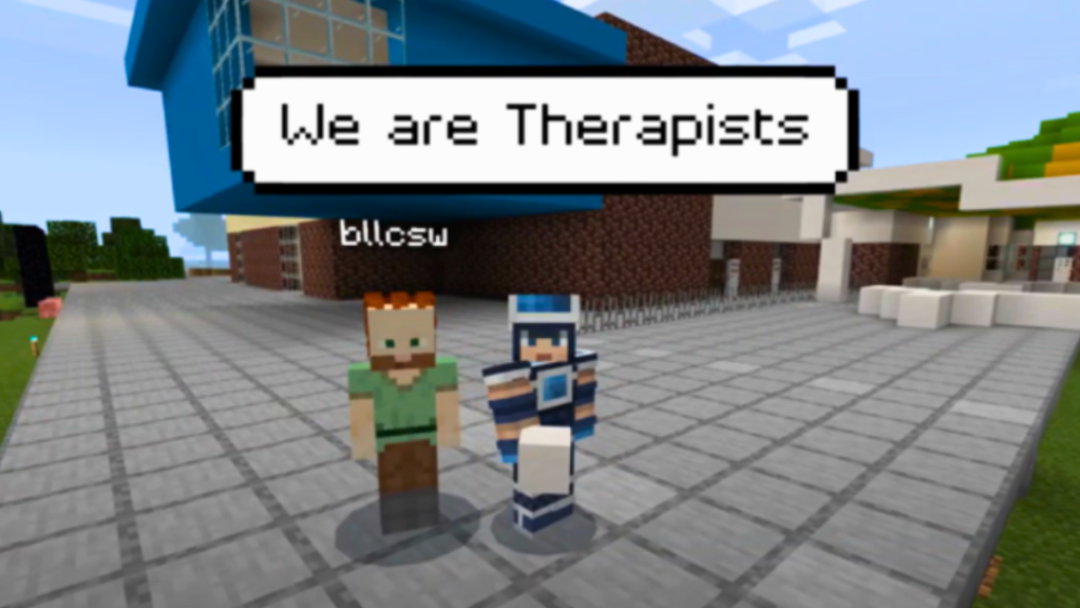
Minecraft therapy follows the approach of play therapy, which is nearly 100 years old. Photo: Courtesy of WellPower
Family and child therapist Braulio Rivera has long worked with kids from ages 6 to 18 struggling with everything from bullying to depression. Before the pandemic, he was able to create a strong bond with his young patients in play therapy – they’d sprawl on the floor playing with Lego blocks and figurines while telling him about what was going on in their lives.
This kind of play therapy was rewarding and successful. But in March 2020, the Covid-19 pandemic lockdown was declared, and his in-person counseling work shut down overnight.
“It was so jarring,“ recalls Rivera, a licensed professional counselor at WellPower, Colorado’s largest provider of community mental health services. He and other therapists at WellPower rushed to set up virtual sessions, but he worried that he and his young patients would be unable to truly connect on Zoom.
Indeed, Rivera was immediately struck by how much harder it was for his young patients to open up on a screen, especially in group therapy. Like other therapists across the country, he found that without an in-person connection, many of his young clients become withdrawn, squirming in their seats, turning off the webcam or muttering “everything’s fine” to questions about how things were going. It was discouraging.
But not long afterwards, he was on a Zoom call with an 11-year-old client who had sought solace in Minecraft, a video game that allows players to explore and build virtual 3D worlds. The boy invited him to a Minecraft session and soon began talking about how lonely he was. It was an epiphany, and Rivera began developing a Minecraft world for group therapy sessions within the game.
The idea was an immediate hit. Minecraft therapy quickly became enormously popular with his patients and with other kids and teens in the clinic’s online therapy program, Rivera says, with the young patients literally counting the days until their next session.
Minecraft itself is a cultural phenomenon: It has sold more than 300 million copies around the world and has more than 200 million users, including 62 million monthly users, according to The Business of Apps. Fifty-three percent of kids 6 to 8 and 68% of kids 9 to 12 play the game. A Minecraft Movie is so far the most popular release of 2025, grossing nearly $424 million by September 2025 and surpassing Superman in box office sales.
Exploring Minecraft’s potential as a therapeutic tool, Rivera notes, follows a guiding principle in mental health – to “meet people where they are.” Play therapy is nearly 100 years old, but the idea of incorporating video games into therapy has bubbled up over the last 15 years.
In 2011, Mike Langlois, a gamer and therapist in Massachusetts, wrote Reset: Video Games and Psychotherapy, to help clinicians understand the power of gaming culture and its potential for therapeutic use. And since the pandemic, WellPower and other clinics rolling out Minecraft therapy have found that tapping video games to assist in healing is one of the most exciting innovations in child therapy today.
“The people most enthusiastic about Minecraft therapy are exactly who therapists struggle to reach – pre-adolescent boys,” Rivera says. “Typically, this age group is the least engaged, the least open with feelings and the most likely to miss appointments. But they never miss a Minecraft session and are among the most animated and engaged. Minecraft allows us to see a side of them that can be difficult to access in traditional therapy.”
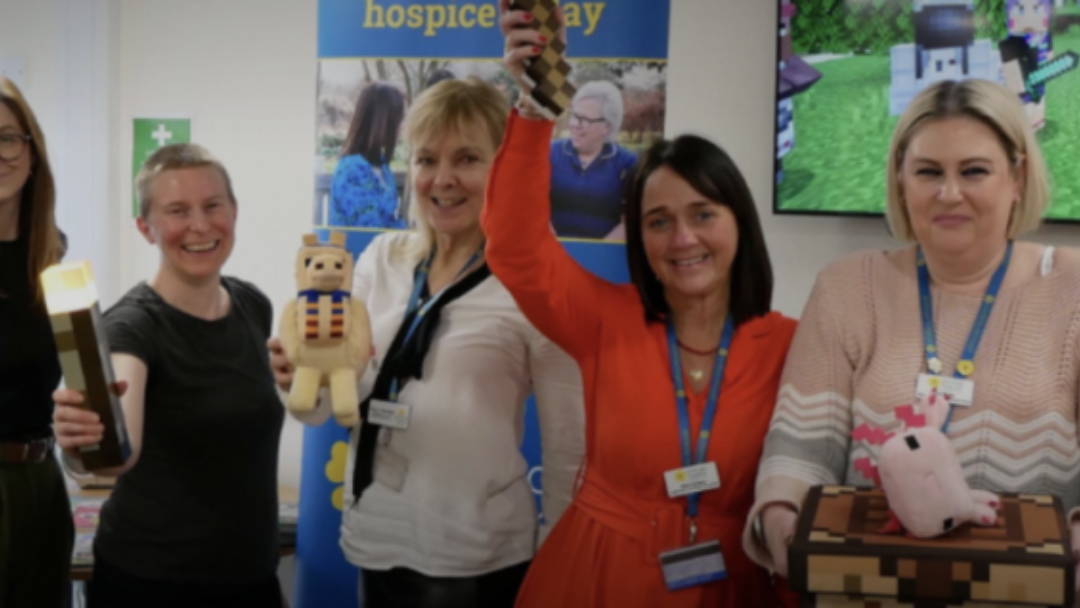
Minecraft therapy in the UK during the pandemic
Rivera didn’t know it when he led his first Minecraft session in March 2020, but across the ocean in the UK, counselor and social worker Ellie Finch was beginning to do Minecraft therapy as well.
Like Rivera, Finch was finding it difficult to use her most trusted tools online, including avatars and play therapy.
This crystallized for her when she took out a tray of jewel-like stones in different colors, which she’d long used with children to give them a way to represent themselves and family members – “a great way to get to know a client and their relationships,” as she put it. But it didn’t translate well over Zoom, she explained in an essay on Minecraft therapy for the British Association for Counseling and Psychotherapy (BACP). In one frustrating interaction, a 13-year-old patient was trying vainly to direct her to a certain stone:
“The second one from the end.”
I moved my finger toward the stone I think she means.
“No, the other end.”
“The purple one?” I ask.
“No, the white one.”
“This white one?” I ask, a bit desperately now.
“No, this is rubbish! I don’t want to do this!”
“Ok.” I put the tray down.
But this discomfort opened the door to a new approach. She had done her MA thesis on how to engage children in online therapy and was familiar with Langlois’s book on gaming’s potential for healing, Finch told MindSite News in an interview. She’d played Minecraft with her own nieces and nephews when the game came out and knew how popular it was with her young clients. “I longed to play the games with them so we could interact and go on adventures together,” she recalled, and decided to revisit her idea of using online games to do counseling.
She was pleased to learn that Minecraft had taken steps to protect children and teen’s privacy online, releasing a special license so that non-educators could access a safe and secure platform. It gave her peace of mind, she said, that the children she worked with couldn’t be pulled away to other servers or approached by strangers online during their sessions.
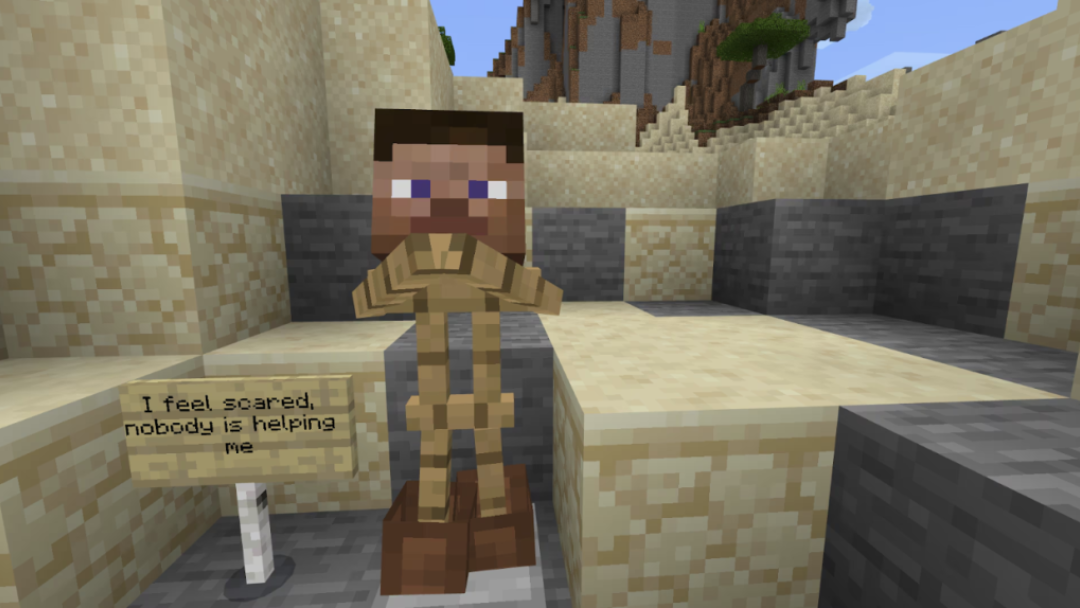
She began by developing a Minecraft world that featured an island. “That world has a lot of freedom – you can suggest activities but the session can also be child-led. That can happen in a sand tray world I’ve made, but also in any world on Minecraft. I do recommend people use an island because it is a safe space with boundaries.”
After creating a peer supervision group with therapists from the UK and the US, Finch had her first Minecraft therapy session, one with a 14-year-old boy she calls “Robert,” who agreed to play Minecraft with her. Robert was “keen to use the sessions to create a memorial” for his sister who had recently died, she wrote in her BACP story:
“I’ve created a world just for Robert: an island with enough features – a village, a ravine and caves – for it to be interesting, but not so big that it feels boundary-less. It’s Robert’s world and only he and I have access to it.
“I ask Robert to find a tree on the island and choose a block from his inventory to represent himself. I say, ‘It’s like making a family tree for you and the people closest to you.’ He instantly gets this idea and starts skimming through his inventory for a block. He selects one and holds it in his hand as he flies high over the island in search of the right kind of tree. ‘Come on,’ he shouts excitedly … and I (as my Minecraft character) follow him as he flies about, scanning the landscape. ‘Here!’ he shouts, as he lands on the biggest tree on the island, with lush green blocks representing its leaves. He places a block at the very top centre of the tree. It’s black with purple specks and it appears to be dripping purple drops. I ask him about the block. He says, ‘This is Crying Obsidian, it’s strong, but it’s crying. I think it’s sad like me, but it won’t be destroyed.’
Finch asks Robert if he’d like to choose a block to represent someone else, and after finding one for his mother – a block of transparent glass “because I always know what she is thinking, what she is feeling” – he searches for a block to represent the sister he lost. After carefully lowering her block into a tree, Robert told Finch: ‘It’s a cake. She really loved cake and it was her birthday a few days before she died.’ He then makes his own character invisible for a few moments. After discussing his need to not to be seen for a while, she recounts:
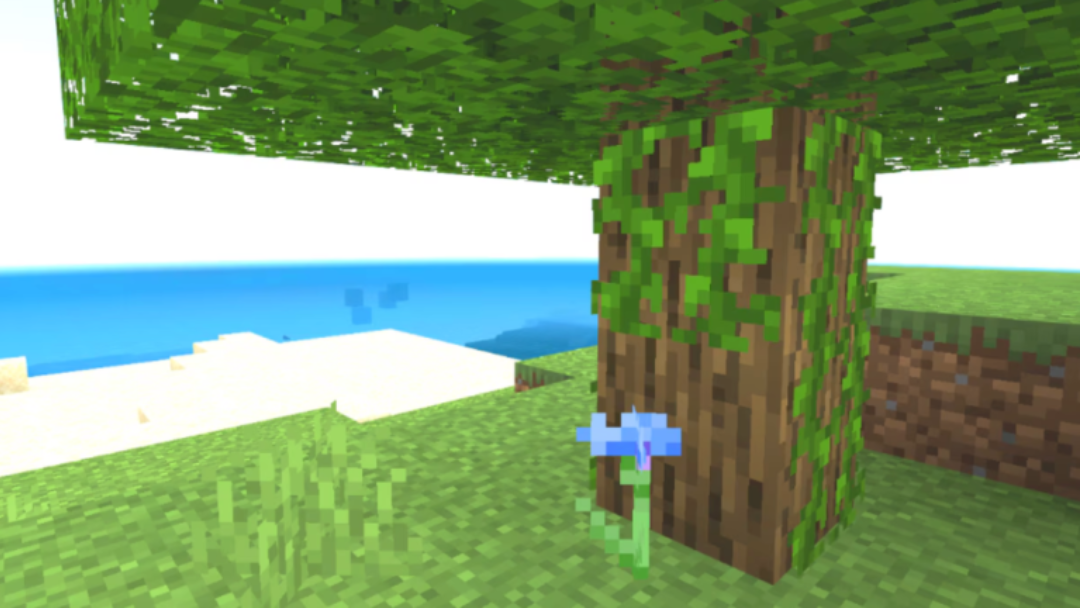
“At the end of the session, Robert comes back to the tree where he placed the block to represent his sister. I say, ‘I wonder if it was hard for you to put a block here for her?’ He’s quiet as he searches for a while in his inventory and finds a flower, which he places on the ground by the tree, and says, ‘Yes, but I’m happy I found a place for her. I’ll make it nice for her here.’”
As news of her innovative therapy spread, Finch found herself deluged with parents seeking her services. “I realized I was not going to be able to meet that need on my own,” she told MindSite News.
In July, she started a training program, Playmode Academy, to teach other therapists how to use the game for therapy and to make mental health support “more engaging, inclusive, and accessible” – especially for children and teens who may find conventional services harder to connect with.
“I want practitioners to know you don’t need to be a gamer to do this,” Finch says. “My joy is to train up people who have never played. A lot of my students are practitioners who go from absolutely never having touched the game to realizing that they can do it, and they can really engage young people in these games. My classes are just giving them the confidence to go and work in this way.”
From intense loneliness to reconnection through Minecraft therapy
Back in Denver, therapist Braulio Rivera was also taking cues from his patients in the pandemic.
In a strained online session with the 11-year-old he had had such a good, easy rapport with in his in-person sessions, the invitation to join him in playing Minecraft was too good to pass up. The boy, bored and distracted during the Zoom session, looked at the camera and said, “Hey, do you want to join my world?”
Rivera was elated – momentarily. “As a therapist, that’s the ultimate compliment – “‘Join my world.’ I thought for a second there he was like, ‘Hey, do you want to know my inner workings? I feel safe now.’ But no, that’s not what he meant. ‘My world’ is a default ‘save’ setting on Minecraft, meaning a world the user has created. So ‘join my world’ translates to ‘I’m bored – do you want to play Minecraft with me?’ What he meant was, ‘Do you want to join my Minecraft world?’”
Rivera did.
He was struck by how closely Minecraft online seemed modeled on Lego blocks and figurines used in play therapy. He began by creating an avatar – a skateboard – with a little help from his young client, a skateboard enthusiast, who promptly began selling him skateboards, all the while sharing his anguish. “The whole time he was talking about he wishes he had friends and he wishes he could talk to people, and that it is really hard that things are the way they are.”
The people most enthusiastic about Minecraft therapy are exactly who therapists struggle to reach – pre-adolescent boys. Typically, this age group is the least engaged and the most likely to miss appointments. But they never miss a Minecraft session
Braulio Rivera, family and child therapist
At the time, he recalls, “all the kids were saying the same thing: ‘I miss my friends. I miss being able to go outside. I even miss going to school’ – and for 10-year-olds, that really says something.”
Rivera enlisted his 7-year-old daughter to teach him how to play Minecraft. Then he had an idea: He found blueprints online of the building that houses the mental health agency where he works and together they built a replica of it. ”It was beautiful, and 70% of the effort was from her,” he reports proudly.
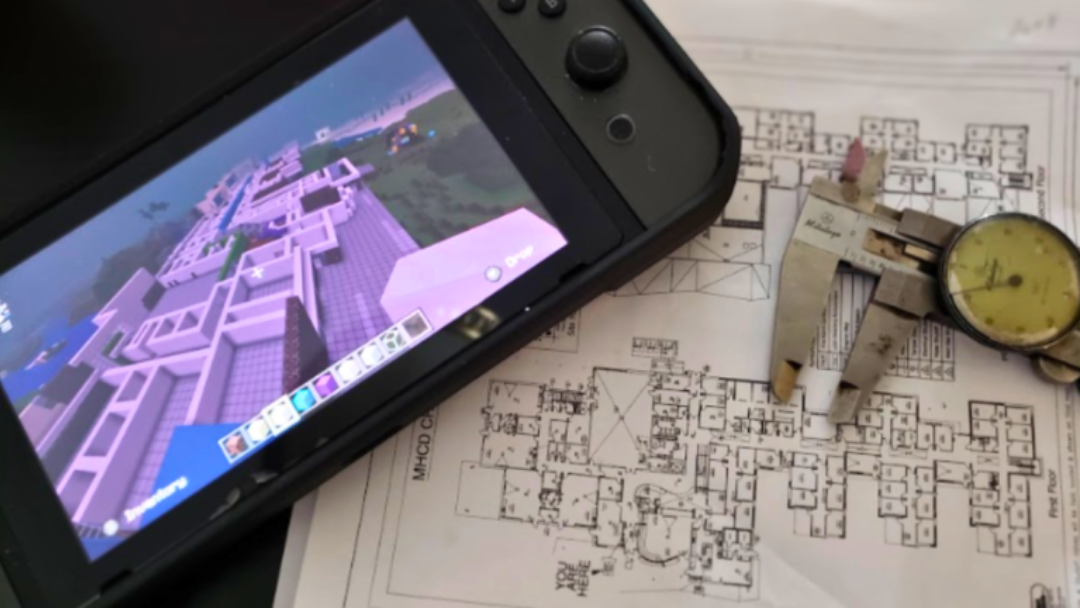
This virtual world opened up new possibilities. “ Now my patient could go out on his skateboard and come visit me,” he recalls. “My avatar, Braulio, would come out and say “Hey, how’s it going?’ and my patient would be like, ‘Hey!’ and we’d go down the hall to my office – in the accurate location – and we would hang out in my office just like we used to do a few months ago.”
After he showed it to his supervisors and eventually got the go-ahead, he and the clinic invited the community to build out the Minecraft world further. Each of the paths in the virtual neighborhood was built by a different child showing what their safe space would look like during the early days of the pandemic.
“You can see a lot of variety and really unique, beautiful builds,” he said. “Some are made out of diamonds and they’re just really cool. Some have religious figures, where (the kids) are drawing their strengths from at the time.”
“I’m a big believer that community heals,” he added. “If you are a part of the community, the community will provide and the community will heal.”
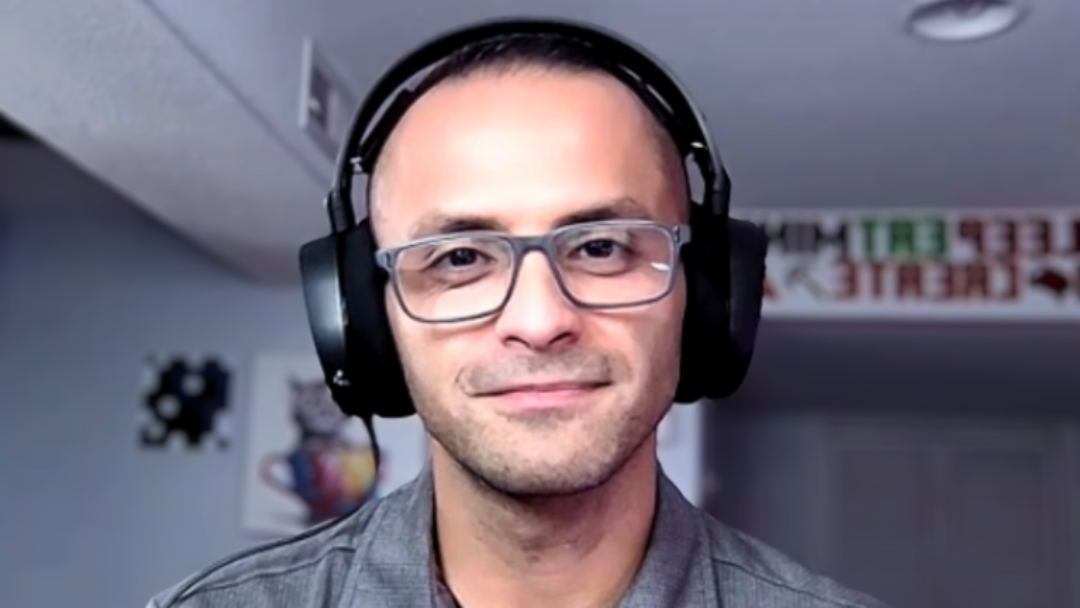
Rivera and Finch have occasionally tapped into other online games, including Roblox, VR (virtual reality) and Animal Crossing, but say Minecraft has significant advantages. . “Minecraft is accessible, it’s secure, and you can manage how the data goes from one place to another,” says Rivera, who noted another big advantage: “Kids come pretrained on Minecraft.”
Rivera was thrilled when the kids in his Zoom group built a secret bunker under the virtual mental health center as a gathering place. “I could see them talking in a sort of code, saying ‘I’m digging down here,’ ‘go deeper,’” he recalls. He could access the tunnel, but as a therapist he didn’t want to get in the way of the kids working together on their own. “With all the emphasis on social distancing and safety during the pandemic, I think kids had an inherent need to connect with each other, to bump elbows, to turn ‘mine’ into ‘ours.’ And I think the kids creating a safe place together on their own just flavored the water with some healing.”
“Building authentic relationships and social confidence”
A number of studies have backed the idea that Minecraft is a valuable therapeutic tool for healing.
A 2025 study in the Journal of Family Therapy found that an 11-year-old with autism spectrum disorder and a history of abuse had a significant improvement in symptoms of depression after sessions of Minecraft therapy, and that his father benefitted as well. A 2023 study on neurodivergent youth published on F1000 Research found the game could be leveraged “to build authentic relationships and social confidence in an engaging, low-stakes environment with peers,” adding that the game’s environment encourages interaction on multiple levels.
Still another study found that “unlike other games, Minecraft may be used to actively promote socialization. In addition, researchers studying autism and Minecraft communities have found benefits for users with autism spectrum disorder, along with studies that have found both exercise and Minecraft and Lego games have led to a decrease in anxiety among youth with autism (and in the case of Minecraft, to the widespread use of the celebratory term “aut-some!”).
A few studies have raised concerns that violence in video games themselves, including Minecraft, increases children’s dangerous behavior around firearms. But researchers in another study concluded that “because Minecraft activities take place in a virtual world, the biggest risk to players (in a therapy setting) is within social/emotional experiences, such as being a target for bullying or feelings of being excluded or marginalized.” For this reason – and because Minecraft has virtual TNT and explosive creatures that can allow participants “to quickly destroy the creations of their peers” – the researchers cautioned that facilitators should be trained in technical interventions, such as turning off virtual player damage and “undoing” in-game player actions if necessary.
Finch and Rivera agree that it’s important to take precautions.
“Minecraft has a lot of settings that you can adjust to ensure you can minimize things like ‘griefing,’ where players damage each others builds,” Finch says. She notes that Minecraft Education also has an app called Classroom Mode that practitioners can use to monitor a group and disable the chat feature.
Rivera says the concern about violence “is something we address proactively and on multiple levels.”
“Technically, all player-vs-player combat is disabled in our secure environments,” Rivera says. “But we take it a step further from a therapeutic standpoint: Our group rules prohibit harming any humanoid characters, even those not controlled by real people. This isn’t just a safety measure; it becomes a foundation for powerful clinical conversations about empathy, the consequences of actions, and why we establish boundaries that prevent harm to ourselves and others.”
Celebrating new beginnings
Minecraft therapy is gaining traction in other countries as well. Finch has trainees from Europe, the U.S., Australia, Asia and Africa, and her YouTube video, “Therapeutic Adventures in Minecraft,” reaches many more. “It’s definitely catching the imagination of people who are working with young people across the world,” she says.
She is also compiling case studies that underscore the value of her trainings. In one, she recounts how employees of a charity called Children Heard and Seen (ChaS) which serves British children whose parents are incarcerated, took her class on Minecraft as a therapeutic tool. ChaS chief operating officer Leanne Manning describes its impact on the children:
“Minecraft isn’t just a game (for them) – it’s a lifeline,” Manning wrote. “For children with a parent in prison, it creates a safe space to connect, express, and belong.” Noting that traditional support isn’t always effective, she adds: “Through something they love, we break isolation, build friendships, and support healing.”
Ukrainian psychologist Oleksii Sukhorukov reached out to Finch to learn more about using Minecraft for children with war trauma and created a Minecraft therapy called WonderWorld for Ukrainian refugee children in Germany. “Now,” he says, “the homelands of many Ukrainians…only exist in Minecraft.”
In Australia, the game is used for neurodivergent children within a Minecraft creation called Legend Land. French therapists are using it to treat children on the autism spectrum. And in addition to support for therapy, Minecraft has developed a special center for social and emotional learning for teachers.
Meanwhile, at WellPower, therapists now host Minecraft therapy groups daily due to the high demand, including a Building Connections group and groups for elementary school students, Latinos, neurodivergent kids, LGBTQ+ kids and more. Many of the kids have fewer resources than those in more affluent communities, “so we’re actively working to bring these powerful tools to them,” said Rivera, who says the Minecraft program is seeing rapid growth among ages 7 to 13 as well as teenagers. They’ve recently built a courthouse and a city hall, creating laws, rules, and a process for solving things together. They’ve also had “really beautiful” graduations, replete with speeches and fireworks, he added.
On Fridays and Tuesdays at 5 pm, Rivera and another WellPower therapist offer group therapy for eight kids. Some had never been part of a community, and some were in groups that experienced prejudice, such as LBGTQ+ teens. Minecraft therapy, he said, showed them a path forward. Many of the kids in the groups became close and some eventually left because they joined a soccer team or an afterschool club. Their families would apologize that they were too busy to return, but Rivera was thrilled by the news every time. “It’s always a big celebration for me,” he said. “It’s like, ‘That’s fantastic. That’s exactly how we want to end.’”
This story was produced by MindSite News, an independent, nonprofit journalism site focused on mental health. Get a roundup of mental health news in your in-box by signing up for the MindSite News Daily newsletter here.