Anthea:
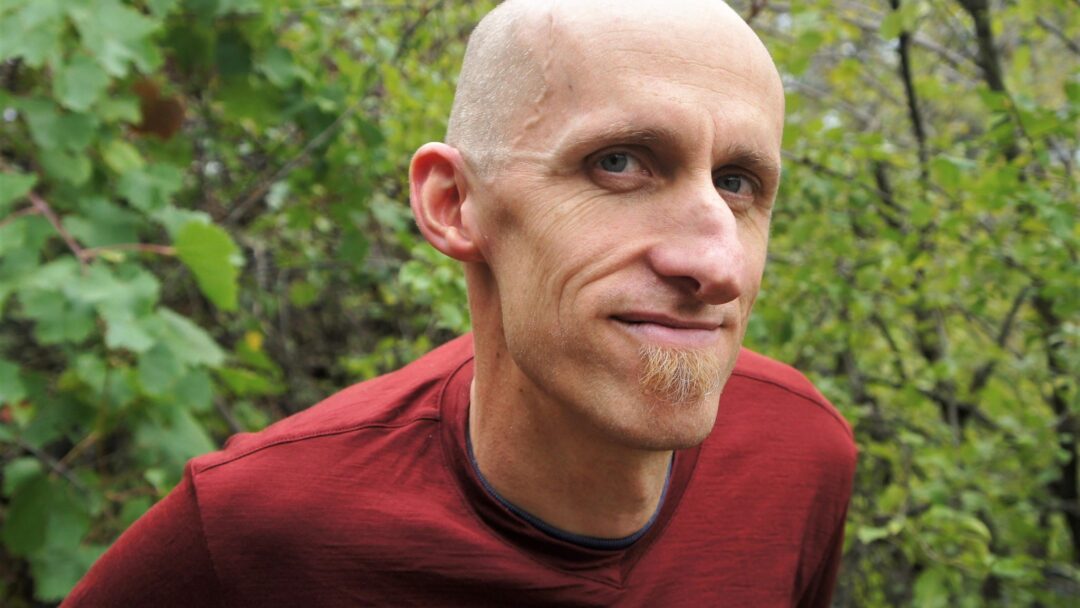
Welcome to Sideshow on 2RPH. This is Anthea Williams. Today, I'm thrilled to be joined by Bree Hadley and Eddie Paterson, two of the researchers and academics behind the Disability Arts History Australia website. The website documents the transformative impacts of arts, arts organizations, and allies working in the disability arts from the 1970s to now. It documents activism, arts practice, and access. Bree Hadley is a professor of drama at QUT. She's an internationally recognized authority on diversity, inclusion, and access in the arts and arts education. She's a writer, dramaturge and director with a special interest in creative access and integration. Eddie Paterson is an associate professor at the University of Melbourne. He specializes in script writing, contemporary performance, and games. He's currently researching the evolution of disability arts in Australia. Eddie, Bree, thank you so much for joining us.
Bree:
Thank you for having us.
Eddie:
Yeah, thank you, Anthea. It's wonderful to be here.
Anthea:
So the website is phenomenal. Bree, can you tell us a little bit about where the idea for it came from?
Bree:
Um, so we wrote the application to seek funding for this, uh, during 2020 in the pandemic year. And I think it's, um, come from a lot of conversations before that, um, and probably for years and years before that with a lot of people at a lot of different events, um, uh, attending the- the- there used to be a thing called Meeting Place, um, and also Arts Activated that would bring the sector together, as well as in foyers and spaces and places, um, academic conferences talking about, uh, the longer you work in disability arts, the more you meet people who are doing fabulous work who are not necessarily known. And I think that feeling of partly wanting to build on work that people have done, artists and allies for a long, long time, partly wanting to not always be reinventing the wheel when you know that people have done work and partly wanting to ... We have seen progress over the last 50 years. We certainly have, but at the same time, we've certainly also seen cycling back to things that people have put effort in to try and do it.
There's been little bits of progress, but at the same time, it's been, uh, dwindled away in some way. And the, the momentum has fallen out of it and new people have come along and not even, not even known necessarily or been able to recapture what has happened in the past. So wanted to bring all that together to recognize the work of people who've worked for so many years to try and make things happen, often underrecognized and underfunded, but also use that as a, um, a resource. So it's not just anecdote, but there's actually some strong foundation to say, look, this is what we've tried. This is what we know works. This is what we know doesn't work to advocate for the future. Eddie, what do you, what do you reckon? What have I forgot to say about our motivations?
Eddie:
Oh no, absolutely, Bree. I think just that emphasis. With a big project like this, often you see the, the headline names, like they've created the idea. But Bree's absolutely right, that this is part of a series of conversations stretching back 10, 20, perhaps more. Um, and it's conversations with the community about how, uh, disability arts history is, is kind of represented in Australia and how visible it is. And I remember distinctly for me, the origin story goes back to a meeting with artists in, I think, 2015 around what do you want from the sector? What do you want for your work? Um, and one of the big things to come out of that gathering was we'd love our history to be visible so we can access it in the ways that we want. So those community-led, community discussions, you know, informal chats as well as formal ones, they're at the foundation of this project.
Anthea:
Yeah, fantastic. And there's an absolutely huge steering committee that's been part of this website. How did you go about recruiting those people to be involved and, and how did that access and that, um, those conversations take place?
Bree:
So if you were talking in the world of universities that we both work in, we would call it snowball, um, in the sense of, uh, I ask one person if they're interested to do it, and then they tell me another person, and then that person tells me two or three names, and then those two or three names tell me ... they each tell me two or three more names and it kind of rolls along, and it depends who's interested and available and has capacity. And so each time, it expands out in the network and you get two or three more names and each of them gives you two or three more and two or three more, it gets to be a bigger and bigger network. Um, and so we did that with the research team that started with myself and Eddie and our collaborators, Janice and Katie.
And then, we got names of people who would be able to assist us in the direct research team. We got names of people who'd be on a steering committee that met quarterly to inform the project, uh, names of people to be part of interviews and co-design workshops and user testing, and it just became a bigger and bigger group. The other thing that was important from the start was setting it up that people could come in and out of the project because of the nature of the community. There can be periods of like weeks, months, years where you don't have the capacity, and we didn't want it to be that people were like, oh, I don't have capacity now, so I have to like draw a firm ending of being with the thing that you can pull out for weeks or months or years and come back into it as well.
Anthea:
That's fantastic. Eddie, what were you gonna add to that?
Eddie:
Oh, I think it's, it's lovely also because this project is truly a national project. So Katie and Janice that, uh, Bree mentioned, our collaborators. Katie's from WA, uh, Janice working at QUT, but now in, based in New South Wales. And we also were really lucky on this project to have partnerships with Creative Australia and Arts Access Victoria. So that also brings different people, um, interview for things like steering committee and also the workshops and, and those other kinds of engagements and collaborations that we would form across the, the project. And so we're snow, it's a snowball, absolutely. Lots of people are contributing to this snowball, and that's very exciting at the start of the project and really throughout because, um, as Bree mentioned, you know, people are coming in and out of the project, they bring different expertise and lived experience at different points, um, and that can reshape and shape the thinking as we, as we kind of move forward, so it's quite a dynamic process.
Anthea:
Fantastic. What do you think you learned about the overall evolution of disability arts practice over these 50 years in Australia? If, if there is a trend, do you think that you could articulate that for us?
Bree:
I think we learned lots of things. And there are, um, people s- have sort of said, "What's your favorite thing?" And stuff like that. It's like, "Oh, that's hard." People have been working for a long time, so there are definitely people who've been working for decades to make things happen, and it is their labor that brings us to where we are today. And I'm not sure all of those people are known and recognized in the way that they should be. I think the intersectionality was, uh, our attention was repeatedly drawn to the intersectionality of, um, people in our community and to the interdisciplinary nature of the work. Um, we had long debates about finding more in some art forms than in others, and was that just how records are recorded? Was that just a bias or lean 'cause we come from one art form or another?
And in the end, coming to some industry formations being more welcome to us at earlier stages. Um, so film, for example, operates in a completely different kind of industrial formation in some ways in a TV studio as compared to being a creative writer and things like that, and how that has made a difference, so that the support for us to be there and do that may be more recent in the evolution. I think the, the largest thing would be the, the sheer volume of people involved, and a few people made the comment that it's good to have more of a diversity discourse now. We're not sure we're always visible in that diversity discourse, and we're not sure that people realize the depth and breadth of work that has occurred.
Anthea:
Mm, I'm sure that's the case. Yeah, absolutely. And can you tell me a little bit about how you prioritized access in terms of the website? Because I noticed a lot of things available on the website that I don't often see.
Bree:
Building a website was a tricky thing.
Anthea:
(laughs)
Bree:
Um, uh, and I, I ... we've got a line on there that, um, finding the records was tricky, building a website was tricky. We decided it was better to start and do something than to do nothing at all. We have used a platform called Amica that was recommended. The Amica platform is a community-based one, and, um, we used it because we didn't wanna build a bespoke website because then you have to have money to keep updating it, maintaining it. We have people who in a, in a collaborative team know how to do that. Eddie and I are not that person.
Anthea:
(laughs)
Bree:
But, you know, I mean, like, every time there's new software, you have to update it. So having something that's not bespoke, um, helps with that. And it also means the data can be more easily, um, transferred into other databases and websites. Uh, so that was one part of decision making. Um, we wanted it to be screen readable, um, and we wanted it to be large font and to meet some of these accessibility requirements.
The largest issue we had was the old historical stuff from the 1970s is old Courier font on colored paper that you used to photocopy it, which I'm of an age that I remember when that was the done thing. Uh, and so that wasn't the most accessible of modalities at the time. Um, and so we've put alt tags describing and summarizing what's in each of those documents, but some of them are still flat into ... Uh, many of them will read aloud through the Adobe Read Aloud. Um, but that was the most challenging part, I think. Um, so we've got easy read summaries of reports and audio versions of reports and things like that. Um, but the biggest challenge was the old historical documents that are pictures and photocopies of things going back to, you know, a 1989 conference called Creatability that's ... we've got literally the actual text people were speaking at that time, which we wanna keep, and I think that one actually does screen read, but some of those ones don't.
Anthea:
Hmm. I noticed you also have a lot of, um, or you have a lot of ways that you can have documents read to you throughout the-
Bree:
Mm.
Anthea:
... website, even if you don't actually have that screen reader software yourself, which is fantastic.
Bree:
Um. Yeah. And we also put in, um, filters. So the software itself, you can go in and do an advanced search where you have to pick out, like, 15 different things that you wanted to search on. And, um, we think there will be ac- ... So there, there's quite a lot of people who are writing PhDs and masters on disability arts now, that's definitely increased. But some of our audiences, we think, will not want to do that. They just wanna press like screen or they just ... Um, a colleague of mine looked into it the other day and went in and press screen 'cause that's the area. Um, so we've put filters on it as well that people can press to just look for, um, uh, artists with physical disability or just look for music, for example, to try and filter it without having to go through too many of those technical steps, um, 'cause that was part of the request as well.
Anthea:
Yeah, I loved looking at the timeline. I thought that was so fantastic. You ... were you just about to say that, Eddie?
Eddie:
Oh, yeah. The timeline is, is one of the things that continually delights me about the website. And funnily enough, it wasn't something we set out to do from the beginning. It wasn't an initial part of our discussions. I think over the first year, I, I'm not sure that we ever really talked about a timeline of events and, and, and kind of, uh, huge, uh, sort of policies or government or social movements or individuals and their, their kind of art form or exhibitions that are coming to the fore at certain moments. But for me and how my brain works, I really appreciate having a timeline that stretches from the '70s. And it speaks back to your question around, you know, what's ... how do you, how do we trace the evolution and, and really how do we see the legacy of different artists and different organizations and all of this incredible richness of work and diversity of, of work that's, that's gone back, um, many, many decades.
And I think part of the project is really recognizing and taking pride in that legacy and sort of saying, "Oh, well ..." And the timeline is for me, a really wonderful way of visualizing that. And you can kind of go back and go, wow, this was amazing, that this was happening at the same time as a company was forming, at the same time as this incredible conference was happening. And you start to make connections, um, across art forms and across the country as well, uh, reaching back to the history. So I just love that.
And I think also just speaking about access and, um, and, you know, that it's often lovely to see obviously the website and the online archive as the culmination and, and access is, is, is clearly one of the things that we thought about a great deal, but the project itself was a collaborative project whole way. So really, the team is thinking about access and thinking about, um, in terms of who we speak to, who's kind of gathered, who we can kind of collaborate with. And so a big part of the project and a big part of talking about access for the archive and what the archive might be were a series of co-design workshops that took place across the project. And so in consultation with the steering committee, in consultation with state, um, based organizations and companies, um, we gathered together artists from different art forms.
It was meant to be, um, initially before COVID, we were gonna travel around the country and speak to people, uh, but COVID meant we reshaped the workshops a little bit. But those co-design workshops, like the one that we had in Victoria, were incredibly valuable because it spoke to how, uh, how did folks experience websites? What sort of access did they really want? Uh, in particular, how could we kind of temper our more perhaps scholarly incl- inclinations and that kind of really, really inaccessible academic language?
Anthea:
Hmm.
Eddie:
How could we kind of make things really open and inclusive for folks? Um, and as part of that, what we did was, um, actually looked at a number of international examples. So of course, Britain has really wonderful, uh, disability arts, uh, history, um, archive, if folks have, have kind of seen that perhaps in the past, really well worth looking at. The U.S. has some great examples, Canada, et cetera. Um, and so we actually laid out these examples and in the workshops, we actually played with them and said, "Oh, what, what works really well with, with this example? Um, what works really well with this example?" And we were able to cherry-pick a little bit, um, some of those kind of, uh, themes and the ways that the websites were set out, but also some of the accessibility layers that, um, that these other archives had.
Anthea:
That's fantastic. Uh, look, I have to say, I'm so excited to be talking to two people who are experts on access and creative access and how access is being integrated into artworks. I'd love to hear from the history, I'm gonna ask you both this question in terms of the past and in terms of what's happening now, but what were some really exciting examples of access that you store historically?
Bree:
So I'm gonna say it was both exciting and also, mm, we have a note on the website about upsetting content-
Anthea:
Mm.
Bree:
... and it's a little bit upsetting to go back and look at, um, Arts Access Victoria, Accessible Arts in New South Wales, Access Arts here in Queensland, and look at them putting out guidelines in the 1980s and '90s that could still be highly useful to people's access needs today. Um, so they have things that, for example, there's one early '90s from Access Arts that's a guideline for people working that has at the end, like some basic Auslan signs. And if I jump forward and there's a whole era in which Aus- Australian Elizabethan Theatre Trust was supporting Theatre of the Deaf and some of the staff there were doing things like Auslan lessons in their lunchtimes. You jump forward to our interviews now today and you've got experts saying, "Look, deaf-led practice, that is the thing that we need in order to be really successful. We don't have it. Um, we need to build it."
Uh, and so it's kind of like we've got findings coming forward where people want intergenerational, um, leadership, mentorship, guidance, teaching to take the skills that people have learned through these long histories of practice, teach them to new generations, teach them to the field more broadly to build these inclusive culturally safe spaces, culturally safe for deaf and disabled and neurodivergent people, that you can see these practices built up over years, um, often through ensembles like, um, 2D arts in South Australia, Restless Dance, we, that have been training grounds where artists haven't been able to go to universities, but they've got training there. You can see that it's happened in the past, but it's been going on so long, you feel like, well, why haven't we had the opportunity to build that in more broadly to the sector today?
Anthea:
Yeah. Yeah.
Bree:
But then you can turn around positively and think, well, now we've got these findings where artists are like, we need disability-led practice. We need intergenerational exchange and hubs where we can share this with each other as findings coming out of this that people can use it as a platform to take their power and argue for that.
Anthea:
Yeah. And what about you, Eddie? Did you find anything in the past that you thought we've gotta bring that back or, um, any companies that you found were doing something really radical that you wish that we were still doing now?
Eddie:
I, I'm similar to Bree in the sense that in actual fact, a lot of the really groundbreaking access considerations were happening a long time ago. Um, and I think what the archive points to, and you asked about the, uh, the evolution, I think what the archive points to is that things over history, things sort of dip away and they kind of, and all of a sudden, we lose some of that sense of, of continuity with our history, and then they come back and we realize, oh, actually, you know, what we were doing 10 years ago was really valid and really important and we actually were, we were nailing it, we were nailing the access there.
And Bree talked about that lovely document where, um, folks were, were meeting in their lunchtime to learn Auslan. And I just think, well, that's a fantastic innovation. It's not mainstream within companies now, but, you know, imagine if it was. It would be a great, a wonderful thing to bring back to not just disability arts institutions, but institutions and organizations more broadly. So I think, you know, it's, it's not necessarily about identifying those early innovations as recognizing that they already existed without our community, um, and, and trying to look at ways of, of kind of supporting similar innovations now.
Anthea:
And what are you-
Eddie:
I think one of the things that's ... Oh, sorry to interrupt. Um, uh-
Anthea:
No, I was just gonna say, what are you excited about going forward?
Eddie:
I think for me, it's the movement which you can see quite clearly within the timeline and within the archive and also within the interviews. So on the, on the archive, we managed to also interview a number of contemporary artists and allies about their own thoughts around disability arts and it, and it's changing nature over time and, and their experiences, um, and how that led into either their changing, the changing of their arts practice or various movements and, and, uh, and reflections on how things have changed in the history.
And one of the things that I really notice and have noticed for a long time is just this increasing attention to, uh, not just disability-led artworks and companies and art formations, but a real attempt and engagement within the community to support and kind of nurture, um, artists and, and offer kind of mentoring that, as Bree mentioned, is a kind, is, is in a kind of safe cultural space. So disability-only spaces, disability-led production, and then what that leads to is disability-led organizations and companies. And I think that's something that we can really see, uh, particularly happening across the last, say, 20 to, to, to the last decade, and that's very exciting for me.
Anthea:
That's fantastic. And Bree, what are you excited about for the future, or what do you think, uh, the next steps we need to promote in the community are?
Bree:
I think one thing that's changed and changing is ... And, and one thing I learned going through this process as someone who's read a lot, written a lot. So I'm sure I've written something where I've said, "Oh, this production, it names the non-disabled director or whatever, and it doesn't name the disabled people with a, with a tone associated with that." Going through this, I read some stuff from many, many years back, I believe from Arts Project Australia, um, in Victoria, where it, it, it clicked in my mind, the level of stigma for the person and the person's family and the whole community of having intellectual cognitive disability at that time was the reason they weren't naming it, even though the, the organization set up by people who have family members with intellectual and cognitive disability, I think that has changed between the '70s, that organization set up in the '70s and going continually today, and that people's, people talked in the interviews about still passing not [inaudible 00:22:56] masking, not masking, but I think it has changed.
I think in, um, Creative Australia's latest data, you see a big jump from 9% to 16%, I think it is of artists identify as having a disability. And you see it in, um, the current generation of emerging artists are so much more willing to step forward. And I think in terms of disability-led practice and intergenerational exchange of methodologies for creating safe spaces and disseminating methods that are ... The artists talked a lot about sustainable and changing the definition of success, so it's not all like go, go, go, and completely punishing was what one of the artists-
Anthea:
Hmm.
Bree:
... used as a term, and actually shifting that up and going, "You know what? That's ... That doesn't work for us. Let's do it differently." The fact that young artists are more able to come out and identify and say, "This is who I am, and I'm proud of this." Notwithstanding that there can be physical challenge. I think that is really gonna make a difference going forward.
Anthea:
That is such a fantastic note to end on. Thank you so much. Thank you, Bree. Thank you, Eddie. What a great conversation. I'm looking forward to spending even more time on the website.
Bree:
Thank you.
Eddie:
Thanks for having us.
Anthea:
You're on 2RPH with Sideshow. Welcome back, Liz. What are you seeing and not seeing this month?
Liz:
Hi, Anthea. Well, it is fantastic to be back. This month, I'm thrilled to be seeing Unfinished Business at the Australian Museum in Sydney, a free exhibition, which brings together the voices of 30 Aboriginal and Torres Strait Islander people living with disabilities from remote, regional, and urban communities across Australia. This exhibition has been created by Sydney-based human rights documentarian Belinda Mason, OAM, and her sons. They utilize the 3D effect of lenticular photography and documentary film. What's really fantastic is that each participant has determined how their visual story will be shared, so there's a lot of collaboration with the participants, and the works are overall a call for meaningful social and systemic change.
The exhibition also includes Uncle John Baxter's installation Not Fit for Purpose. So you probably are familiar with Uncle John Baxter, respected Latja Latja/Narungga Elder. This exhibition so powerfully reflects the systemic barriers faced by people, particularly in regional and remote communities, and how their experiences are compounded by systemic racism and ongoing effects of colonization. The whole show is designed with accessibility at its core, including tactile elements, audio descriptions, Auslan content, and of course, online resources, which is just incredible. It runs from the 1st of November 2025 to the 19th of April 2026. It's free, and I'm so excited to get a chance to see this exceptional exhibition.
Anthea:
That sounds amazing. So what is it that you're not getting to see?
Liz:
What I'm not getting to see this month is Muscle Cars, a solo exhibition of a series of new paintings by Jo Kiriazis at the Fitzroy Library Showcases Inn, you guessed it, Fitzroy. I am fascinated by Jo's fascination with car culture. It's a world bursting with racing stripes, novelty number plates, and bright colors, and Jo's passion for muscle cars is so fun and so bold. It's just such ... You know, and it's just like a burst of joy when you see someone else's passion and what they're, what they love? Jo said this. "I got my first car when I was a teenager. It was a muscle car, a midnight blued Ford Cortina TD with the sunroof and yellow flames painted on the wheel arches and bonnet. I love this car and everything associated with it. My father sold the car as punishment for speeding. I have never had the opportunity to return to the dizzying heights of a true muscle car. These paintings reflect the future I never had, a world of fast cars in bright colors and possible futures they could bring."
And look, I just love this. I think it's so interesting to see other people's perspective, which is why we love art so much. Um, I wish I could go. The exhibition is on from the 30th of October until the 25th of January. Again, this one is also free, and you can find more information on the Arts Access Victoria website.
Anthea:
That sounds like a really awesome exhibition. Thank you so much for recommending it. This is our last show for the year, Liz, so I hope you have a great summer, and I'm looking forward to chatting to you again soon.
Liz:
Thanks, Anthea. It's been such a great year. It has been so filled with incredible artists, incredible exhibitions, musicians, so many fantastic artists. We're so lucky to be part of such a creative and energetic community.
Anthea:
Completely agreed. So to take us out for the year, here is Nat Luna with talk soon.
Nat Luna:
How did we go from one hour to three? Lost in time, we've unlocked some chemistry. We're starting to get personal. Making me blush, head spinning like vertigo. I just want the night to go on and on, yeah.