Anthea:
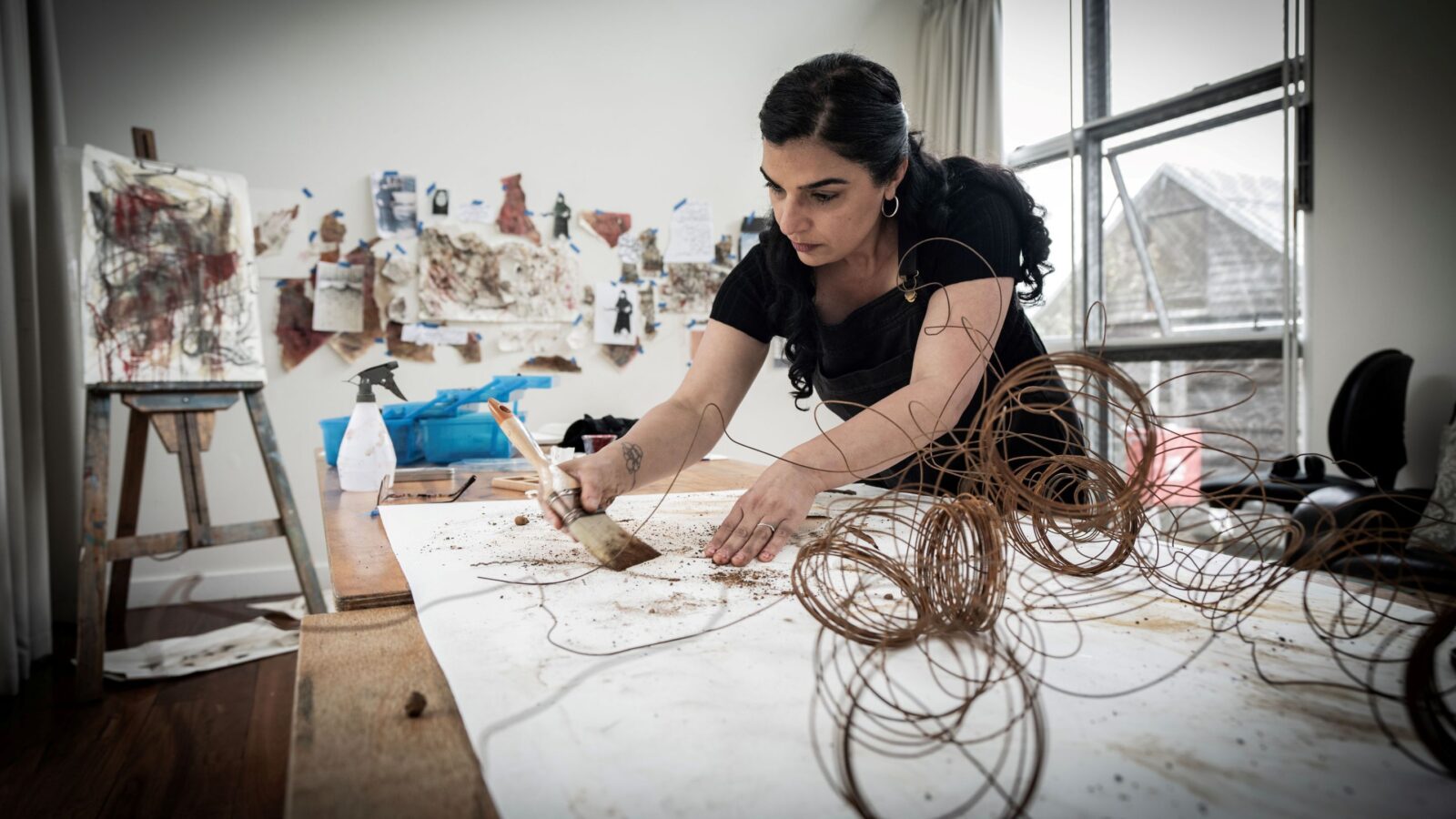
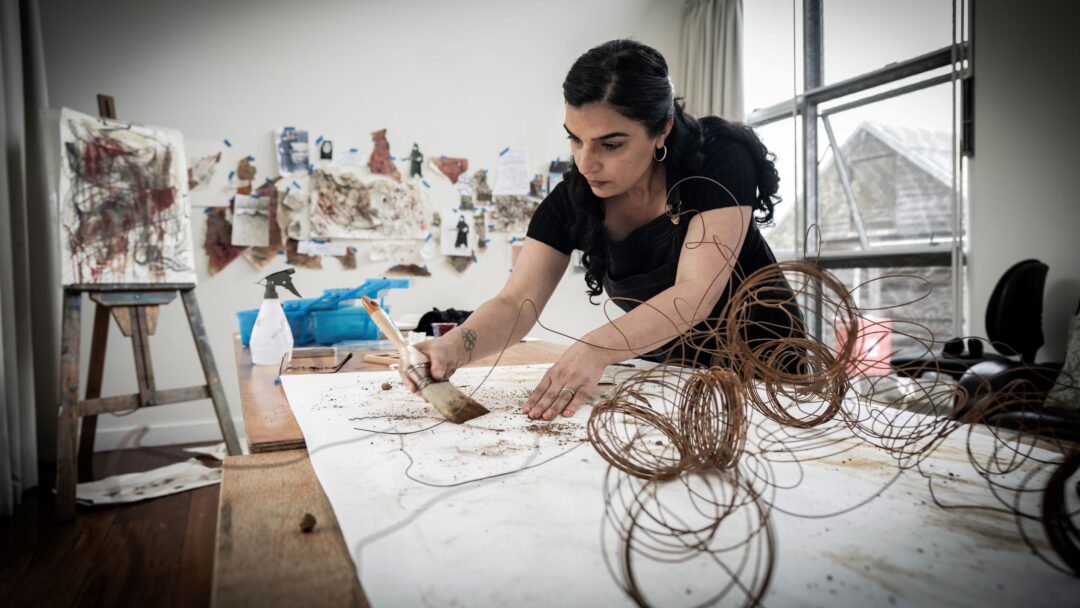
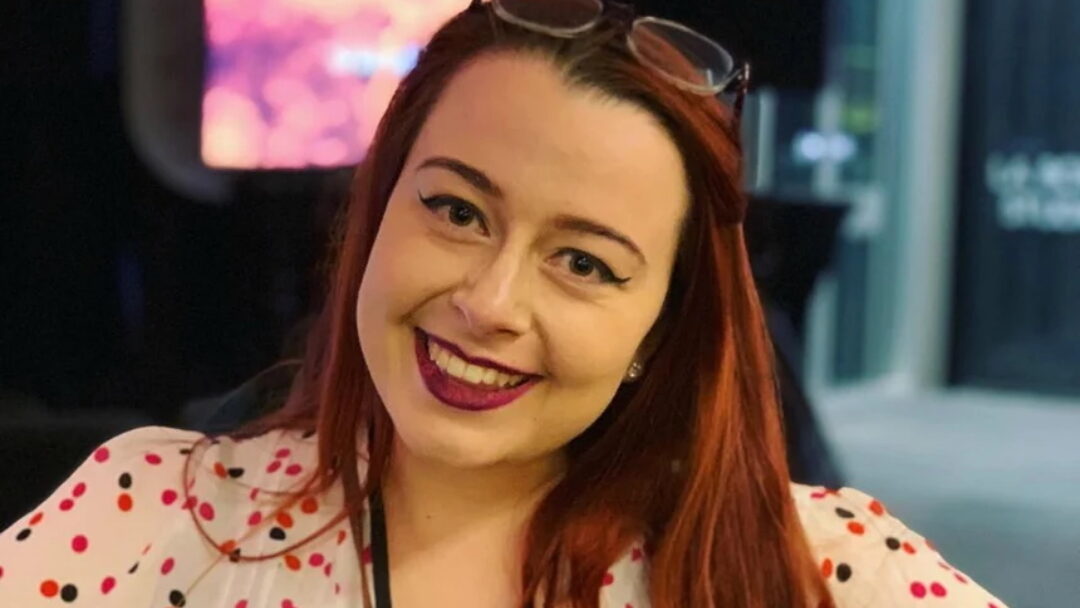
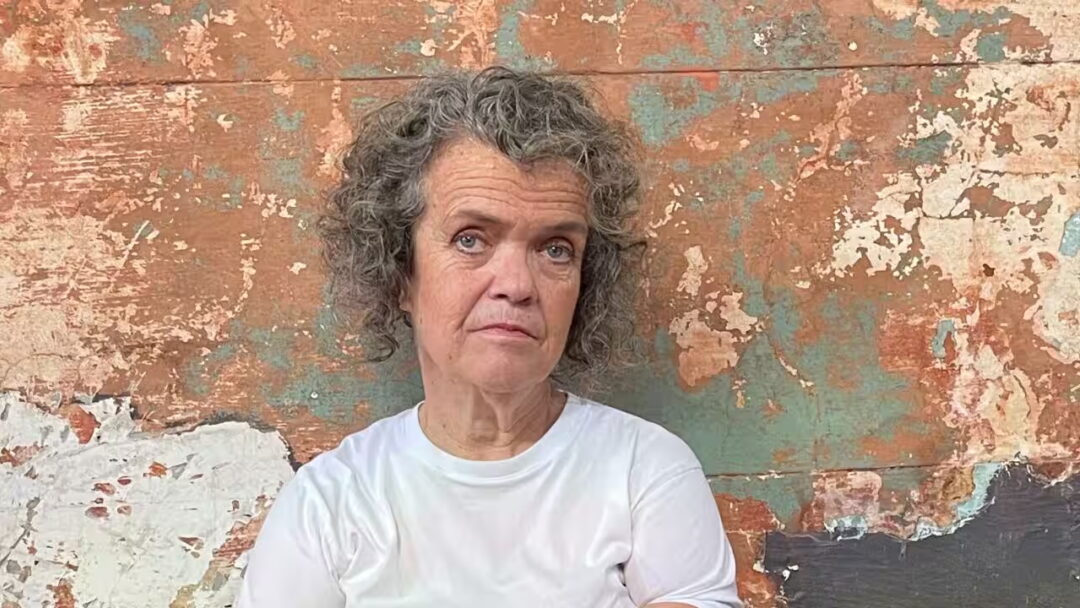
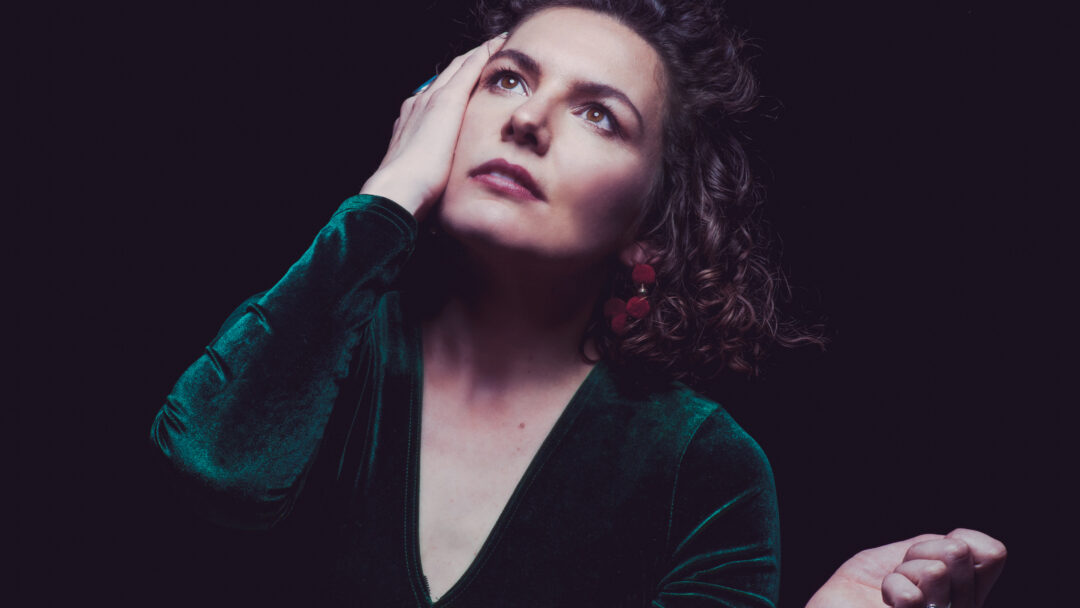
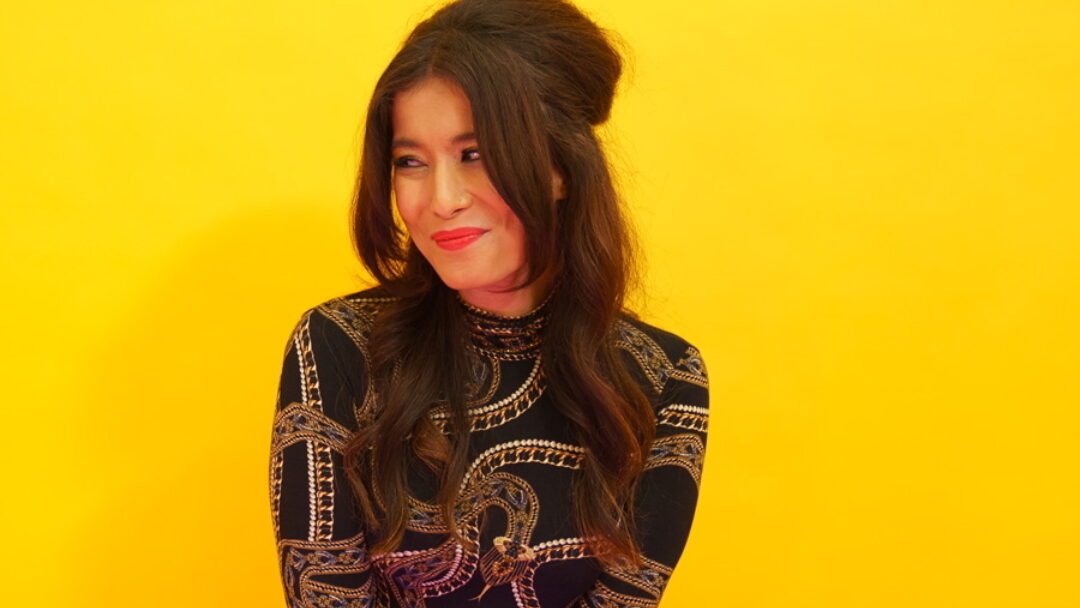
Welcome to Sideshow on 2RPH. I'm Anthea Williams, and today I'm joined by Negin Chahoud. Negin is a visual artist based in the southern highlands of New South Wales. Her work explores healing and trauma, homeland longing and safety. Negin says true art is born when you allow yourself to be vulnerable and authentic. So with that in mind, I'm going to ask her, to first of all tell us a little bit of her story. Negin, welcome.
Negin:
Thank you so much for having me. [inaudible 00:00:40]-
Anthea:
So tell me a little bit about your story.
Negin:
Sure. I'll start from Iran. I'm a refugee from Iran, and we had to escape Iran due to persecution because we are Baha'is, which happened... In 1989 is when we settled in Australia. Iran was a beautiful country when my parents grew up there and my siblings were there. So before the revolution in 1979, Iran was a very, kind of free country. So they had their beautiful fashion, beautiful homes, and everyone was free to explore their individuality and have a voice. Well, not so much the female side, but they were allowed to be slightly free. When the revolution happened in 1979, that's when our whole life changed. We needed to leave Iran because of our faith. We were persecuted in the sense that we were punished for believing in the Baha'i faith. So my family lost their home, lost their belief. They lost themselves in ways that they weren't able to express.
So when we escaped Iran, we came... Me and my grandmother, we had to be smuggled from Iran through the borders of Iran to Pakistan. And going through that five or six day journey for I was about five or six years old, we had to climb mountains and rocks to get into this kind of a hut-like, I wouldn't say... It's kind of like a structure where hundreds of people were smuggled there and we had to do that through the night, and they had mountain soldiers, if that makes sense. Kind of keeping a eye out to see who is trying to be smuggled out illegally. So when we got into this hut-like structure, it was only me and my grandmother. And my grandmother was well in her seventies at the time, so she had to secure me, keep me safe. And the only way she was able to do that was handing a piece of gold or some jewelry to the smugglers, to make sure we're safe and we get to our destination safely.
And I remember the men with kind of turbans carrying guns and weapons, bigger than me, taller than me. And all I can think about was, "Oh, this is such a beautiful adventure." Like this is great. I'm seeing the clouds. I'm climbing this really long and large mountains, I'm almost touching the sky. And I remember when we were in the structure, the only thing that I can think of was being able to draw stick figures onto the dirt where we were laying down. There was no cushions or beds or anything like that. I was just lying on the ground, the dirt and the rocks and holding my grandmother for dear life. And I remember losing our luggage when we were climbing these mountains. But to her, she needed to just keep me safe, that was her goal. And to me, I was like, "This is great."
This is a fantastic experience for me, and I'm so excited and not realizing that we could have easily been executed had we been caught. We could have easily had a different life. It was such a sliding door moment, every time I think about it now, it could have just gone [inaudible 00:05:16]. So when we finally got to our destination, which was Pakistan, we waited there for two years for Australia to give us permanent residency to enter the country. And two years wasn't actually that long compared to other people. So when we arrived, we were in a hostel until I was able to move in with my uncle who was already in Australia. That is the short version of my journey from Iran.
Anthea:
Wow. So your grandmother did such an amazing job of making you feel safe while going through something so traumatic, but there was really a double story going on there, wasn't there?
Negin:
Yeah, my grandmother was... She was special. She was so courageous. She was a nurse. She did so much for the community, and just to be uprooted out of that country that she called home for so many years and then have to leave it. But through tremendous life, like she had such a hard life, she was just incredible. She was one of the strongest women I had ever encountered, and I miss her every day. She was an amazing person.
Anthea:
So a lot of your work I know comes from this sense of trying to address this trauma, and trying to look at what it means to be separated from a homeland and having two homelands now, I assume. Can you tell me a little bit about when did you start making art and how did you find art in terms of how you're going to deal with this narrative?
Negin:
Well, the first time, I've always loved drawing, and I've always found it as my way of expressing myself, because words don't usually come easy to me. I'm not... Doing this is quite challenging for me, like just being able to talk. I love talking to people, but I don't really like talking about what my artwork is about because I don't know how to articulate it. It's such a strong narrative that I feel like me being able to express it with words, it just isn't enough for it. So when I started creating really, really truly started creating was when my grandmother passed away. I've always loved drawing and I've always loved journaling. I loved writing my emotions. When my grandmother passed away, I had her clothes for two years and she was well in her nineties when she passed away, and I couldn't deal with it.
For two years, I kept all her clothes in my closet, and I didn't know how to deal with that emotion. I didn't know how to let go of her. I didn't know who I was without her. I was so dependent on my grandmother that I wasn't able to see myself clearly in the mirror. My mirror was very foggy, I had no idea who I was looking at. So when she passed away, I took two years and after the two-year anniversary, I slowly started getting her clothes out. And I wanted to tell her story, but without me actually physically using the words, I wanted to share her narrative with so many people. So I started cutting her sleeves, her clothes. I kept two of her really precious items, and I started cutting the sleeves and kept the buttons and sewed around the pocket of her blouse. And I started writing her poems, when I say her poems, the poems she used to read, which was Hafez, which is a Persian poet.
So she used to love this book and she used to read it, and I started writing Persian poetry on a painted part of her sleeve, which was part of my structure on my paintings. So I started painting around them. I started experimenting with the dirt and the elements around where I was living to incorporate my life and her life combined in one. That I wouldn't be here today if it wasn't for her. So I started writing the Persian poetry on her sleeves and started expressing my art that way. And all of a sudden a narrative was born.
A practice was born in me that allowed me to heal from losing her, losing my home, losing my mother in Iran, and just going through so much trauma that I found healing in that. So I would sit still in any form of dirt that I have around me, look at leaves and elements and bark and trees and sew them on to my artworks. And use the Persian calligraphy and Persian writing of what my grandmother's poetry and books she used to read, to incorporate her life and her journey, meeting my journey together. So all of a sudden I started healing and voicing what I was feeling through my art by creating those kind of elements together.
Anthea:
That's amazing. And your work is very mixed media, isn't it? I know that you do prints and you do watercolors, there's ink and stitching, and you use a lot of natural elements as well, don't you?
Negin:
Yes. I find when I'm grounded, when I have my hands looking for natural elements and going through the dirt, and I actually physically mean the backyard dirt. I dig my artworks and my paper before they're even stitched on or before they're even painted on or Persian writing on them or anything. They go through this trauma itself to kind of create the element of what I went through. Because it wasn't easy, the journey, the hike, the climbing of the mountains, that wasn't an easy task. And remembering them allows me to kind of feel so blessed to be where I am. And the only way I can ground myself is digging through the dirt and covering that piece of paper, staining it with turmeric and spices and the Persian food that we used to eat. And kind of incorporating all of that in this paper before I'm even able to do anything with it.
I work on paper that has gone through just as much trauma as I have, because that's the only way I can connect to it. If I can't connect to my artwork, I can't tell my story to people. So yeah, it really grounds me. It spaces me out. It allows me to heal from everything that I've been through.
Anthea:
One thing I love about your work is you talk a lot about healing, but it seems that you've brought that out to the community as well. Can you tell us a little bit about your Letters of Love project?
Negin:
Yeah, the Letters of Love Project. Now, every time I talk about the Letters of Love project, I get so teary because it is like my third baby. I absolutely love this project. See, as a person who's gone through everything that I've been through, being a refugee is just an iceberg of all the other trauma that I've been through in my life. Certain things that have happened to me that I thought I dealt with before having children. But the funny thing about the human body, it truly does keep score of all your trauma. It hides, and the brain protects your body from that. So you think you're fine, but internally you are not. And that's what I felt when I had my first child, when I had my first child, all of my trauma that I thought I dealt with 20, 30 years, it came back with a vengeance.
It's like as if someone had just decided to pour concrete all over your shoulders and said, "Here you go. Now I want you to walk, and now I want you to start living your life and taking care of this newborn that you have in your hand." It was one of the hardest thing that I have been through as a parent, as a woman, as a refugee. And I just didn't know how to deal with it. I didn't know how to manage my emotions. I was upset all the time, I was crying all the time, and my mum passed away when I was seven months. So I didn't have a support of women or mum or sisters that I can go to. There was no one for me to reach out to. So having this newborn crying all the time, and I'm crying all the time and not sleeping, allowed all these emotions just to resurface, and I had no idea how I was going to manage it.
I then started seeing a psychologist, and I said to her... First, I went to my doctor and my doctor's like, "Look, you have what we call post-traumatic stress disorder, and you are going through depression, and this is something that we need to try to manage." And after him actually telling me, "You need to go on medication and you also need to see a psychologist to deal with all your past trauma," I started rewriting letters to myself. I used to do that when I was a kid, I used to write all my emotions. That was one way of dealing with it. So I started writing letters to the time that I was 16, to the time that I was 14, to the time that I was going through trauma in my life. And I started writing letters to my child, to my younger child, to my inner child.
So I started feeling kind of a sense of relief. I was able to find who I was again when I started writing letters to my younger self. So I thought to myself, there are so many women, there are so many men, there are so many people that go through sense of trauma. Especially when you have a newborn, when you have a newborn, all of a sudden emotions start coming into your life that you thought you had dealt with. And all of a sudden you are there with all these emotions that you don't know how to address.
So I was part of a mothers group, and they were amazing, they were empowering. They were just gorgeous women, and there was only 15 of us. So I started saying... I wrote a little note on Facebook and I said, "You know, ladies, I'm actually going to hold a workshop in my home in the studio, and I would love you all to be part of it. It's called the Letters of Love project. I'm going to give you a blank postcard and want you to just write a letter or a quote or a song lyric to your younger self. And at the front, I'm going to help you to do an artwork together. There'll be morning tea. Let's just come together and let's just chat. You don't need to partake. You can just come and we can do this together."
I didn't know at the time that eight years on, there was going to be over 550 postcards already written amongst women, men, different cultures, different religion, people from Dubai, people from New Zealand. With the Letters of Love project, it's just been one of those opportunities where I've allowed people from all around the world to be part of it. So the project is been basically creating a community of people who want to make the world not only a better place, but also share their insight, their knowledge, their experiences with other people.
And the idea is that these postcards are going to be in galleries on the walls where people can actually pick it up, read it, and really connect. And it's to kind of help people that sometimes don't want to express their emotions. They don't want to talk about their problems, but they do want to be part of a community. Silently, they want to be part of it. And this is one of those things, every time I run a workshop for this project, all of a sudden conversations arise. People are becoming more vulnerable and allowing themselves to express their actual journey with other people, because the more we do that, that's when we create a community. Empowering each other, not bringing each other down because of our religion, because of our background, because of our color, because of our gender. It's actually creating this oneness of humanity where we can create love for everyone to be part of.
So when anyone walks through these walls and see these projects on the wall, they'll be able to connect. They'll be able to say, "Oh, I went through that. I know how that feels." And then they open up. So the more we allow ourselves to be vulnerable and talk about it, the subjects become less taboo, which means it gives us the opportunity to be truly who we are. By allowing ourselves to say, "Okay, you know what? You've gone through this trauma, but that trauma isn't you. That trauma is an experience of your life. You become who you are by the knowledge that you have, by the experiences that you've gone through, and you allow yourself to truly be who you are." And this is what the project's about.
Anthea:
I love that. It really is using art to bring people back to themselves and back to their communities. So what is next for you? What are you looking forward to in terms of the work that you're planning to create going forward?
Negin:
See, this is the hard part for me. I've got two young kids, so right now, every year I say to myself, I want to be a better artist, I want to be a better mom, I want to be a better person. But this year, I've actually said to myself, I'm just going to allow myself to be me and just truly heal from my pain and through my trauma. I feel like I've just done so much, so far. I need to kind of step back and really figure out who Negin is, and that's what I want to do this year. This year is just about reconnecting with myself and allowing myself to truly heal from my past and do a lot more art in my studio with my kids and being more present. I feel like I'm somehow... Somehow I lost my way, and I really want to get that back.
And this is all about this year, I've had a couple of profound moments where I've faced really challenging times, where I've kind of gone head to head to the person that truly broke me. And now I've come out of it more brighter, more fierce, and more empowered. And with that, you kind of want to do something amazing, but you also want to just sit with that emotion for a while. And that's what I'm going to do this year. This year is all about recreating myself to be more present, and that's all I'm going to do this year. Just try to find a better version of myself.
Anthea:
That sounds amazing. Thank you so much for joining us.
Negin:
Thank you so much for having me. Such a wonderful opportunity. Thank you again.
Anthea:
You are listening to Sideshow on 2RPH with Anthea Williams. Hey, Liz. Welcome back to Sideshow. Thank you so much for joining us. What are you seeing and not seeing this month?
Liz:
Thanks for asking Anthea. What I am not seeing this month is sadly not seeing one of my favorite artists of all time, Eliza Hull, I'm not sure if you're familiar with Eliza's music.
Anthea:
I love Eliza's music.
Liz:
Well, you'll know why I'm so disappointed to miss out on these shows. So Eliza is supporting Sarah Blasko. You may be familiar with Sarah Blasko's music.
Anthea:
Yeah.
Liz:
So Eliza is supporting Sarah Blasko all through the month of March, all through regional and rural Victoria. For people who don't know about Eliza, Eliza Hull is a very haunting, beautiful singer-songwriter, musician, writer, artist. I am a huge, huge fan of Eliza, and I've gone to many of her shows that she's headlined, many of the shows she's supported other artists. She's played at the Sydney Festival. I mean, she's played all around the world. She's an incredibly beautiful musician.
Anthea:
I will make sure I put a link to that on the show notes of where she's going to be throughout Victoria. I've seen Eliza live twice, both times were completely remarkable, in really different settings. And she's also a disability campaigner. She's also written a number of books, one of which is on parenting and parenting as someone with a disability. I've been trying to get her on Sideshow for quite a long time, and she has agreed that she's going to come on this season. So watch this space. But yeah, like you, I'm a massive, massive fan. So Liz, tell me, so what is it that you are seeing this month, Liz?
Liz:
What I am seeing is something I'm very, very excited about. It's Wellbeing Through Art. It's been a series of talks that's been held at the Art Gallery of New South Wales, and it's been presented by Accessible Arts. It's been held on the 5th of March, and it's in celebration of New South Wales Women's Week. This has been a series of talks that has happened over the last year and a half that have been presented by Accessible Arts at the Art Gallery of New South Wales.
And each time they have an incredible line-up of speakers. So it's not presented in a panel style, although there is a question and answer at the end. What it is, is you have a keynote speaker and they'll give a 20 minute, half an hour talk, and then you have other artists who come and do shorter talks. And it's all to do with mental health, art, art practice, and it explores everyone's creative expression and their wellbeing and health through art. Now, I have seen that it's sold out in person, but that is fine for me because I was always intending on joining online only anyway.
Anthea:
So who were the panelists?
Liz:
There is Em Rusciano who as you may or may not remember, she was a finalist in Australian Idol way back in 2004, which is why she's sort of in our collective memory. But anyway, she's... I know Em more from more of her contemporary stuff, her podcast with Michael Lucas, her author, I know she's quite a prominent autistic ADHD advocate. And then we've got Hiromi Tango, who's a contemporary artist. She draws on her own experience a lot and anxiety. Bec Charlwood is a comedian who's going to be in the talk. She's very funny, as you may well know. And then there's clinical psychologist, Jane Miskovic-Wheatley.
Anthea:
Hey, so tell me what is the date, because I'd like to catch this online as well.
Liz:
So this is on Wednesday, the 5th of March. It's between 6:00 and 8:00 PM.
Anthea:
Hey, looking forward to catching you online, Liz.
Liz:
Thank you. I'm really excited about it. I think there's something really energizing about having all those artists together. Have a great March, Anthea.
Anthea:
You too. You talking about Eliza Hull gives me the perfect excuse to take us out with one of her tracks, Lilac Dreams.
(Outro music):
Everybody saying it'll all be fine. Everybody saying it'll all work out. The pain never leaves you, but it's nothing to them.