Audio
Do disabled people have to write about disability?
1 season
Episode 7
15 mins
In this episode we talk to crime writer Ashley Kalagian Blunt.
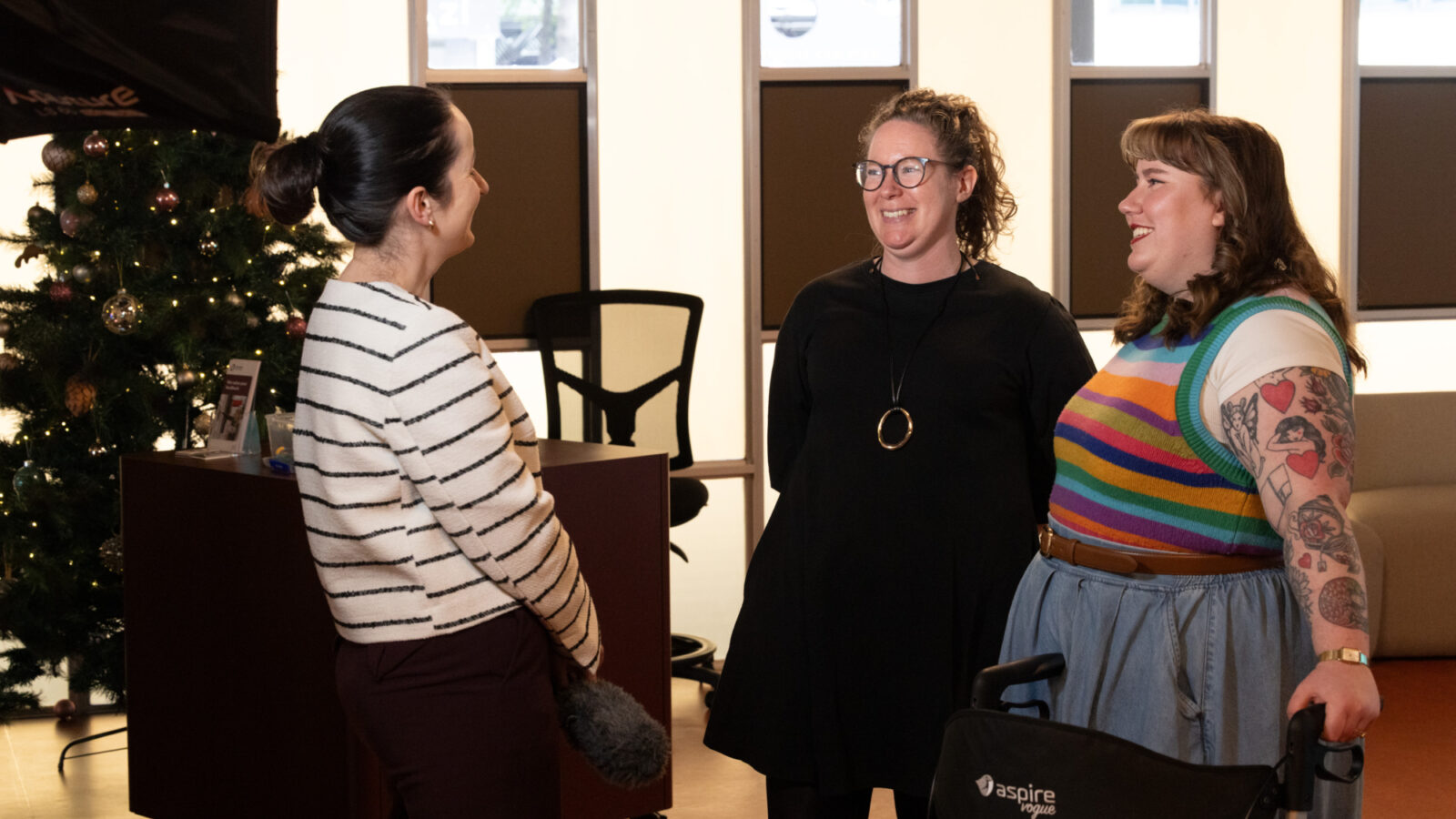
Crip Culture is hosted by Rosie Putland and Fiona Murphy, our producer is Honor Marino. In this episode we talk to crime writer Ashley Kalagian Blunt. Ashley tells us about the reality of being a bestselling author whilst navigating chronic illness. And we hear an excerpt of Janelle McMillan’s book ‘Rafting – A Wheelchair Won’t Stop Us!’
This podcast is proudly supported by Arts Tasmania and Print Radio Tasmania. Follow us on Instagram @CripCulturePodcast
This episode’s guests
Ashley Kalagian Blunt is the number one bestselling author of Dark Mode, which was shortlisted for the 2024 ABIA General Fiction Book of the Year, the Ned Kelly Awards for Best Crime Fiction, and the Danger Award for Debut Fiction. She teaches writing workshops across Australia. Her latest thrillers are Cold Truth, which was also shortlisted for the Ned Kelly Awards, and Like, Follow, Die.
Janelle McMillan OAM is an artist and author who has cerebral palsy. While she describes herself as non-verbal she has a lot to say. She is feisty, determined and smart. Her children’s book ‘Rafting – A Wheelchair Won’t Stop Us!’ is available free of charge to all Tasmanian schools and educational institutions.
Credits
Hosted by Fiona Murphy and Rosie Putland.
Produced and mixed by Honor Marino.
Cover art by Judy Kuo.
Music: Moments Like These — Simon Folwar (Uppbeat), License: BEB32FWJ6WULT877 & My Tiny Love — Soundroll (Uppbeat), License: VPFSMMM3K2C71ONF
Opening theme: [opening music with syncopated beat, sounds of a typing keyboard and layered voices]
Synthetic voice: Culture, Crip Culture.
Fiona Murphy: Well, welcome to the Crip Culture podcast.
Rosie Putland: I just love this idea of disability culture and crip culture
[music fades]
Rosie: Hello and welcome to the Crip Culture Podcast. I’m Rosie Putland, a disability influencer and storyteller.
Fiona: And I’m Fiona Murphy, an award winning writer and the author of The Shape of Sound, a memoir about deafness.
Rosie: Crip Culture celebrates disability, arts, culture and creativity. Today, in our season finale, we ask the question, do disabled people have to write about disability?
Fiona: We’ll hear from best-selling crime author Ashley Kalagian Blunt and children’s book author Janelle McMillan,
Rosie: The question that is so often asked by non-disabled people is a loaded one, do disabled people always have to write about disability? Ashley’s answer begins with nuance.
Ashley Kalagian Blunt: Part of the issue of us not bringing enough nuance to public conversations and discourse. And I really think that is the thing, like across all topics that we need to be doing more of societally, because obviously who we are as individuals is multifaceted, and someone can be a brilliant writer of any genre and also live with disability and be able to talk about both of those things [laughs] and also consider how maybe one actually influences the other.
Fiona: Ashley’s been told by people in her personal life not to talk about her illness online.
Ashley: A handful of people in my personal life who have suggested that I shouldn’t talk on social media about the chronic illness that I live with, it in that they see it as complaining or as attention seeking behaviour. And again, I think that really lacks that nuance, because I’ve had so many more people who say to me, I’m so glad you talk about what you’re going through, because it makes it easier for me to talk about what I’m going through, and I’m so glad to see what you’ve been able to achieve despite what you’ve been going through, because it makes me feel like I can achieve those things too. So I just tend to ignore people who tell me that I shouldn’t talk about my illness, because, again, I don’t think they’re bringing any nuance to the way that I’m doing it, or the reasons behind it.
Rosie: When publicity time came during the release of her second crime novel, Cold Truth, Ashley pitched angles about writing with illness, and the silence was telling,
Ashley: Yeah, there’s a lot of angles that I think are really interesting in terms of how I have to work around my illness and with my illness in order to have the career as a writer that I’ve had. And when we were doing promotion for my most recent novel Cold Truth, I was I’ve had a list of suggestions, kind of about things that angles I could talk about in relation to the writing and the illness. So I had pitched these to the publicist. She was really happy with a lot of them. We workshopped some of them. It was really interesting though, in that we didn’t really seem to get any kind of media response to any of that. And I was a bit disappointed, because I thought, you know, this is really different angles on things and valuable to people who might be going through a similar thing, or might know someone who’s going through a similar thing. So yeah, it’s a bit disappointed that there wasn’t more interest in that.
Rosie: Ashley isn’t a stranger to writing compelling pitches, which made the moment feel all that more disappointing.
Ashley: As journalists like I trained as a journalist, and that concept of if it bleeds it leads, was definitely something we were taught in a in a slightly cynical way, but it’s still, you can be cynical about it, but it’s still the reality like that doesn’t change the reality of it. And I think especially nowadays, in the hyper competitive online journalism space, where the most attention grabbing headlines are the ones that are driving the news cycle and driving attention that something like my story, which isn’t as extreme as a lot of people’s stories, might be harder to catch attention absolutely but I think at the same time, I meet so many people who are struggling with variations of chronic illness or disability, and I think that when we do talk about it, and particularly when we write about it, and that’s able to get out and to reach people, one of the things that it does is it allows us to start to better understand the experience that we’re going through.
Fiona: Besides a handful of people in her personal life warning her not to talk about illness, Ashley’s also been given similar advice from industry professionals, but for different reasons.
Ashley: When the screen rights for my memoir, How to be Australian, were optioned. I ended up in a writer’s room with a group of very experienced writers working on the pilot script for that series. And there was a one of the former heads of ABC comedy was in there, and I was talking to him about how, you know, I’d been living with chronic fatigue syndrome for a number of years, and I’d really like to to write about it in my in my fiction. And he said, oh, well, it’s really hard to portray that in story because it’s not active. And I thought that was such an interesting comment on I guess first, the perception of illness as not active, as sort of passive, but then, as in terms of the challenge of, well, yes, okay, crafting character is always about a character who is seeking to achieve a goal, you know, and facing obstacles to that goal. And that is more challenging when you have a character who’s very limited, but you can take that as a creative challenge, rather than just a reason to say, oh, we can’t. We can’t put that in story.
Rosie: The work found a path anyway, through bed audio books and hundreds of hours of true crime, illness changed Ashley’s genre, which catapulted her to best-selling status in both Australia and overseas.
Ashley: I think it comes back to writing about what feels urgent and what excites me. So I have written a number of essays about living with chronic illness, and whenever I do, you know, media appearances, author talks, I will talk about living with chronic illness, but it’s interesting because, as I said, I write cyber crime thrillers that have you know, don’t that don’t have characters with disability yet. But the reason I ended up doing that is so much because of my illness, and so this is one of the reasons that I always talk about it, when I talk about, when I talk about my writing, because I had, I had, I’d written to I was working on two projects. One was the history of the Armenian Genocide and its connections to Australia and connections to my family. I started that project in 2010 and then a memoir of moving from Australia to Canada and thinking that Australia was just hot Canada, and discovering, actually, no, it is culturally distant. And there I had a lot to learn in becoming Australian. So I was working on both of those projects, and was quite advanced in both of them when I got sick. And so there was quite a period of time where I wasn’t working on anything, and then I came back to those two projects and continued working on them, and was able to finish them, and was even able to get them published. And it was interesting, because at that time, people were saying to me, oh, like, look at what you’ve been able to do, like, despite how sick you are. And I kept trying to explain, like, well, I did most of this work before, like, before, like, I don’t have any other books. Like, there’s nothing else coming after this, because of how little I could do. But I think people there’s, there’s this tendency to put an optimistic spin on things. So when I was at my sickest, there was a number of years, really, where I was often not able to do anything, including, including even listen, because the words I couldn’t put together words to form a coherent sentence, basically, my short term memory was that affected. So I could, I could hear words, and it was kind of like this, just like little cloud of words that would start to form around my head, and I would realise I was just hearing words and not making any sense of anything. So that’s when I knew I had to stop listening. But when I could listen to things, I ended up really getting into true crime. I’d always had an interest in it, and I’d always read thrillers, but I’d never tried to write a thriller earlier in my emerging writing efforts, partly because I just didn’t feel like I knew enough about it, like I have no background with law enforcement. I don’t know about forensics and police procedure, and you know all of the things that you would need to know to write a good thriller. And then I had these years in bed where I listened to literally hundreds and hundreds of hours of true crime podcasts. And after that, I started to feel like maybe I did know a bit about police procedure and forensics and how investigations work. So I decided, in 2020 I decided, you know what, I’m going to try writing a thriller like as my first novel, and it’s an experiment, and if it doesn’t work out, that’s okay, I can go back to creative nonfiction. So I didn’t put any pressure on myself with it and and I loved it. I really loved the process, and that’s how I ended up writing my first thriller, which went on to become a best seller, and has really given me the career that I have now. So I have this career because of because of the circumstances of the illness I don’t know I would have ever felt had the confidence to try writing a thriller, if not for it.
[music rises]
Rosie: Access changes process. Process changes art.
Fiona: And while Ashley has experienced incredible success, she offers nuanced advice when teaching writing.
Ashley: Well, I know I just said how beneficial it is and how amazing it is when they make the effort to do that and when they share that, but I, I do not think they should be expected. I think every writer should write about what they feel passionate about in terms of what they want to put out into the world, right? Like, what I what I teach, is like write either what excites you or what feels urgent to you, like, like you choose. So for for some people, if, if what feels urgent to them is writing about their experience with disability, that’s great. And for other people, if they don’t want to talk about that at all, if they want to keep that totally private, I think that’s that’s their choice, and I respect that as well. And then I’m someone who has done both. So I have written publicly about my illness. I have a podcast about creativity, writing and health, where I talk about my health quite openly. And also, like make a space for people, for others to do that, but then I, you know, I will write thrillers that are about cyber crime. So no, there’s no, no disabled main characters there yet, but we’ll see. We’ll see in the future.
Rosie: Writing about disability can be power, but keeping parts of your experience private can be power too.
Ashley: I think it’s really important to be honest with yourself in terms of what you’re comfortable with, and not compare yourself to someone else in terms of what they’re doing, in terms of what they’re comfortable with, in terms of how they’re creating their public profile. Figure out what you are comfortable with, which might be a process of trial and error, and then just feel confident in doing that.
[music rises]
Fiona: Sometimes the most radical pages are the ones read aloud. This is Janelle MacMillan’s book Rafting a Wheelchair Won’t Stop Us, as voiced by Janelle and her support worker Janie and our producer, Honor and her daughter, Zara.
[music rises]
[Janelle speaks and her support worker Janie voices over the top]
Janelle McMillian and Janie: My name is Janelle McMillan. Oh. And I am the author of Rafting a Wheelchair Won’t Stop Us.
Honor: Trent and his dad packed everything that they could possibly need on his adventure. What have they done here?
Zara: That’s the front of the car.
Honor: Mmmhmm and what’s this?
Zara: It’s a wheelchair
Honor: Where have they put the wheelchair?
Zara: The roof, they’ve tied it.
Honor: That’s clever,
Zara: because there’s a string.
Honor: Yep, it goes all the way around. Yeah, it’s pretty tricky to tie a wheelchair to the roof of a car.
Zara: No, because you could tie it come on to here. It has to be a big strength. Tie it from here all the way around as high as the car. Keep doing and doing until it doesn’t roll.
Honor: Trent yelled rafting here we come.
Honor and Zara: a wheelchair won’t stop us!!
Honor: Then they were off paddling down to the first big drop in the river. The rafting guides yelled out,
Honor and Zara: hold on, here we go!!
Janelle and Janie: Adam and Trent were buggered by the time they got home, but they had an awesome experience together, a friendship.
[theme music rises]
Rosie: You across this season, we heard the same drumbeat. Access isn’t a detour from art, it’s how art gets made.
Fiona: Some of us write about disability straight on, and some of us write about heist fashion and love stories, but all of us bring our bodies to the page.
Rosie: Do we have to write about disability? No.
Fiona: Do we get to? Yes! And we get to write about everything else as well.
Rosie: This is Crip Culture, a podcast about disabled creativity, craft and community. If you enjoyed this episode, please share it with a friend.
Fiona: Thank you to this episode’s guests, Ashley Kalagian Blunt, Janelle McMillian, Honor, and Zara. You can find links to Ashley and Janelle’s work in the show notes.
Rosie: Crip Culture is hosted by Rosie Putland and Fiona Murphy. Our producer and editor is Honor Marino.
Fiona: This series was made possible with funding from Arts Tasmania and Print Radio Tasmania.
Rosie: And if you want to keep creating culture with us, follow us on socials @CripCulturePodcast and subscribe wherever you get your podcasts.
Continue listening
Our guests are Laura Pettenuzzo and Dr Scott Avery.
Where are all the disabled authors?
Crip Culture Podcast by Fiona Murphy, Rosie Putland
Episode 1
•21 mins
Audio
In this episode we talk to author Micheline Lee and poet Andy Jackson.
Is it risky being an openly disabled author?
Crip Culture by Fiona Murphy, Rosie Putland
Episode 2
•19 mins
Audio
In this episode we talk to author Kylie Maslen and poet Esther Ottaway.
What does accessibility actually look like in the publishing industry?
Crip Culture by Fiona Murphy, Rosie Putland
Episode 3
•31 mins
Audio
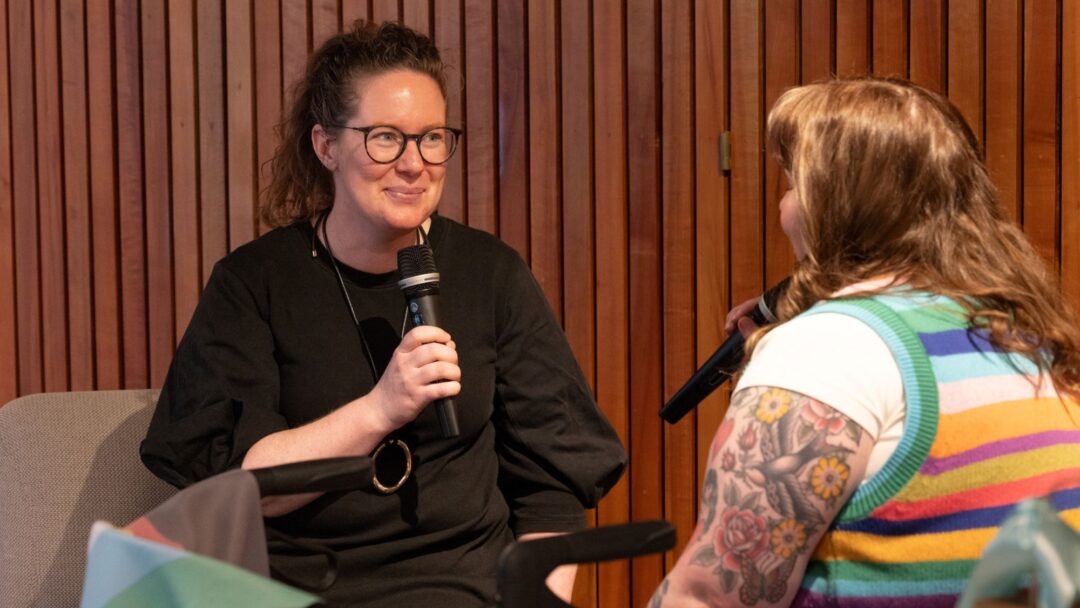
In this episode we talk to Kay Kerr and Beau Windon.
What does a sensitivity reader actually do?
Crip Culure by Fiona Murphy, Rosie Putland
Episode 4
•32 mins
Audio
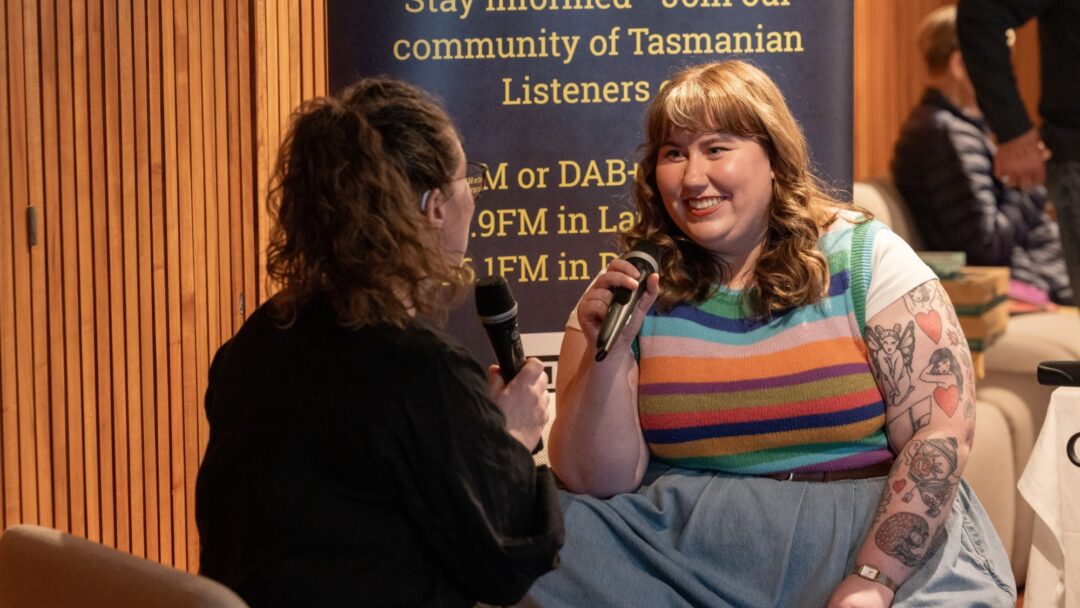
In this episode we talk to journalist Matilda Boseley and author Olivia Muscat.
Is it getting easier to build and sustain a writing career if you’re disabled?
Crip Culture by Fiona Murphy, Rosie Putland
Episode 5
•29 mins
Audio

In this episode we talk to authors Carly Findlay and Gayle Kennedy.
What is it like going on a book tour as a disabled author?
Crip Culture by Fiona Murphy, Rosie Putland
Episode 6
•28 mins
Audio

In this episode we talk to crime writer Ashley Kalagian Blunt.
Do disabled people have to write about disability?
Crip Culture by Fiona Murphy, Rosie Putland
Episode 7
•15 mins
Audio