Audio
What does accessibility actually look like in the publishing industry?
1 season
Episode 3
31 mins
In this episode we talk to author Kylie Maslen and poet Esther Ottaway.
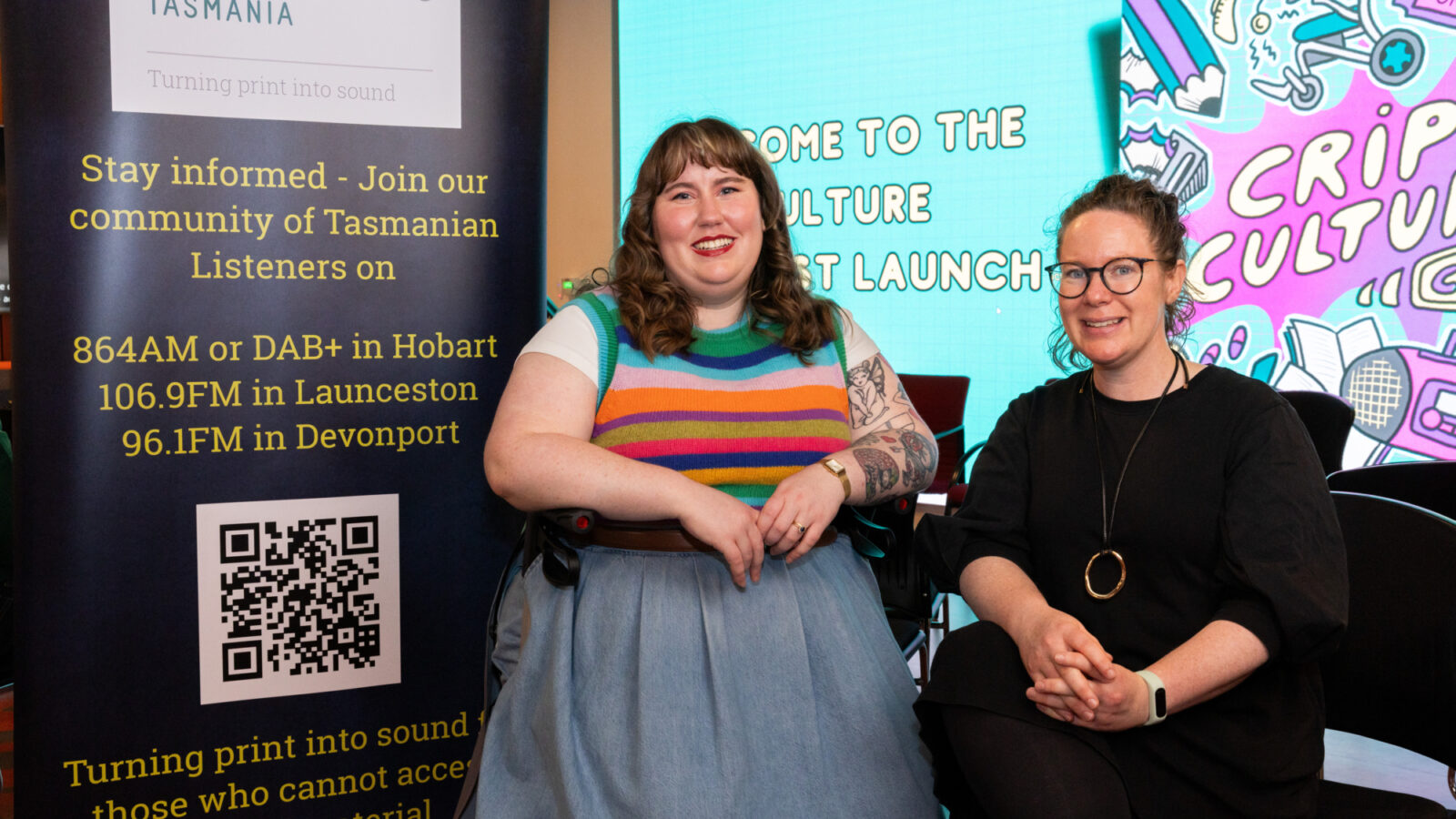
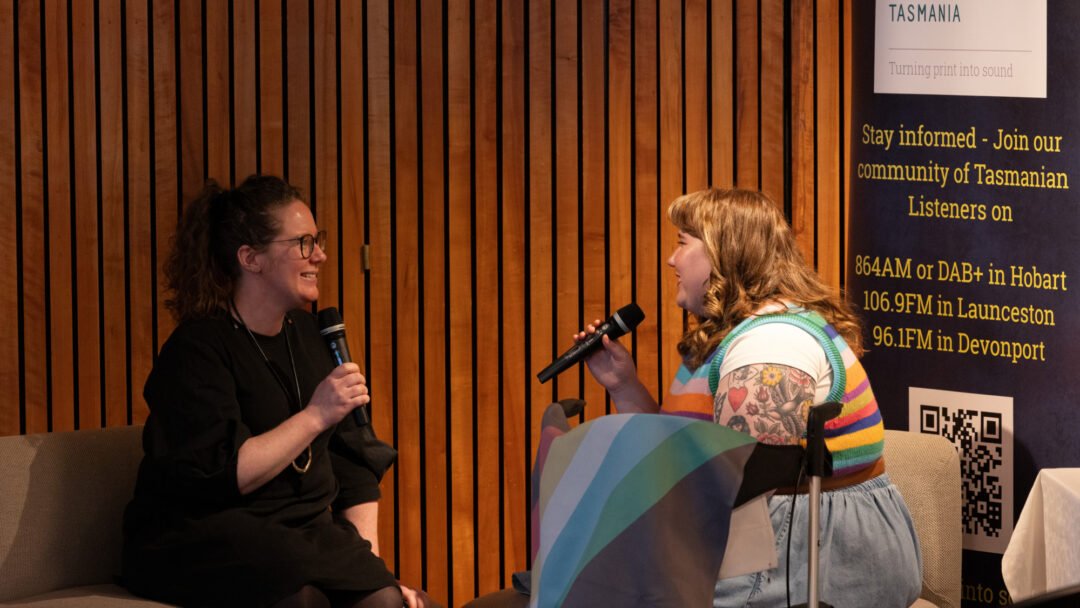
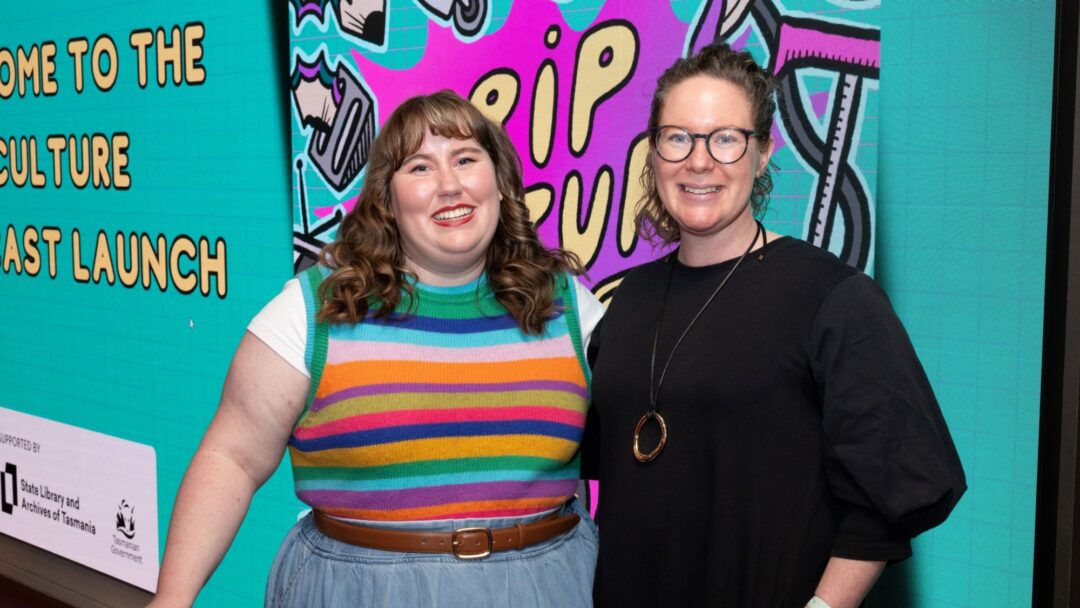
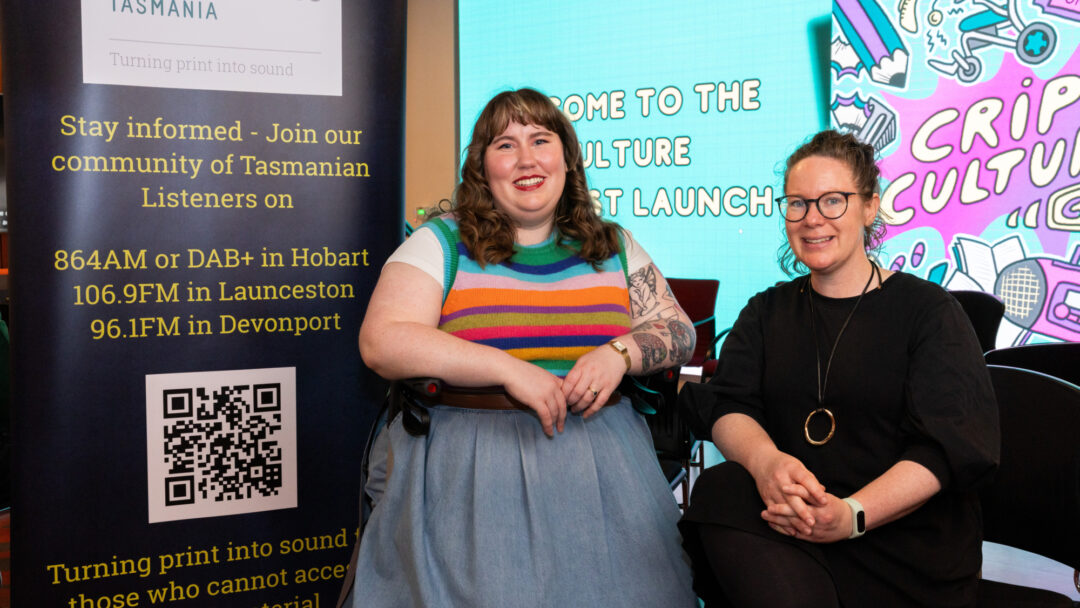
This episode’s guests
Kylie Maslen is a writer and critic living on Country stolen from the Kaurna people of the Adelaide plains. Kylie’s first book – SHOW ME WHERE IT HURTS: LIVING WITH INVISIBLE ILLNESS – was shortlisted for the 2021 Victorian Premier’s Literary Awards in non-fiction, named in Guardian Australia’s ’20 best Australian books of 2020’, named a Saturday Paper’s ‘Best new talent of 2020’, included in bookseller Readings’ ‘Most talked about books of 2020’ and declared ‘a Millennial masterpiece’ by Columbia University’s Intima Journal of Narrative Medicine. Kylie’s cultural criticism, social commentary and critical essays have appeared in the Guardian, Meanjin, InDaily, Adelaide Review, Crikey, Money Magazine, The Shot, Kill Your Darlings and Junkee, among other outlets. Kylie was an inaugural member of the External Strategic Advisory Board for Flinders University’s Caring Future Institute and are the disability advocate on Splinter Journal’s founding Advisory Committee.
- Kylie Maslen, Author Website
- Support Kylie on Patreon
- Follow Kylie on Instagram
Esther Ottaway is the author of She Doesn’t Seem Autistic and a landmark anthology of Australian disability writing, Raging Grace: Australian writers speak out on disability (co-edited with Andy Jackson and Kerri Shying), and two other poetry volumes. She is the winner of the $25,000 Tim Thorne Prize for Poetry and People’s Choice in the Tasmanian Literary Awards, and has won or been shortlisted for many international and Australian prizes. Esther convenes the Women’s Poetry Oasis workshop series. She is AuDHD and has invisible physical disabilities.
- Esther Ottaway, Author Website
- Follow Esther on Instagram
- Raging Grace: Australian Writers Speak Out on Disability, Edited by Andy Jackson, Esther Ottaway, and Kerri Shying
Credits
Hosted by Fiona Murphy and Rosie Putland.
Produced and mixed by Honor Marino.
Cover art by Judy Kuo.
Music: Moments Like These — Simon Folwar (Uppbeat), License: BEB32FWJ6WULT877 & My Tiny Love — Soundroll (Uppbeat), License: VPFSMMM3K2C71ONF
Opening theme: [opening music with syncopated beat, sounds of a typing keyboard and layered voices]
Synthetic voice: Culture, Crip Culture.
Fiona Murphy: Well, welcome to the Crip Culture podcast.
Rosie Putland: I just love this idea of disability culture and crip culture
[music fades]
Esther Ottaway: People had blood sugar, attacks, migraines and attended while lying down, and it felt gloriously like home.
Kylie Maslen: It is not my body that is at fault, but society’s failure to deal with bodies like mine.
Fiona: This podcast was recorded on stolen, unceded Aboriginal land. First Nations peoples are the world’s oldest storytellers, and their voices continue to guide us.
Rosie: Hello and welcome to the Crip Culture podcast. I’m Rosie Putland, a disability influencer and storyteller.
Fiona: And I’m Fiona Murphy, an award-winning writer and the author of The Shape of Sound, a memoir about deafness.
Rosie: Crip Culture celebrates disability, arts, culture and creativity. Today we’re talking about building creative worlds that fit our bodies. Joining us is Esther Ottaway, poet and editor of Raging Grace and Kylie Maslen, author of Show Me Where it Hurts: Living with Invisible Illness. First up, Esther tells us what it’s like working with 23 disabled writers.
Esther: The zoom meetings we held to create these works were extraordinary. We were battling to be present. During the meetings people had blood sugar attacks, migraines, vertigo, panic attacks, suffered through pain, left the screen to warm up heat packs
[sound of a microwave warming up]
Esther: and take medications, and attended while lying down. People turned their screens off and their sound down when in sensory overwhelm, but were present in chat.
[sounds of text notifications]
Esther: People logged on late because they were ill and logged off early because they’d become ill, then used email or text to share thoughts, and it felt gloriously like home. These people totally understood when I arrived in my dressing gown that I was still seriously working on the project. They knew when I wasn’t present in the meeting that I was still working hard on the project. Rather than running to a schedule we worked in a symbiotic flow using the quorum that was present in each moment, people finding manifold ways to be heard and seen in a web of connection and acceptance and multiform communication that was almost its own organism. I’d never worked in an environment like it.
Rosie: That was Esther reading from the book Raging Grace: Australian Writers Speak Out on Disability. It was a project that fully embraced crip time, which is time that bends to illness, to care, to energy levels. It’s time that honours presence in whatever form it comes in. It’s a rhythm that resists the clock and still results in extraordinary work.
Esther: Yes, as I said, it was a first time experience to actually be in a working environment.
Rosie: Yeah,
Esther: that accepted all of those needs, and where we totally respected one another’s commitment and and where we we had full confidence, you know that we were absolutely committed to the project, and so people’s needs were just absolutely accepted. And yeah, we worked around it, and we flowed and we got the project done and had a brilliant time doing it.
Fiona: You could call it collective care, or call it crip professionalism, commitment measured by trust and outcomes, not by suits and stamina.
Rosie: Esther shares the story behind the book’s title, Raging Grace.
Esther: Yes, it comes from one of the poems in the book by Jasper Peach, who is a amazing, creative writer in many forms, but poetry being one of them, and we, as we work together to put this book together. We collaborated with more than 20 disability writers from across Australia during zoom meetings and also in private work. And so Jasper brought this piece and read it out to us, and it was an electric piece. And the that phrase ‘Raging Grace’ in in a description of what it takes to be a disabled person in a culture that does not support you or recognise you, we just immediately, all of us kind of lit up. The chat went crazy. We were like, ‘that’s the title of the book”. It’s just just kind of summed up the the rage, I guess, comes from having to constantly swim upstream in a culture that where the norm is expected to be complete health full time work unit, you know, do things in the typical way, not an atypical way, and there’s a lot of pressure to conform to that, and you’re seen as a failure, or message that you are a failure by the culture if you don’t conform to that. And but so many of us can’t so 20% or more of Australian people are disabled, so we need a space in which to exist and to have our needs acknowledged. And yet, very often, we come up against these behemoth systems of medicalization, of Centrelink, of NDIS, all of which are doing wonderful and necessary work, but the systems can be incredibly dehumanising and discounting of our experience and and can make us feel angry.
Rosie: hmm
Esther: And so some of what the writing in this book touches on is that anger at having that basic right of being, having the needs that we have acknowledged having that denied. One of the poems I wrote for the book actually opens with a person in a wheelchair just wanting to get across the road and just wanting, just asking for a curb crossing, just a little ramp, just to get from the curb to the road safely. And it astounded me. It came from a comment by Robin M Eames, who’s an amazing writer in Raging Grace, who is in a wheelchair, and when we were talking about what we would like to see changed. I was kind of thinking in terms of big picture things, but they said, “actually, I’d just like to be able to get down the street”. And I thought, wow, okay, we’re back there. We’re actually way, way down in terms of where we need to start building these building blocks of foundational acceptance for for disabled people. So that’s the rage, the grace. I think, when you have chronic illness of any sort, you have to find grace to continue to get up every day because your life is hard, and your life, in many ways, is isolated, because your own experience of illness is is no one else’s. It’s it’s your own package of things to deal with. And so we do develop grace as disabled people, we develop a way of engaging with the world which is respectful and which, to some degree, has to fit the systems in which we work, but also we have our own grace and our own power in being able to step into our voices. And I think this is why this is such an important Australian anthology. There’s not been an Australian anthology like it where disabled people have entirely created this work for the purpose of communicating what our experience is,
[theme music rises]
Fiona: A title born out of rage and grace, the two truths of disabled life held together in one phrase,
Rosie: but inside crip time, the work flowed for Esther, but outside it’s a different story.
[theme music rises]
Fiona: Pressure doesn’t just show up in government systems and services. It’s also baked into how books are made. Meet Kylie Maslen, author of the essay collection, Show Me Where it Hurts: Living with Invisible Illness.
Kylie: Publication does inherently rely on deadlines, [laughs] while a lot of them are flexible, there inevitably comes a time when they’re no longer flexible. And I definitely felt stressed about them towards the end, and it definitely kind of I was very anxious, and both wanting to just get that thing to print and get it out of my life. But also, just like, maybe some of this is mental ill health, maybe some of this is just being a woman, but there was, like, I had a lot of anxiety towards the end of like, what are people gonna think of this? Am I gonna get cancelled by the Murdoch Media, [laughs] my family going to read the chapter about sex and like, never want to speak to me again. Like, there, yeah, there was a lot of anxiety there. But I think on the whole I was able to make the accommodations that I needed through the publishing process, and the publicity process. But I also remember saying to my editor at the time, like, when we would never do this, the same again, like this is we kind of pushed through the publication process quite quickly, because at that time, endometriosis was like, very suddenly getting a lot of news time, and we wanted to capitalise on that. And so, yeah, things moved quicker than they would have normally like through the, what’s the word for the like, structured editing process in particular. So, I really had very limited information about how it all worked. So, it was hard to know, like, what to do and what was available to me.
Fiona: For Kylie, that urgency meant moving faster than she had the tools to navigate. It wasn’t just a crash course in publishing, but also in survival.
Kylie: If I was to publish something again, I would be able to advocate for myself a bit better, because I would like be able to anticipate what was coming, I guess is what I’m trying to say. So I got signed in May of 2019 and yeah, I would have had four chapters completed, and then I wrote the remaining six before Christmas of 2019 and then the first half of 2020. Was the editing process. And then the book came out on first of September, 2020. Yeah, it moved very quickly.
Fiona: That is fast!
Kylie: Yeah, yeah. I would never do it again. [both laugh] Yeah, it’s interesting like, I’ve had a few diagnoses since that kind of makes sense that, like, that kind of like fast paced way of working is useful to me, but also can be very overwhelming and stressful, which is then like a negative thing towards my mental health. And so it’s this real kind of balancing act. I don’t regret the way that it was done, but I yeah, in terms of my health, would not do it again. The same.
[soft piano music]
Rosie: The spotlight fades, but the body keeps score.
Kylie: Yeah, I kind of crashed out pretty hard once the book went to print. And then the book came out, and there was like a month of, I mean, you would know, like, quite a lot of publicity stuff needing to be done, like doing interviews and writing op ed pieces, that kind of thing. It was like during lockdown, so there was no travel. I don’t know. I’m sad that I didn’t get to experience that, but also, like, I don’t know how I would have coped, considering I was already, like, absolutely wrecked, and, yeah, and so once that, like, initial burst, started to calm down. And then definitely, by, like, December of 2020, it was, like, there was a lot less of attention. Yeah, I was exhausted. You know, I’m very lucky with the publisher that I had that they took a lot of care with me. But it’s also like, you get to this point and you’re no longer, like, the big, shiny, important thing. I was also, yeah, just kind of not very well mentally and so I was trying really hard to, like, capitalise on grants that were available at the time for like, creative people, and trying to, like, frantically research what book two would be, and like, sending off these endless pitches to people about various things, where I look at them now, and I was just, and I’m just like, wow, that was a bipolar episode. [laughs] It was not like, some of these things were not well thought out and were not they just didn’t fit the writer that I am. I was just trying to create stuff that I thought would be published, rather than the stuff that I was best to be writing about.
Rosie: Out of that whirlwind, a shift from rushing and producing to pausing and choosing.
Fiona: Has that impacted your how you approach writing now, in terms of writing projects or even coming up with ideas for things?
Kylie: Yeah, definitely, I think I am a lot more, not so much cautious, but just like, more considerate about what I kind of sit on and work on before showing to others, really letting myself just take time. Um, rather than pushing myself through various things. I haven’t written a second book, and I haven’t pitched a second book for a while now, but I have done some writing, and I have done, like, one sort of longer writing project. But I definitely now think about not only like, is this the right idea? Am I the right big person to be writing it, but also like, am I in a place right now where I can commit to that and where that would serve me and my health before serving Australian literature, [laughs] whatever like grandiose ideas that I occasionally have about myself.
Rosie: Deadlines and systems demand conformity, but disabled creatives often thrive in the opposite for Esther, that means flexibility and freedom.
Esther: Yes, I said in my foreword to Raging Grace, disabled people are always working.
Rosie: Yeah.
Esther: And it’s a really interesting and provocative statement, I think, because I think it’s easy for people to view disabled people as always resting,
Rosie: Yeah.
Esther: when, in fact, even when we’re resting, we’re cogitating like mad on the next project, and we’re just waiting for that little bit of energy to arrive so we can actually download that into the world. So, yeah, I feel like there’s, there’s so much kind of stored capacity there, but it takes a flexible model to deliver that and and certainly writing. You know, as a poet, I I’m my brain is never off, whether it’s day night, you know, whether I’m engaged in other things, inspiration can-can strike me, and I need to follow that. And so, you know, there are many times when I drop other responsibilities to-to sit down and work on a poem, because the creative time is, is right? And so, yes, it’s a, it’s absolutely a free and flexible model that you need to be able to make creative work. And I actually think neurodiverse people are especially, especially good at-at that. We have a flexible and free brain, and yeah, and that’s why we see a lot of those amazing people in creative fields.
Fiona: Rest isn’t absence. It’s a method, and it’s a method disabled creatives have long mastered. Kylie tells us how she works.
Kylie: I’m actually making use of voice-to-text a lot and drafting most things by like speaking them into my phone or into my laptop and slightly polishing a transcript for shorter pieces.
[typing and clicking sounds]
Kylie: I’m able to do that and then I’m able to edit on screen longer form. I write, you know, in a word document or google word or whatever, but most of my editing is done in hard copy. I find like staring at a screen really difficult and really fatiguing for me. So even if I’m having something published in print, I will get printed off,
[sound of a printer and sounds of editing with a pen]
Kylie: edit by hand, and then go back and, like, make those edits before I send it off. I and in terms of, like, larger pieces, so like, yeah, I will write about the idea at the time. Or if I’m using a reference, I will just kind of like write all the stuff about that reference and then move on to the next bit, and then I print everything out and literally cut it out with scissors and, like, lay it all out on my bed or on the kitchen table, and then move the pieces around into a narrative that makes sense to me.
[sounds of printing, cutting and shuffling papers]
Kylie: And then I will add often, like connecting sentences by hand as I’m doing that. And then kind of think about like, Okay, do I have a strong enough intro? Do I have a strong enough conclusion? You know, what? What am I missing? What are the pieces that need to be added to connect all of these ideas together? Yeah, taking that off screen is really useful to me, but also, like, allows me to work in a way that makes sense to me, rather than, you know, like, if I, if I leave comments, you know, a lot of writers will, like, leave comments or edits to themselves in their manuscript. And drives me crazy. Like, I just like, I couldn’t work that way. So, yeah, I found a way that works for me and is most accessible to me, and it’s a bit old school for some, but like, yeah, it’s not because I’m a luddite. It’s just because of my access needs, yeah.
[piano music rising]
Fiona: Throughout this season of Crip Culture, we’ve heard that telling the truth about what it means to be disabled isn’t always simple. We’re often taught to mask, to minimise, to hide. Kylie was determined to make the invisible world of illness, visible.
Kylie: It was deliberate. Part of it was because the book started by writing individual essays. So the first chapter of the book was an essay that was long listed for the Lifted Brows Experimental Nonfiction Prize. And so, in writing that there was, you know, like referencing process that needed to be done. But also there were two real reasons. The first one was because I wanted, I wanted the book to be an entry point. But then, yeah, if someone had a family member and they were trying – with endometriosis, for example, and they were trying to understand, and then they got this kind of like, oh, okay, that makes sense, but then wanting to go and understand more of the science behind it, or wanting to know what they could do to help the person in their lives that they had resources to go to, to give them a greater understanding. But the other main reason was because I had spent my life being questioned and gaslight and not believed. And so, I was like, I’m going to give you hard proof behind the science of this and behind how I got to where I did with the writing, because I don’t want any of this to be left up to interpretation. Like, I yeah, I’m not going to be gaslit with my own book, thank you very much. So yeah, it was definitely a very thorough research process, and I really enjoy that, to be honest, as well. Like, I like going down those little rabbit holes and highlighting and like pulling threads together. I really enjoy that element of writing. And so, yeah, it brought me a lot of enjoyment the editing of those reference, on reference pages. Those was, was hell yeah, no, it was always a very deliberate and informed choice to do it that way. I remember somewhere during the process this book came out about the Bell Gibson story about like these two journalists wrote a book about how her book had been published, like pulling apart, like, who found out when that she didn’t have cancer, and how, how was she able to go so far in her publishing, despite this fraud, I just emailed my editor, and I was like, believe me, when I tell you, I’ve got receipts, like, I’ve got, like, I keep, like, doctors reports, and I have, like, all this proof that this is actually happening to me. Like, I promise you this isn’t going to be an issue. Or not making any of this up, like, which I kind of did tongue in cheek, but also, like, I think comes back to the idea of, like, after being disbelieved for so long, like, yeah, the idea that I could be making shit up was just like, I need to make sure that everyone knows that that’s not happening.
Rosie: Kylie’s references aren’t just about scholarship. They’re a form of advocacy, a way of making her story undeniable, and a gift of community care for readers, for Esther, telling the truth about disability meant unlearning what she’d been taught as a child.
Esther: I feel like I’m still in training in terms of unpacking a lot of the training of my generation. So, I’m Generation X, and we’re a generation where the implicit message is where disability is weakness and failure and shameful, and you should not have it, and so therefore you need to hide it. So all of my life, my instincts have been to cope on my own and to shield other people from seeing any of the impacts of my disability, but then raising a daughter on the spectrum, I didn’t want her to carry that message of shame and inadequacy, and so I’ve tried very hard to create a place of acceptance for her and of acknowledgement that these conditions are conditions that affect many people. They are legitimate conditions. They’re not something you’re imagining, they’re not something you’re making up, and they are things which need to be accommodated and, and so it’s been a real journey for myself in terms of unpacking that fear that I have around exposing, you know, those more vulnerable sides of myself when I wrote my my most recent book, which is She Doesn’t Seem Autistic, that was a real act of bravery in terms of claiming what my experience is. And like you said, that duality so but I wanted to step forward because there are no good or few good role models of autistic and ADHD women. We’re starting to see them stepping forward, and that is absolutely amazing and fantastic. But really as a parent, I thought, well, I need to model, I need to model this for my daughter, that I need to let go of my shame and be able to, to be more honest. And I think it helps, it helps other people. You know, it does a service in the world to explain that these things do affect many, many people, and that it’s actually quite easy to accommodate our needs in many, many situations, just a matter of me firstly, recognising that I can be okay with asking for accommodations and, and that also many people do have goodwill around that, and they are, you know, open to learning and to changing around those things.
Fiona: If systems isolate us and deadlines drain us. Community is what heals both Esther and Kylie described how joy and pride can emerge when we find spaces where our needs are met without question.
Esther: It was incredibly bonding and incredibly validating, because we all saw we all trusted each other, so we didn’t see any of these dealing with health issues as something to be suspicious of. Oh, maybe they’re not, you know, committed to the project. Or maybe they’re not, you know, doing is working hard. What we saw was people working unbelievably hard! Because if you’ve got all those symptoms and yet you’re getting up out of bed to still forge on with the work that you’re passionate about that is just so admirable and so mighty and something to be celebrated. And we all saw that in one another, so it was massively validating. And I do really encourage the finding and connecting with other disabled people as a path to healing, because it’s, it’s really, really validating.
Rosie: The pathway to healing can also be a pathway to belonging.
Kylie: I think it happens most for me in community, like finding people who understand, and it’s not necessarily that they have the same disability as me. It’s just that there’s this, like, common understanding of, I don’t have to pretend around you, I don’t have to mask around you. I feel safe to be myself around you. Yeah, I’m like, thinking of my support worker, because she’s here, but like, she sees me very upset, and, you know, kind of talks me down when I’m feeling very emotional and unregulated. But we also like, just do a whole bunch of fun stuff together where I will I do this thing where I’m constantly like: Oooh! Ooooh! And just like, having a lot of fun just being a little kid, and like I feel, and, you know, I’m 42 years old, and I feel really safe and comfortable to just like be, you know, basically three year old me, and I love that and I but I don’t feel like I can do that with everyone, not even like all like important people in my life. So, I love when I am able to find stuff that makes me happy and do these things in a way where, yeah, no one’s gonna judge me if I take the lift instead of the stairs. Or no one’s going to, like, when we got here, the tech was like, “would you like the light off in the studio?” And I was like, “Yes, please!” And like, it was not something that I had to ask for, you know, like, I love when I’m in situations where people just kind of inherently understand rather than and that then frees up the energy for me to be yeah, youthful and silly and yeah, find my own version of joy I guess.
[theme music rises]
Fiona: For Kylie, pride and joy looks like silliness, play and safety and the freedom to be wholly herself. For Esther, creativity is about communication, connection and care and refusing to pass on shame to younger generations.
Rosie: The threads are clear, creativity and joy are not things we muster despite disability. They’re at the heart of it.
Fiona: And when we’re held and connected, that heart beats louder.
Rosie: This is Crip Culture, a podcast about disabled creativity, craft and community. If you enjoyed this episode, please share it with a friend.
Fiona: Thank you to this episode’s guests, Esther Ottaway and Kylie Maslen. You can find links to Esther and Kylie’s work in the show notes.
Rosie: Crip Culture is hosted by Rosie Putland and Fiona Murphy. Our producer and editor is Honor Marino.
Fiona: This series was made possible with funding from Arts Tasmania and Print Radio Tasmania.
Rosie: And if you want to keep creating culture with us, follow us on socials @CripCulturePodcast and subscribe wherever you get your podcasts.
Continue listening
Our guests are Laura Pettenuzzo and Dr Scott Avery.
Where are all the disabled authors?
Crip Culture Podcast by Fiona Murphy, Rosie Putland
Episode 1
•21 mins
Audio
In this episode we talk to author Micheline Lee and poet Andy Jackson.
Is it risky being an openly disabled author?
Crip Culture by Fiona Murphy, Rosie Putland
Episode 2
•19 mins
Audio
In this episode we talk to author Kylie Maslen and poet Esther Ottaway.
What does accessibility actually look like in the publishing industry?
Crip Culture by Fiona Murphy, Rosie Putland
Episode 3
•31 mins
Audio
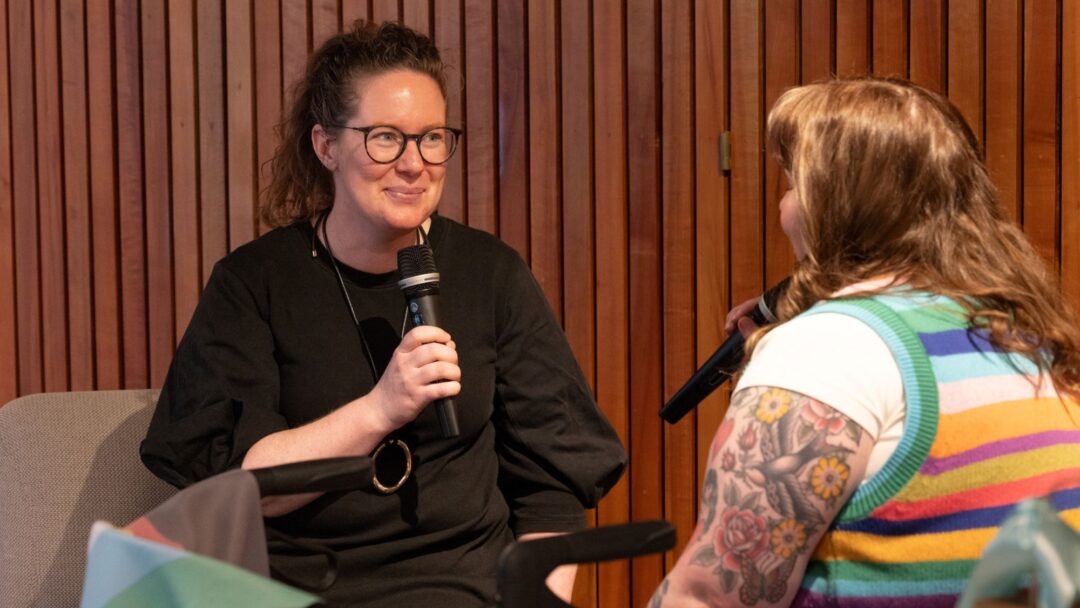
In this episode we talk to Kay Kerr and Beau Windon.
What does a sensitivity reader actually do?
Crip Culure by Fiona Murphy, Rosie Putland
Episode 4
•32 mins
Audio
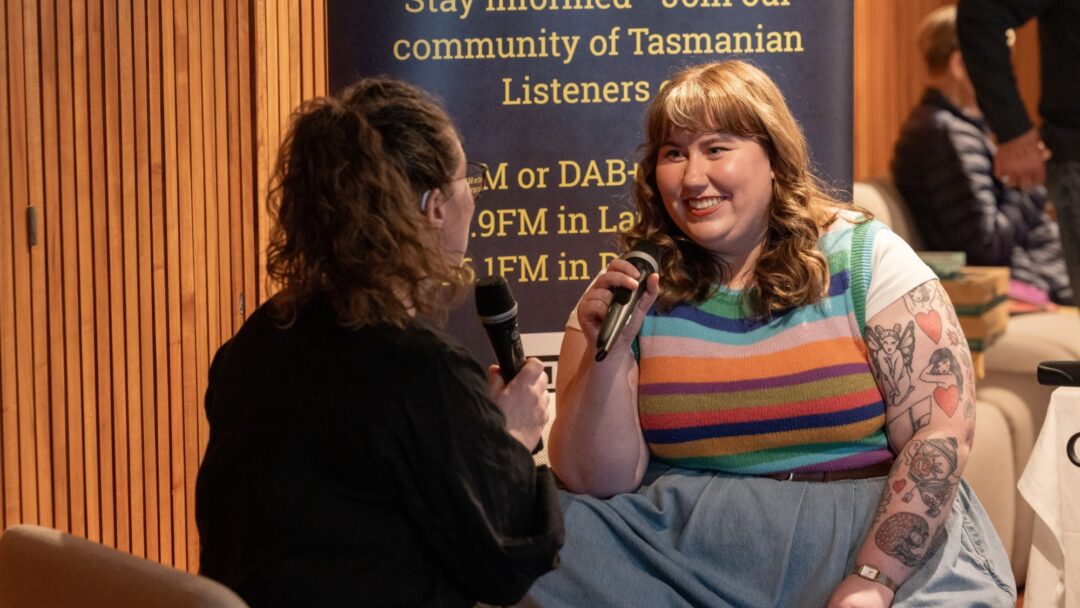
In this episode we talk to journalist Matilda Boseley and author Olivia Muscat.
Is it getting easier to build and sustain a writing career if you’re disabled?
Crip Culture by Fiona Murphy, Rosie Putland
Episode 5
•29 mins
Audio

In this episode we talk to authors Carly Findlay and Gayle Kennedy.
What is it like going on a book tour as a disabled author?
Crip Culture by Fiona Murphy, Rosie Putland
Episode 6
•28 mins
Audio

In this episode we talk to crime writer Ashley Kalagian Blunt.
Do disabled people have to write about disability?
Crip Culture by Fiona Murphy, Rosie Putland
Episode 7
•15 mins
Audio