Audio
Where are all the disabled authors?
1 season
Episode 1
21 mins
Our guests are Laura Pettenuzzo and Dr Scott Avery.
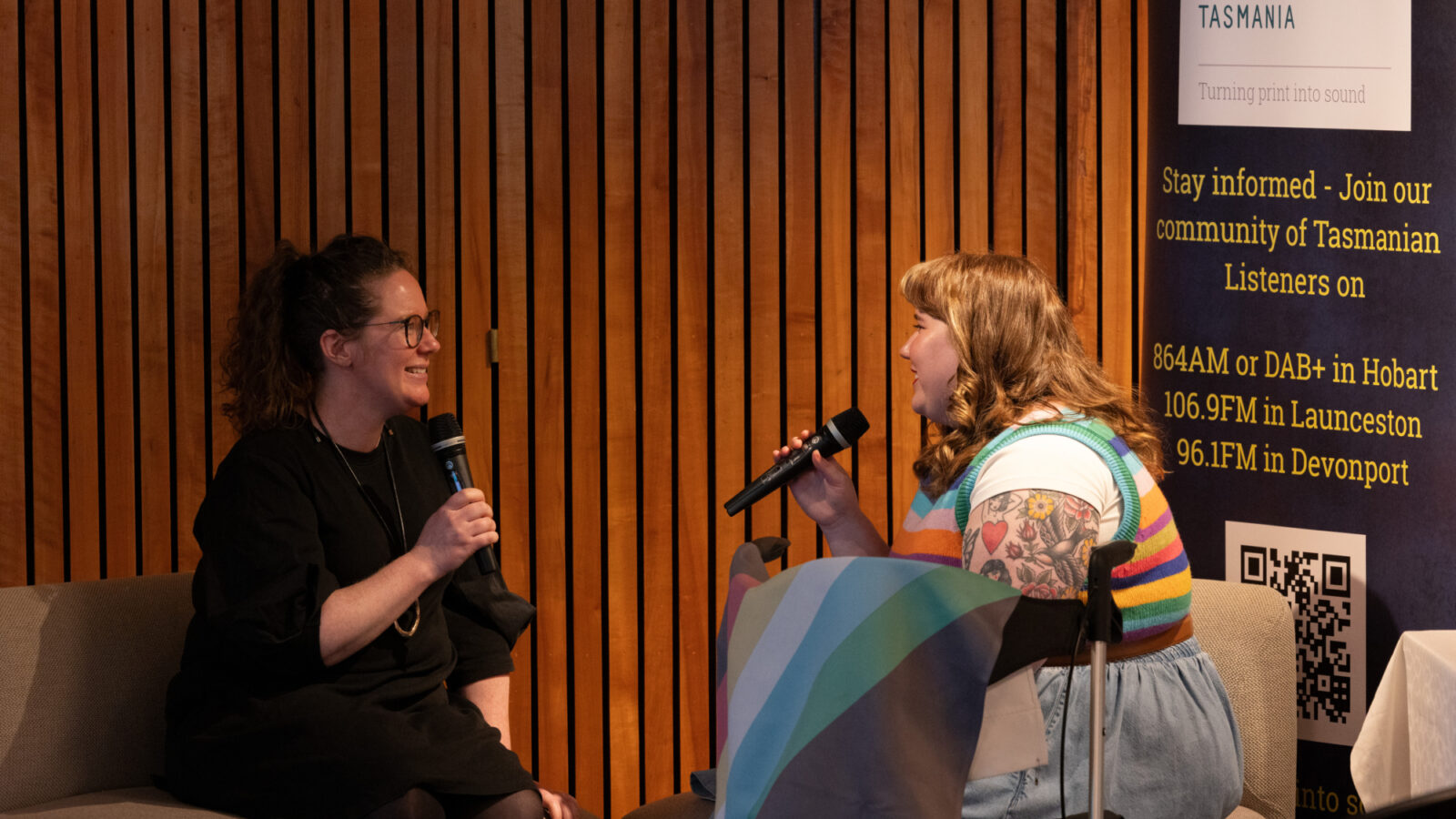
Crip Culture is hosted by Rosie Putland and Fiona Murphy, our producer is Honor Marino. In this episode we talk about how we made an accessible podcast and the story behind our name. Our guests are Laura Pettenuzzo and Dr Scott Avery. Laura shares what crip time looks for a freelance writer. Dr Scott talks about when he unexpectedly discovered that he had written a book. We ask both of them about representation and whether the publishing industry is accessible.
This podcast is proudly supported by Arts Tasmania and Print Radio Tasmania. Follow us on Instagram @CripCulturePodcast
This episode’s guests
Laura Pettenuzzo is a disabled writer, speaker, authenticity reader and accessible communications professional. Her writing has appeared in places such as Griffith Review, Meanjin, Archer Magazine, Women’s Agenda, ABC Lifestyle and The Age. She runs a business called All for Access, which supports individuals and organisations with plain language and Easy Read. Laura is also a co-editor and contributor to Crip Stories, an anthology of disabled writing to be published by NewSouth in 2026. You can usually find her trying to read or drink a cup of tea while being distracted by her cat.
- No Place Like Home by Laura Pettenuzzo – Griffith Review
- Nothing About Us Without Us by Laura Pettenuzzo – Griffith Review
- Follow Laura on LinkedIn
- Follow Laura on Instagram
Dr Scott Avery is a professor of Indigenous disability health and wellbeing in the School of Public Health, University of Technology Sydney. He is an Aboriginal man descendant from the Worimi people and is profoundly deaf. Dr Scott is a recognised educator, researcher and policy adviser on Indigenous cultural approaches for the inclusion of people with disability. He has extensive experience in conducting community-based research and policy in Indigenous and disability organisations, and is the ‘Professor in Residence’ at the First Peoples Disability Network, an Indigenous Disabled Peoples Organisation. His publication ‘Culture is Inclusion: A narrative of Aboriginal and Torres Strait Islander people with disability’ has influenced national policy across Closing the Gap, Australia’s Disability Strategy, and the Royal Commission into Violence, Abuse, Neglect and Exploitation of People with Disability. He has been appointed as an expert advisor to numerous Government bodies, and has advocated on Indigenous and disability rights at the United Nations. He was appointed by the Australian Government as an Ambassador for the International Day of People with Disability in 2023.
- Culture is Inclusion: A narrative of Aboriginal and Torres Strait Islander people with disability by Dr Scott Avery
- First Peoples Disability Network
Credits
Hosted by Fiona Murphy and Rosie Putland.
Produced and mixed by Honor Marino.
Cover art by Judy Kuo.
Music: Moments Like These — Simon Folwar (Uppbeat), License: BEB32FWJ6WULT877 & My Tiny Love — Soundroll (Uppbeat), License: VPFSMMM3K2C71ONF
Opening theme: [opening music with syncopated beat, sounds of a typing keyboard and layered voices]
Synthetic voice: Culture, Crip Culture.
Fiona Murphy: Well, welcome to the Crip Culture podcast.
Rosie Putland: I just love this idea of disability culture and crip culture
[music fades]
Laura Pettenuzzo: [Laura’s voice is muffled as she is wearing a mask] As a disabled writer who wants to make a career telling stories and elevating and amplifying disabled stories. It’s hard to believe that that’s possible.
Rosie: Hi and welcome to the Crip Culture podcast. I’m Rosie Putland, a disability influencer and storyteller.
Fiona: And I’m Fiona Murphy, an award-winning writer and the author of The Shape of Sound, a memoir about deafness.
Rosie: This podcast was recorded on stolen, unceded Aboriginal land. First Nations peoples are the world’s oldest storytellers, and their voices continue to guide us.
Fiona: Crip Culture celebrates disability arts, culture and creativity. In this season, we’re exploring the publishing industry and asking questions such as, what is it like being a disabled author or editor? Is the industry welcoming? Or are there still barriers? Throughout this season, we’ve spoken to writers from around Australia.
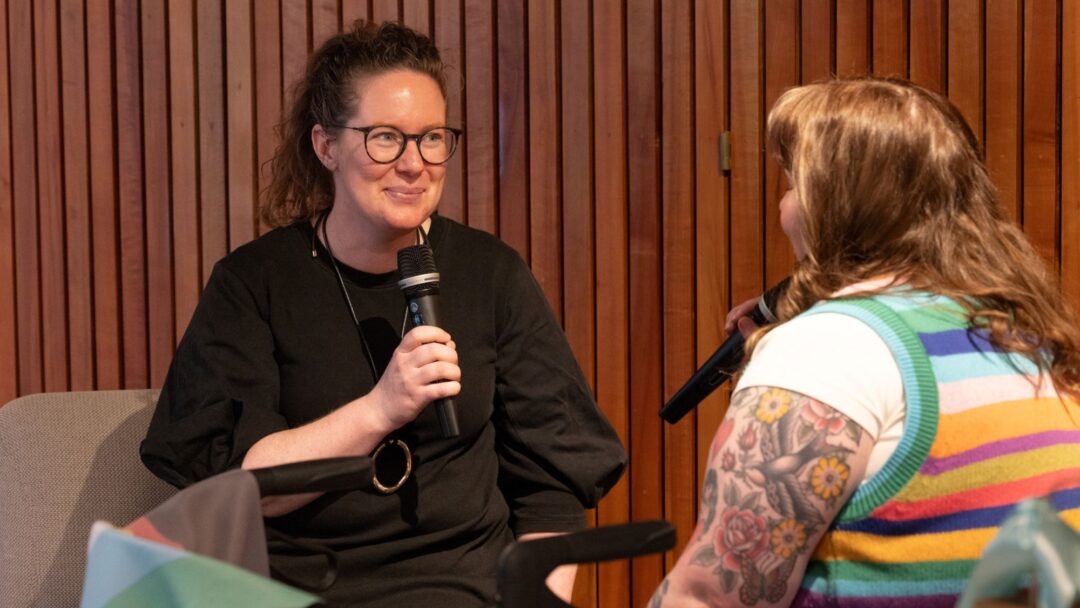
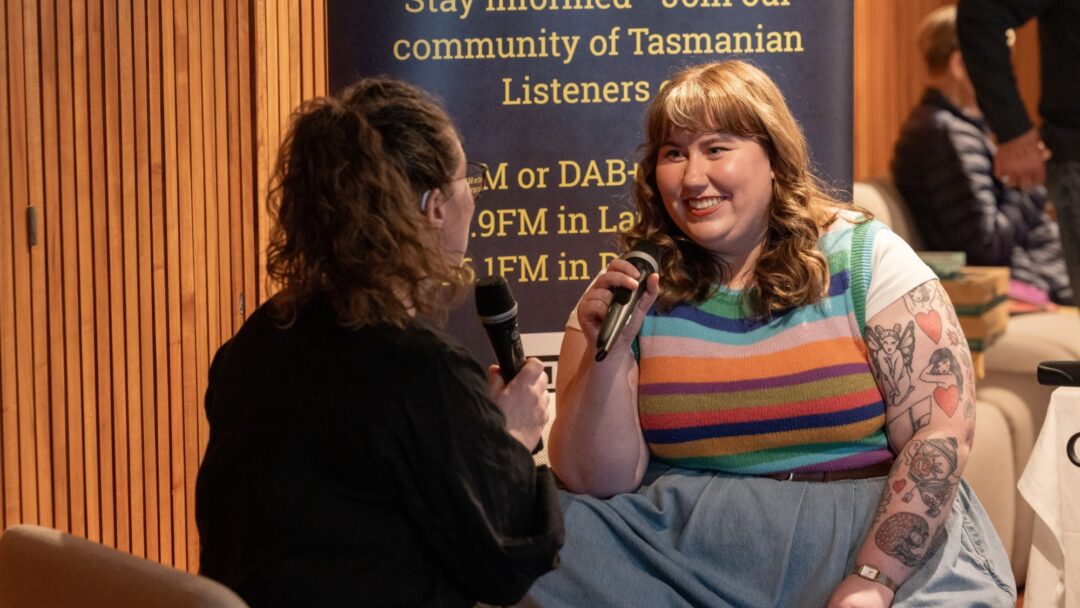
Rosie: We’ve worked on crip time, whether dialing in via zoom or chatting face to face in a local community radio station.
Fiona: But even before any interview was recorded, we chatted about access. We wanted everyone to feel comfortable and at ease, for our guests, as well as for ourselves.
Rosie: Accessibility looked like flicking off fluorescent lights and masking up,
Fiona: providing interview questions beforehand and planning rest breaks,
Rosie: finding accessible studios and briefing audio techs on our guest preferences,
Fiona: and if anyone needed to reschedule, that was absolutely okay.
[Swipe sound effect]
Honor Marino: Hey team? Is it even okay to use the word crip?
Fiona: That’s Honor, our non-disabled producer who’s been working on the podcast with us.
Rosie: The short answer is yes, reclaiming language is a part of disability culture,
Fiona: but we get that reclamation happens at a different rhythm and pace for each disabled person,
Rosie: and they don’t have to reclaim it at all.
Fiona: We’re inspired by community language, including crip time, crip lit and crip-mas.
Rosie: Throughout this season, you’ll hear us and other guests using some of these terms. Meet Laura Pettenuzzo, a freelance writer with bylines in The Age, SBS Voices, ABC Everyday, and The Guardian, she tells us about what crip time means to her.
Laura: Being a disabled writer means that I operate on crip time. Crip time is the idea that time is experienced and can be experienced differently by disabled people. That might be because certain tasks take us longer. So, so what that looks like in terms of writing for me is that as a disabled writer, I can’t necessarily write as fast or as much as I want to, but that doesn’t mean that my words aren’t valuable. I think actually what I’m trying to remind myself is that that means that they’re more valuable because I’m using precious spoons. Spoons is another term for energy. I’m using precious energy to create those words, and crucially also to create words that I hope will invite reflection in the people who are reading them, particularly if I’m writing something like an article that I know is going to have an audience and is going to have an audience relatively soon, then being a disabled writer comes with almost a sense of responsibility. For me, personally, I want to do that in a way that furthers the disability rights movement, and that does challenge a lot of those ableist stereotypes that we’ve talked about previously.
Fiona: Crip time reminds us that slowing down doesn’t mean less value. Instead, it changes how we measure our worth.
Rosie: Challenging ableist stereotypes can take up so much precious time and energy. For me, this is long weighed on the decision to disclose. Would I prefer that the slurs come when I don’t disclose I’m Autistic, or the infantilisation that comes when I do, or the stereotypes about what it means to have chronic pain and use mobility aids as a fat person as if I can exercise my way out of pain.
Fiona: And for me, I’ve had people tell me that I don’t look or sound deaf. I became so afraid of what others thought I hid my deafness for over 20 years. Dr Scott Avery, an author and professor of indigenous disability health and wellbeing, has grappled with similar stereotypes.
Dr Scott Avery: How can I be really clever in challenging this narrative of its hearing loss or its deficit or it’s something wrong with you? I’m actually gifted by the silence now, I’m not hearing impaired. I wear these cochlear implants as much for your benefit as I do for me. But when I go home, I go to my natural world. I take them off, and there is such a special serene place, and that’s my natural world. So I’m kind of doing this for you as much it is for me.
Fiona: Scott admits that finding self-acceptance is only one piece of the puzzle. Moving through the world as a Deaf Aboriginal man has many challenges.
Dr. Scott: I actually use a phrase that we’re kind of everyone’s second favourite football team, because in being deaf in the Aboriginal world, it’s like there’s all these things happening in the Aboriginal world, being deaf such a small part of it, and conversely, being Aboriginal in the deaf and the disabled world this being such a small part of it. And everyone kind of goes, oh, we want you to do well, but we’re kind of not going to buy your jersey and turn up for you, because we’ve just got our own stuff happening. And part of me doing what I did would ultimately become a book Culture is Inclusion, and my PhD and a whole funded research program now was to create a safe space so if I walk into a bookstore, I can see whole bookshelves of Aboriginal people. I love them. I read them inspired by the leaders. I’m going, where’s, where’s the deaf stories? You know, if they’re there at all, thankfully, I know of yours. You’ll be signing my copy one day. But I’m going, Yeah, and actually, knowing yours is out there, going, actually, I just, I just kind of need to shut up and get them writing as well. Like, if you don’t see the stories that you want to see-read, write them. I call it my right to sparkle. You know, my right to be excellent. I spend so much of my energy just getting into the room, it’s almost like, oh, that’s good enough. You should be grateful, and said, no, I want to be really good. And I’ve just felt my whole life, it didn’t matter what qualifications or job title or whatever I achieved, I had this wall around me, like it’s kind of this invisible wall going, well, this is as far as you’ll ever get. This is the most you’ll ever be. I might, might be old now thinking, oh, mightn’t happen in my life, but I can break some of that open for the next one to come through.
[music lifts]
Rosie: Laura started to notice the impact of walls being broken down.
Laura: The publishing industry in particular has been inaccessible to us for so long, and we’re slowly seeing disabled people telling our own stories. But I think what we’ve also seen for a long time is disabled writers being pigeonholed into only telling disabled stories, but only telling particular kinds of disabled stories, only kind of exploring the ideas of, say, internalised ableism and finding disability pride and those things are really important, and they’re not all that we are. They’re not all that disabled characters are and can be, and we, what I really want to see is disabled joy is characters living boldly as their glorious disabled selves, unapologetically, but also being received by the world around them without shame and with acceptance and in a way and in a world that normalises disability, I guess I want to see not just a shift in the way that disabled characters are portrayed, but also in the way that the fictional worlds around them are portrayed, so that the fictional worlds themselves don’t consider disability in much the same way that the real world shouldn’t consider disability as an afterthought or an add on. But I want fictional worlds and fictional stories to consider disability as a given and not like a given that’s a pity or a shame, but a given that is a unique asset to the world and the storytelling.
[music lifts]
Fiona: Dr Scott tells us he thinks about storytelling through a cultural lens, which stretches back thousands of years.
Dr. Scott: When I talk about cultural, I draw on my learnings as someone who’s Aboriginal, being able to sit with Aboriginal people and their idea of disability and deafness is very different to how the western world sees disability and deafness, is this kind of everyone in our world has a place and purpose, and it’s often described as there is no word for disability in Aboriginal languages.
[sounds of cicadas at night]
Dr. Scott: We often use nature now country to teach this going, look at all the animals they have, the different place. Look at all the trees, different kinds of trees. There’s a reason why there’s different kind of trees, and they all work together to keep the planet going. And that’s very much how we see people. If you understand an indigenous culture of disability, you have to cast your mind back 25,000 years. So out in Lake Mungo in western New South Wales, there’s these footprints in the clay.
[sounds of footprints crunching on clay at night]
Dr. Scott: So, it goes right footprint, right footprint, right footprint, no corresponding left footprint. And the Western archaeologist going, what’s going on here? Maybe the wind has eroded, and then someone gonna really got it here. Let’s ask the elders, the elders go, “that’s a one-legged man on a hunt”. And we told the story. In addition, my novel Culture is Inclusion tells the story of this is emblematic of our culture, where we talk about people having responsibility. They bring inherent worth to their community. The idea of being deaf or disabled, kind of this is not no it’s not significant. It’s what they can bring. So this one legged man participating being part of a community in on a hunt. You have your moments where you kind of go into dark places. I spent a lot of time on the Disability Royal Commission, which you know, you could see the hurt and inflicted on our community into just the way it was dealt with. I thought was just left many of us in a dark place. And I kind of imagined having a conversation with Mungo Man and I was kind of going, oh, man, it’s just so hard. Mango Man goes, Well, do you think I actually got on that hunt without a struggle?
[soft piano music lifts]
Dr. Scott: It’s actually we have to fight for our right. We have to disrupt things. It’s not going to happen unless we talk about the struggle. And how can we learn about what is a good struggle? What is honour in struggle, what is principle based of struggle, to fight and disrupt as active resistance, to fight for our place in society. Now that is trying to take this away for us. We need Deaf scholars. We need more Deaf professors. We need more deaf writers. We need more Deaf data analysts. We need more Deaf teachers. We need more Deaf baristas. We need more Deaf people working in airlines. We that’s what we, that’s it. So, it gets to a point where you don’t even notice it anymore. It’s not exceptional. You can just shine in your own right.
[piano music rises and lifts]
Laura: We are still being let down time and time again by an industry that if it cared, and if it did the work and did that tiniest little bit of reflection could ultimately shift the narrative on the way that disability is represented.
Rosie: Laura is an editor of an anthology that features work from disabled and neurodivergent writers.
Laura: Anthologies don’t sell very well. And you know, in a world that is so driven by money and driven by profit, it’s it’s a rarity and a privilege to have an anthology published. In terms of disability anthology specifically, it’s really important, because they are a means of circumventing a lot of the access barriers that disabled people face in publishing. A lot of the times it’s not just the attitudinal bias that could be conscious or unconscious on the part of publishers and acquisitions teams. It also. it’s also sometimes, at least for me, my own disability, that has meant that it is harder for me to get words on the page. And so what these anthologies do is they allow disabled writers who maybe haven’t had their works published ever before or only in smaller pieces or smaller platforms, to reach a much wider audience. There, or at least, I want this anthology to be a launch pad, or like a springboard for the careers of so many of the disabled people whose words we’re lucky enough to have in the collection. I think what what it means to me to see disability anthologies on the shelves is. Is to see things changing by highlighting the voices of multiply marginalised disabled writers. This anthology, I hope, embodies the idea of Disability Justice.
[theme music lifts]
Rosie: The author of care work dreaming disability justice. Leah Lakshmi Piepzna-Samarasinha, says that a disability justice framework understands that all bodies are unique and essential, that all bodies have strengths and needs that must be met.
Fiona: Storytelling is a powerful way of highlighting the strengths and needs of disabled people. Dr Scott calls his book, Culture is Inclusion, a truth telling exercise. He had the goal of talking to as many Aboriginal people with disability as he could.
Dr. Scott: The research question was, what is your story? That was it. Tell me your story. I didn’t want to go in and say, are you disabled? This, that, I just wanted, yeah, what’s your story? First thing I ever did was in Redfern. So, I’m connected with what was called the Deadly Deaf Mob, Aboriginal people who are either deaf or have hearing impairment. I end up speaking to people in Redfern, Wagga Wagga, Broken Hill, Welkenya, went to Alice Springs, went up to through the Utopia Homelands into Tennant Creek, went down to Adelaide, because one of the Deaf people moved Adelaide. So can you do one down here? So we made an arrangement to go down there. So ended up speaking to 47 Aboriginal people. It’s originally commissioned as a government report, and as I do, you have to do the academic peer review, but I do a community review as well. So how would community read this? Because I need to make sure that community are okay with how I’m writing about their story, your sense of you’re the custodian, you’re like, you’re like a curator in a museum to their stories. That’s the sense of responsibility you feel like you have. So sent it out. So here’s my draft report, and someone come back – “oh, you’ve written a book mate”. And I went, actually, thank you for that intervention. Don’t think I want to write a government report anymore. I want to write a book. So in the space of 10 weeks, just rewrote the whole style and tone into book form. There’s a lot of hand imagery in the book all the way through, because that is in aboriginal cultures that hand and healing that’s intertwined. One of my favourite things that naturally opens is, is an image of right, a set of right footprints on a orange, ochre clay. And I actually have the copy that I brought in today. Bring it out for special occasions. It’s, it’s my ceremony copy. And it’s, I call it a ceremony copy because when we did the launch of the book, there was a smoking ceremony. Actually walked this book, this this through, and it’s not a book anymore. It’s, it’s my totem. I carry it with me. It’s like my security blanket, and for me, I think it just captures the spirit and the soul of the people who told their stories, many of whom I know, have passed.
[piano music rises]
Rosie: What makes you hopeful for the future of disabled storytelling,
Laura: Grassroots, grassroots disabled storytelling, and seeing the ways that that is is growing, and seeing the ways that publishing is ever so slowly starting to make space for, and not Just make space for, but actually celebrate disabled voices. One example that I think of is the diversity in Australia and New Zealand Children’s Book Award. I’m lucky enough to be on the committee for that award, and that was created by Kate Foster. Shout out to Kate, who is an autistic, children’s author, and so that exists purely to elevate and celebrate books and stories for children. So, picture books, middle grade, young adult chapter books that have a representation of diverse or marginalised characters and seeing the ways that through that award, disabled stories are being recognised and gaining new readerships has been really beautiful. But I think there’s also things like Bramble Journal, which is a journal specifically for disabled writers, by and for disabled. Writers and the invisible disability issue of Rally Magazine, just seeing all those different ways that disabled writers are creating the spaces that we need has been really beautiful and shows me that, you know, the I’m stealing, I’m stealing words now. But, you know, the idea of the future is disabled is not mine, the phrase is not mine. But I think the idea behind it is very, very true. And to adjust that slightly, the future of publishing is disabled, and we’re starting to see that very slowly, and that gives me so much hope.
[theme music rises]
Rosie: This is Crip Culture, a podcast about disabled creativity, craft and community. If you enjoyed this episode, please share it with a friend.
Fiona: Thank you to this episode’s guests, Laura Pettenuzzo and Dr Scott Avery. You can find links to Laura and Scott’s work in the show notes.
Rosie: Crip Culture is hosted by Rosie Putland and Fiona Murphy. Our producer and editor is Honor Marino.
Fiona: This series was made possible with funding from Arts Tasmania and Print Radio Tasmania.
Rosie: And if you want to keep creating culture with us, follow us on socials @CripCulturePodcast and subscribe wherever you get your podcasts.
Continue listening
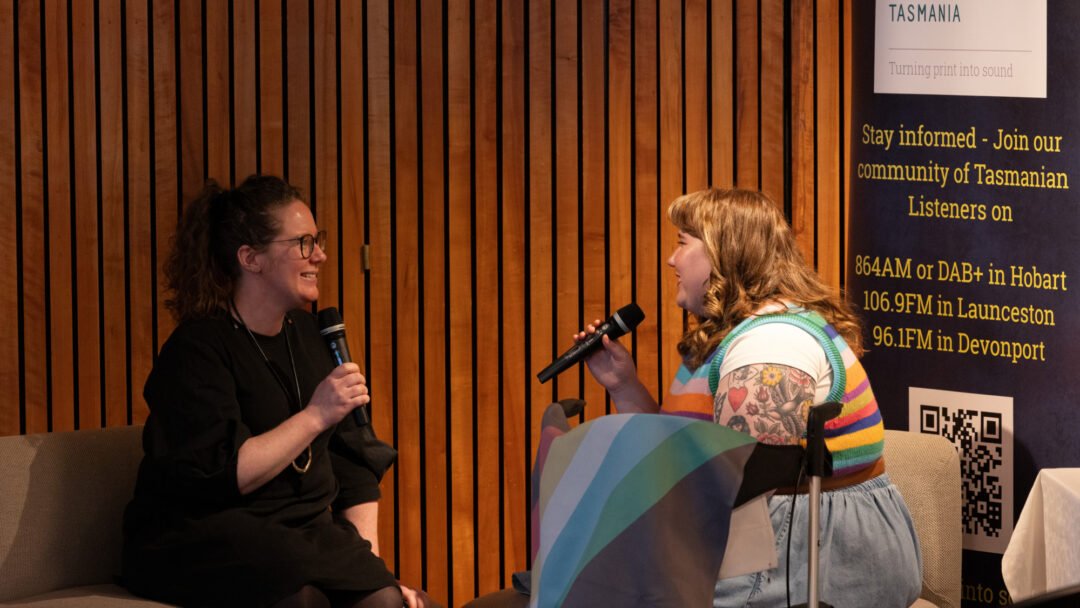
Our guests are Laura Pettenuzzo and Dr Scott Avery.
Where are all the disabled authors?
Crip Culture Podcast by Fiona Murphy, Rosie Putland
Episode 1
•21 mins
Audio
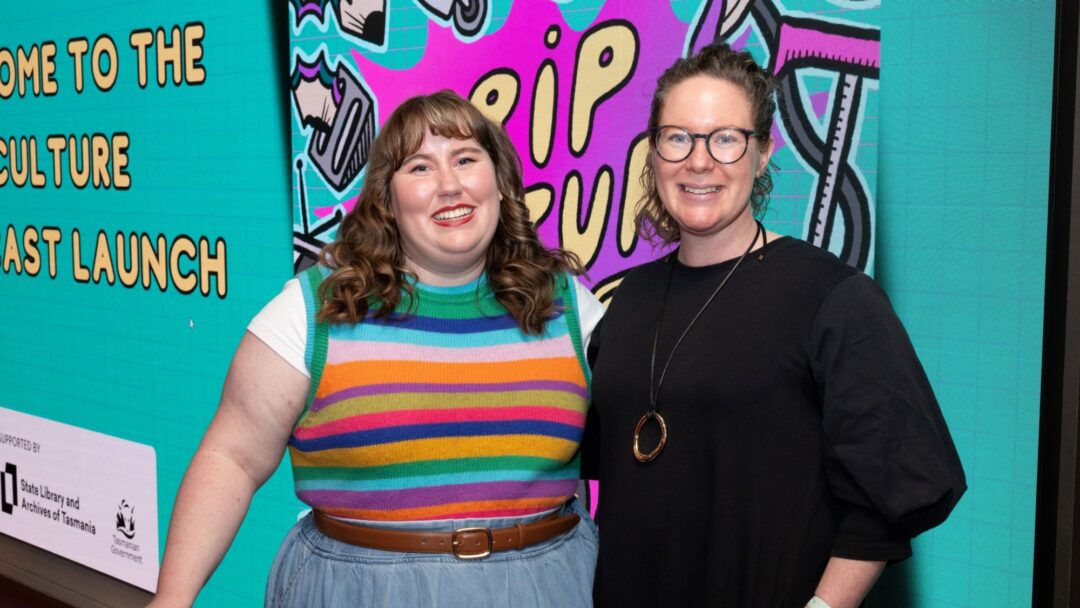
In this episode we talk to author Micheline Lee and poet Andy Jackson.
Is it risky being an openly disabled author?
Crip Culture by Fiona Murphy, Rosie Putland
Episode 2
•19 mins
Audio
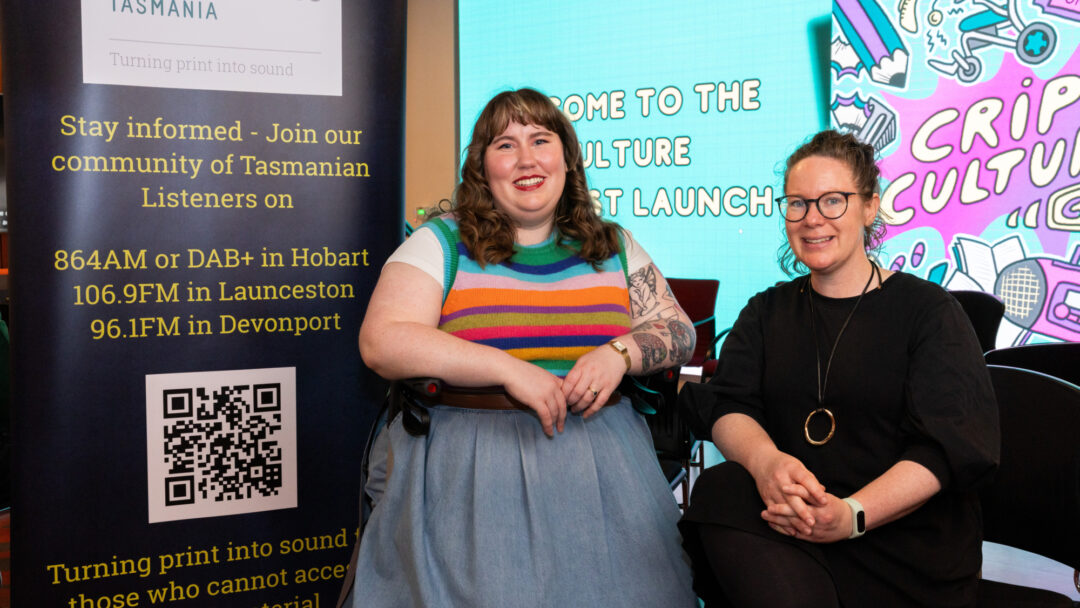
In this episode we talk to author Kylie Maslen and poet Esther Ottaway.
What does accessibility actually look like in the publishing industry?
Crip Culture by Fiona Murphy, Rosie Putland
Episode 3
•31 mins
Audio
In this episode we talk to Kay Kerr and Beau Windon.
What does a sensitivity reader actually do?
Crip Culure by Fiona Murphy, Rosie Putland
Episode 4
•32 mins
Audio
In this episode we talk to journalist Matilda Boseley and author Olivia Muscat.
Is it getting easier to build and sustain a writing career if you’re disabled?
Crip Culture by Fiona Murphy, Rosie Putland
Episode 5
•29 mins
Audio

In this episode we talk to authors Carly Findlay and Gayle Kennedy.
What is it like going on a book tour as a disabled author?
Crip Culture by Fiona Murphy, Rosie Putland
Episode 6
•28 mins
Audio

In this episode we talk to crime writer Ashley Kalagian Blunt.
Do disabled people have to write about disability?
Crip Culture by Fiona Murphy, Rosie Putland
Episode 7
•15 mins
Audio