Audio
What does a sensitivity reader actually do?
1 season
Episode 4
32 mins
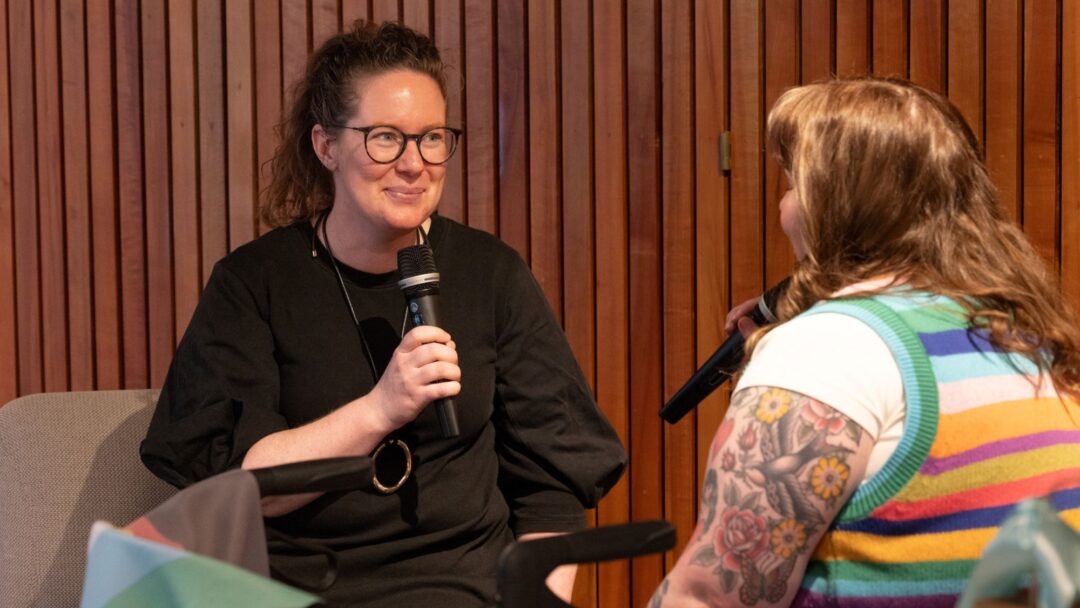
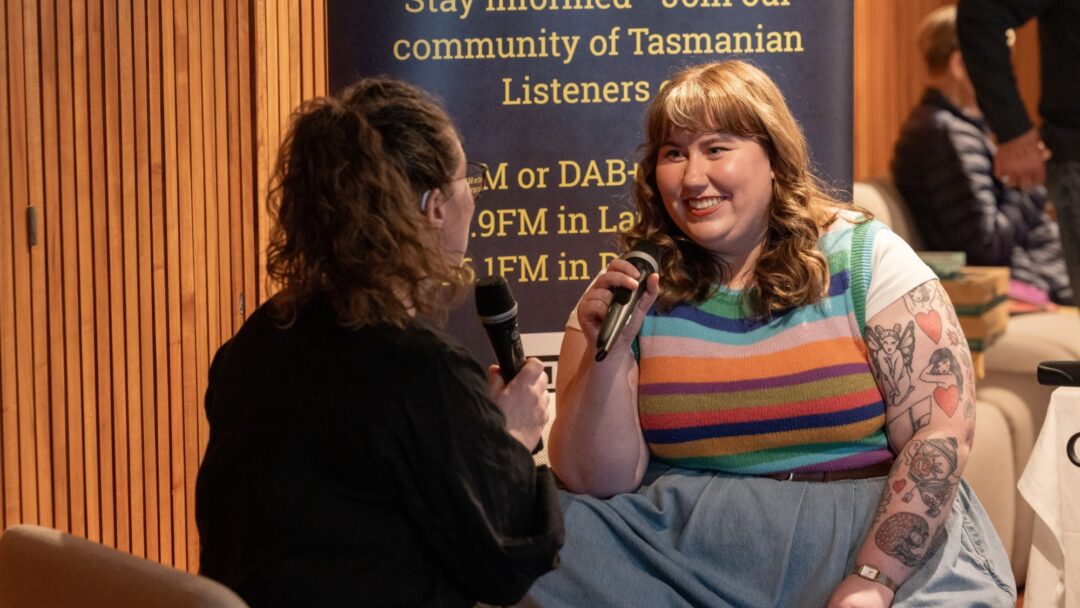
In this episode we talk to Kay Kerr and Beau Windon.
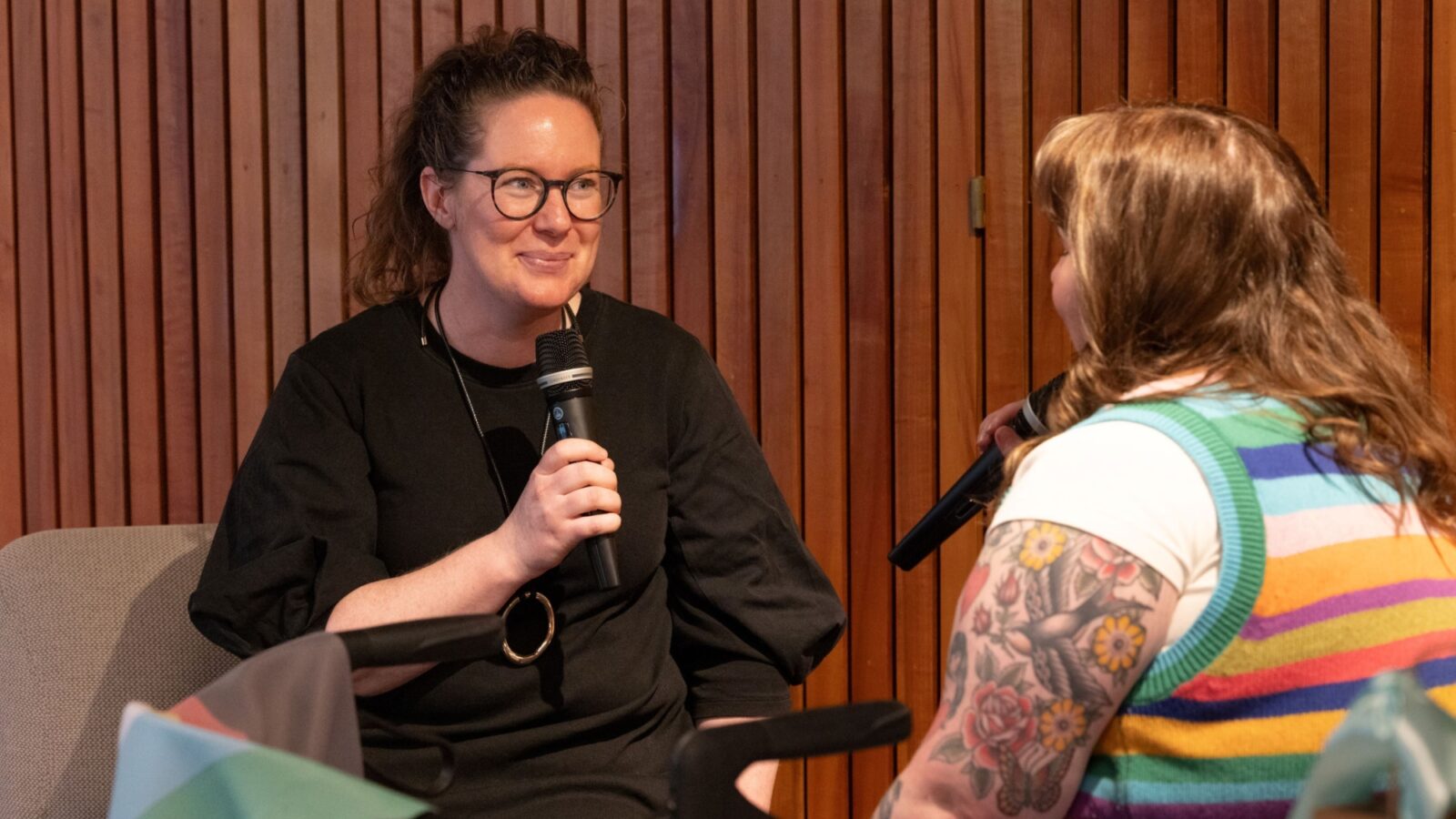
This episode’s guests
Kay Kerr is an autistic journalist and author living on the Sunshine Coast, Queensland. She has published three books—Young Adult novels Please Don’t Hug Me and Social Queue, and non-fiction Love & Autism. Her fourth book, and first adult fiction, Might Cry Later, will be out in the new year.
Beau Windon is a neurodivergent author of Wiradjuri heritage based in Naarm. Unable to settle on just one genre of writing, he wields them all with wreckless abandon. His writing has won awards and been published widely. He’s also currently doing his PhD in the Aesthetic Form of Neurodivergent Literary Memoir — which is quite the twist since he failed English in High School. If Beau could be any animal, he would be a chocolate egg – the kind with a toy hidden inside.
Credits
Hosted by Fiona Murphy and Rosie Putland.
Produced and mixed by Honor Marino.
Cover art by Judy Kuo.
Music: Moments Like These — Simon Folwar (Uppbeat), License: BEB32FWJ6WULT877 & My Tiny Love — Soundroll (Uppbeat), License: VPFSMMM3K2C71ONF
Opening theme: [opening music with syncopated beat, sounds of a typing keyboard and layered voices]
Synthetic voice: Culture, Crip Culture.
Fiona Murphy: Well, welcome to the Crip Culture podcast.
Rosie Putland: I just love this idea of disability culture and crip culture
[music fades]
Beau Windon: If you, if you give them some of yourself, it makes it easier for them to give some of themselves to you.
Kay Kerr: Nobody is forcing an outcome from the process. Nobody is saying, you know, this person is going to read the book and tell you what you’re not allowed to put in it, or tell you what you have to put in it. It’s feedback in the same way that any other editing process is.
Fiona: This podcast was recorded on stolen, unceded Aboriginal land. First Nations peoples are the world’s oldest storytellers, and their voices continue to guide us.
Rosie: Hello and welcome to the Crip Culture Podcast. I’m Rosie Putland, a disability influencer and storyteller.
Fiona: And I’m Fiona Murphy, an award winning writer and the author of The Shape of Sound, a memoir about deafness.
Rosie: Crip Culture celebrates disability, arts, culture and creativity. Today, we’re talking about what makes an authentic story and why so called sensitivity reads are really about craft and community. Authentic stories start with safer rooms. Beau Windon is an award winning neurodivergent writer of Wiradjuri heritage, and he tells us his tips for creating accessible and safe creative spaces.
Beau: Yeah, well, it is something that is really important to me, because I feel like I took so long to get comfortable with myself and what I need and presenting myself and how I can fully participate in things. It took me so long to figure that out that my greatest desire is to help shorten that amount of time for other people. So I’m always very you know, when I come into these kind of spaces, I will front load things with saying, you know, don’t, don’t worry about if you need to ask for any accessibility adjustments, or if you got any questions or thoughts in your head, and you’re like, oh, I don’t know if I should say that, if it’s acceptable to say that, or if it’ll be embarrassing, don’t worry about about saying that or asking for anything, because the chances are any there’s so many other people in this room that are also thinking that and wanting that, and they’re just hoping that someone else will say it so they can be like, oh, actually, yes, I I would like that as well.
Fiona: Beau has found that openness invites openness, and sometimes it becomes a perfectly human icebreaker.
Beau: I’ve got the story, this story that that I often tell at the start of running a workshop, or when I first meet people, because I’ve started to see it as like a cheat, like a hack, into getting people to open up and feel comfortable with me. And it just really kind of removes all of my armour and makes myself vulnerable to them. And I find when I make myself vulnerable and open to people, then it makes them more comfortable with it as well. But about a year and a half ago now, while I was on my way to run a workshop, I shit my pants. So I’m lactose intolerant, but I always say the keyword there is intolerant. I’m tolerant of lactose if there’s a toilet nearby. So I always think, okay, I can have this frozen yoghurt because I’m going home soon and there’s toilets there. So you know, if anything goes wrong, I’m safe. I’m tolerant. I had just kind of had a bit of a brain slip that I was doing this workshop, and I had gotten a like a milkshake, had it and then thrown it away. Was pottering around the city, because I live in the CBD, in Melbourne, CBD, so I was pottering around the city. And then I remembered I had to do this workshop, and I was like, Oh shoot. I started making my way there, and it was just like the harmless act of, like stepping off the street onto over the gutter, where I felt like a small release, and had this moment of oh no, oh no. And, you know, in my head, I was like, maybe it’s just sweat or something. I was really lucky that I was close to my apartment as well, and I kind of waddled home, and then had this moment where, you know, got got in and went into the bathroom, took my pants off, and I was like, oh, yep, yep, no, that’s happened anyway, threw, threw those underwear, out, changed them, cleaned myself up, and everything. Went to teach the class, and I don’t know why it was like, it was almost like I had this thing that was just weighing on me, and I was like, I need it to release the pressure, the tension. So I told the class, I told the workshop about this. I was like, so I just shit my pants. Everyone laughed, and everyone like, you know became so open and welcoming of me that I was like, oh, and I started just telling this story all the time. And now I’ve got, like, I don’t even think twice about it. I would just, like, tell people how I shit my pants, and all of a sudden people do start to open up to it. And it’s funny because, like, I teach classes at Melbourne University, and in the first class of everything, I’ll usually tell the story a few weeks in last year, I had a student come in about halfway through the semester, and they were so excited. They’re like, Beau, guess what? I shit my pants on the weekend!
Fiona: [laughs]
Beau: Fantastic. So I think like that sharing and, you know, being upfront with with what I need for accessibility and what can make things easier for me to participate, it helps other people come into that space as well. I think of it as like, as like a cheat code, you know, like with video games, except instead of any code, it’s just telling the story of me shitting my pants.
[sounds of retro video game success]
Fiona: Vulnerability isn’t the point. It’s the door. Authenticity walks through it. The feeling Beau creates safety, clarity, that’s the same energy an authenticity reader can bring to a manuscript. It’s a lived experience editor who checks accuracy, context and impact, then suggests ways to deepen the work. However, some people say it stifles creativity or is too ‘politically correct’. Award winning Autistic author, Kay Kerr of the novels, Please Don’t Hug Me and Social Cue sheds light on what the process actually looks like.
Kay: I wonder what people think a sensitivity read or an authenticity read is when there is that kind of criticism. Because I think nobody is forcing an outcome from the process. Nobody is saying, you know, this person is going to read the book and tell you what you’re not allowed to put in it, or tell you what you have to put in it. It’s feedback in the same way that any other editing process is, whether you go and you have your friends read a manuscript before you send it to a publisher, or if it’s, you know, an editor at your publishing house, or like somebody like a literary agent reading it, or a writing group reading it. I view it very much in that framework, as opposed to this kind of, you know, politicised idea of it being there is only one right way to write a certain type of character, and this person’s the police that’s going to come in and tell you, like, this is the way you have to do it, and it’s going to ruin the narrative of your story, or, yeah, do something negative to the story. I just think, I also think that’s kind of like a purposefully, like an ill reading of that situation, like ill intent I guess I don’t like think that many people actually think that. I think that’s kind of the argument that’s put behind it, because it is something that we’re talking about in the space of diversity, and that always rubs a certain type of person the wrong way.
Rosie: Yeah, it sounds like what you’re saying is that it’s much more collaborative than than people imagine. I wonder if that sort of perception around authenticity or sensitivity reading comes from conversations around book banning. Do you think that’s the case?
Kay: Yeah, definitely. And it’s interesting, because the books that are, you know, often the books that come up in this idea of book banning, or these very real examples of book banning, are diverse books. You know, whether that’s gender and sexuality or diversity around yeah, around other things like that. So the books that we’re having the conversations around authenticity reading for are also often the books that are yeah, the same ones that are banned when there is that sort of conservative push against certain voices.
Rosie: It sounds like people think it’s something that’s all or nothing. You have a sensitivity reader, and then they just axe the book. But it doesn’t, I don’t think that’s the case.
Kay: No and I think, like, I have had authenticity readers on all of my books for a variety of characters. So you know my characters being autistic and neurodivergent as a primary point. I always have other neurodivergent writers read my work because I think, you know, it’s important to have their perspective and get their feedback, and it sparks really interesting, fun conversations that make me think about things in ways that I hadn’t thought about before. So I just think, as long as it you know you’re engaging with people that you can work with creatively and that you have that sort of rapport with. I don’t see how it can go wrong. I guess the times when I have felt that it hasn’t worked out has been the other way around. When I’ve been the person doing the read, perhaps, and what somebody’s looking for is not really feedback, but me being very autistic and just being like, this is what’s not working about that, or this is what you could do instead, and that’s not actually what is wanted. So that’s, I think, where I’ve found trouble, more so than engaging with other people and having conversations around my own work/
Rosie: That’s so interesting. I really love the way that you talk about it being collaborative and actually being exciting to have that feedback and think of new ideas to actually make the writing better. Other than you know, that collaborative nature of it, what do you think makes a really good authenticity or sensitivity reader?
Kay: I think it’s, it’s the lived experience. So unless you’re writing something that is entirely autobiographical, there is, you know, you’re using creativity, you’re using your imagination, you’re making up scenarios, you’re making up characters. So even if you have that shared identity with them, you are still writing them in situations that you haven’t experienced, or in dynamics that you haven’t experienced, or with other people in ways that you haven’t lived. So I think what’s really interesting and fun about it is people that you know are also autistic for me, but have lived different lives. So it’s, you know, people who have had an autism diagnosis from when they were a child, compared to me having one when I was an adult, that changes their experience of moving through the world. People that have grown up with connection to the neurodivergent community, versus people who grew up feeling really isolated because of that identity, like it just changes the lived experience. So I think a sensitivity reader that does a good job is someone that is excited about engaging the work. I use authenticity reader and sensitivity reader interchangeably, because, because I have understood that for some people, sensitivity as the descriptor doesn’t quite fit, because it’s not, I guess, about being overly sensitive about the work, it’s more about making sure that the work is authentic to the experience of the character.
Fiona: So what does that collaboration feel like on the page? Beau says it starts the same way his writing classes do, naming power, lowering stakes and inviting honesty.
Beau: That would be like my biggest tip when it comes to either running workshops or editing disabled writers or artists work is if you if you give them some of yourself, it makes it easier for them to give some of themselves to you.
Fiona: I can only imagine if the industry as a whole started to use that approach, because in my mind, I’m going through all these interactions I’ve had with editors where they do use phrases like these are just suggestions, but then you follow each one meticulously, because is it really a suggestion? I’m not sure. Where is that kind of connecting and being vulnerable, there’s trust is being built, and it feels like the power dynamics is becoming more of a collaboration than someone being dictated to.
Beau: Yeah, yeah, exactly that. And I always, you know, will mention that as well, that it is a collaboration. And I, because I have that same thing when I see from editors, suggestions I’d be like, is this a suggestion, though, or are you telling me this and you’re just trying to be nice and polite. So I always say, you know, feel absolutely free to disregard this is just something that I thought of that might lift it, lift this sentence or this paragraph or this story, in a way, but it might not gel with you. And if it doesn’t gel with you, that is absolutely fine. You can feel free to disregard it. It’s not going to hurt my feelings at all. In fact, it’s going to make me happy, because I know that you know what you want from this, and that’s, that’s what I want, I want. I want you to be proud of this, you know.
Rosie: But sometimes the ssk isn’t honesty at all. The ask becomes almost like an insurance plan.
Kay: Sometimes with autistic characters written by non autistic writers, there is this idea of, if I just get one autistic person to look at it, they can give me the yeah, like the tick of approval, and then I can go ahead and but also that, to me, feels a little bit like, if I face any criticism, I can point to that autistic person and say they said it was fine, and you’re almost used as a shield, in that way, from any criticism, which I really don’t like, the feeling of.
Rosie: Authenticity reading isn’t about asking for a permission slip. It’s about accountability.
Fiona: But is it okay to write outside of your lane?
Beau: I’ve always been kind of on the fence with it. I do think, and, you know, often I’ll have people in workshops, or I’ve even sat in in, you know, sat in at writing festivals, and heard people ask other writers this. And now I get it a lot myself, but that question of, oh, I want to include an Aboriginal character, I’m not Aboriginal myself. Is that okay? Or, you know, wanting to include any kind of character that doesn’t have that same experience as you and is that okay? And I’m I feel like I kind of seesaw on this issue a lot, and the place I’ve come to at the moment is that if you do want to write those other characters, I think, well, one it’s like, it’s a personal decision, it’s a moral decision. Do you really need to write that that character? Are you cannibalising someone’s someone’s voice that might want to share that story? But I think if you are approaching it from an outsider point of view, you started to walk away from the problematic side of it. Now, in saying that, are you, and I don’t know if this is so much sensitivity readers, but I I always say, if you’re going to write about people, though, you know, get, get to know some of us, so many people want to write First Nations character, and they don’t know any First Nations people, and they haven’t spoken to them. Oh, but I’ve read a tonne of books and I’ve seen interviews, but you haven’t spoken to us. So you really, you really don’t know the intricate details of what our lives have been and what and what it means to exist like this. And I always say, look, offer to reach out to someone, offer to buy them lunch or throw them some money and just hang out and and have a yarn and get to know them, so you can bring that authenticity to that character. And then when you’ve finished that work, you’ve also got someone that can read over it, that you’ve already got that connection with. And I feel like that is more helpful than hiring, you know, a random sensitivity reader that you don’t know, that just kind of goes through this. Because if you’ve, if you’ve met someone and spoken with them, and you have that context, you’re going to get much better feedback. I’ve had, I’ve had people reach out to me often to be a sensitivity reader that I that I don’t know, and I don’t really want to do that, whereas if a friend or someone you know was like, hey, I’m writing this book, and I want to include a character that’s kind of similar to you. Do you want to get lunch? I’ll shout you lunch. And can I pick your brain with it? Then I’d be happy to do that. And I’d be happy to say, look, if you’re going to do this, you need to make sure that you’re not going to introduce any harm to my community, to anyone that’s got my experience, and that would be a way for them to begin to develop a more, I’m not going to say authentic, but like a more rounded character. And then, you know, once, once they finished it, if they wanted me to read it, I always think as well, though, like when you’re doing this, you should offer to pay, because it is a it is a large emotional weight to read this thing. But I’m also like, like, I’ve just said, with everything my I don’t want anyone to take my thoughts or my opinions on this as gospel. This is just what I think some for some people, they will come right out and say, absolutely, do not, do not write anyone that’s not your identity. If you do hire several sensitivity readers, and I, you know, I feel like that’s that’s their their right to say that. I feel like everyone’s we- I think we need to move away from right and wrong here and start to consider more about our own moral feelings, our own ethical feelings around it, and what feels good to us and and do- I think when it comes down to it, it’s just about having empathy, having empathy and wanting to do the right thing. Unfortunately, you’re probably always going to get people on Twitter that are going to hike up about it, but if you’ve, if you’ve met, if you’ve, if you’ve met, someone, chatted to them, gone, gotten to know them in a deep way, then at least you can start to say, I’ve done the work. Do the work. You know?
Rosie: This is why who gets to write it is the wrong first question. Kay zooms out and considers, who gets platformed, paid and believed.
Kay: I don’t have, like a black and white overarching this is what I think everybody should abide by, kind of feeling. I-I stick to autistic protagonists myself, because, you know, it’s what I know, but it’s also what I’m interested in unpacking and exploring and and writing about and the feelings that I’m interested in writing about. But I don’t only write autistic characters either. So I think every writer like that’s something that they come up against and face and think about, hopefully they’re thinking about in their writing as well. I-I think it’s interesting the way that it makes people defensive to talk about like that, that sort of, again, knee jerk reaction of like, we can’t only write our own experience. And I just, I don’t think that’s the discussion that’s being had when we talk about poor representation or misrepresentation, or who should be the one to tell a story, because that’s more broadly conversations around you know, who was platformed in these spaces, who was given the biggest voice, who was given the most money, marketing attention, and what does that mean for the people that have lived experience, that are writing those stories, that are not getting that same experience. So I think those are the conversations that are trying to be had. And I just think it gets misconstrued into this, again, idea of policing what people can or can’t do. And I don’t think that’s I think it’s disingenuous, really.
Rosie: The short version is you can’t Wikipedia your way into understanding a person. Fiona shares some of her thoughts.
Fiona: I actually hate the phrase sensitivity reader,
Beau: Yeah!
Fiona: because I think it implies that people of different experiences are overly sensitive,
Beau: Yes, yes!
Fiona: Whereas I really champion the phrase authenticity reader, it hasn’t caught on, but I keep pushing it, because I think it really shifts the power dynamics and the intentionality of holding the writer to account, of being like, oh, actually, that’s factually incorrect, or that doesn’t make sense, or where did you find this information? Where’s the context of where is the actual reality and humanity in this piece? And I’m trying to help you elevate it. I’m not being sensitive, but I’m just pointing out when your writing is lacking, like it is not good art, when it’s just thin, made up stuff from Wikipedia that isn’t kind of grounded in something or like a real rigorous investigation or approach of research, of connecting and spending time. And I really do think if you do spend time with someone from a different experience, quite more often than not, you realise how little you know the longer you spend with them, that it isn’t just a list of symptoms that you can list off, but there’s more complexities to different disability experiences or chronic illness or cultural experiences that it’s,
Beau: Yeah, yeah, I love that. I’m gonna, I’m gonna start using that as well. The authenticity reader over sensitivity, because it does. It removes a lot of the the pressure. It’s a, you know, it’s not something where oftentimes it’s not something that we’re sensitive about. As good as it is for us and for our communities, it’s just as good for you to you know, have that authenticity read to ensure that you’re not going to embarrass yourself. And I think sometimes that’s the only way you can frame it for some people is it’s not it’s not all for us. It’s for you as well. If you don’t do this, you’re going to embarrass yourself. And you know, people don’t forget things.
Fiona: Maybe, this is just me, but if it was framed that way, people wouldn’t feel maybe as nervous approaching the idea of reaching out and getting feedback if they know it’s going to be beneficial, because I do suspect, and I have heard people talk about the absolute fear that they have of getting someone from a different lived experience reading their work, that they’re going to be told to bin it all, or something like that, whereas framing it around like this is just part of the process of making good art is to have a lens of not necessarily, you wouldn’t call it fact checking, but enrichment of the material.
Rosie: Okay, but on the page, what reads as true? Kay says, stop filming us from the outside. Start writing from the inside.
Kay: When I think of autistic characters that I’ve read that have been written by non autistic writers, it very from the outside in so it’s very what can I observe behaviorally? And usually the behaviour that is observed is observed from an autistic person in distress. But then the non autistic person doesn’t necessarily know that those are distressed behaviours, so they’re taking those behaviours and writing a character around those behaviours, and as opposed to autistic writers who are writing about what’s happening internally, the internal experience of being autistic and those outward traits, behaviours, observable instances being sort of the flow on effect of of, you know, being distressed or not having support, or having going through a challenge emotionally, or whatever it is, whatever their sort of plot and storyline is. I think it’s just it’s so much more interesting when, to me, it’s more interesting usually when it’s an autistic writer writing autistic characters, because they’re capturing the internal workings. And that, to me, like seeing that represented on the page for the first time, was life changing for me. I-I remember reading Helen Hoang’s books, and I’m not a big romance reader as a whole, but her, yeah, one of her books, reading it for the first time, and somebody unpacking that internal experience of an autistic woman around my age, was just just, I just remember bawling my eyes out reading this, like incredibly romantic book, which was not in any way sad, but just because that feeling had not been something that I’d had before. So I just think, to me, that’s the difference. It’s the internal experience versus the looking from the outside in. And I’m always more interested in the internal.
Rosie: And when the inside is missing, readers can feel the agenda, whether it’s self discovery or a quiet gripe disguised as a character.
Kay: There are two different experiences I’ve had. There is either where I wonder if the writer is exploring their own identity and perhaps is not identified themselves, but I can tell that through exploring those behaviours or traits that they’re trying to understand something further, whether that’s about themselves or somebody they know. I’m not, you know, putting diagnosis on anybody, but that’s one experience I’ve had of reading autistic coded characters from non identified as autistic writers, and then the other experiences where it’s almost like clear that they’ve had someone autistic in their life that’s annoyed them or they don’t like, and then they write like the cranky lady in the office, or like the uptight guy who’s like, obsessed with numbers, and it’s just like all the things that like irritate them about that kind of person, and it’s very clearly autistic coded, but they don’t really understand anything about that person. They just, it’s just like irritation.
Rosie: Yeah, yeah. I often think about what it would be like to know that person and read that book and be like, are they writing about me?
Kay: Yeah!
Rosie: You know? [laughs]
[music rises]
Rosie: Multiple lenses don’t dilute a story. They deepen it. Kay builds those lenses by talking with community first.
Kay: I think that it’s important to me to to make sure that I’m covering any parts of the because, you know, to be autistic. I have lived one autistic life. I have not lived all the autistic lives. So to me, it’s important to make sure that if there are elements of the experiences of the characters that I haven’t lived, that I’m not missing anything in the thinking and processing of those and that I’m speaking to other people that have different experiences, which is just something that has ended up being a huge part of my day to day life, both my work and just like my personal life is, I end up constantly having conversations with other autistic people about their lives. And because we don’t do small talk, it’s like, straight into like, what was our childhood, like unpacking, like, you know, the things that we struggled with socially or within our family dynamic, or within friendships or within careers and and these big, sprawling conversations. So it just it makes sense to me to be having those conversations around the work, because I’m having them around my life anyway. So I think it just gives me a broader understanding, and that’s what I’m always seeking, and that’s what is the most interesting to me in my work and in my life, is more understanding of, you know, the different experiences of autistic and neurodivergent people.
Fiona: And those lenses change the work and us as well.
Kay: One thing I think about all the time, and this is it just changed my perspective, and it has then flowed on into the work. But I also wrote a non fiction book called Love and Autism, and one of the people that I interviewed, Jess, had a diagnosis from when she was a child, and so after my diagnosis, I always framed like, imagine if I’d had that understanding about myself? Imagine how much easier or better, or how much more support I could have had, how much more understanding like all positives or rainbows or like I wish, I wish, I wish. And in talking to Jess and Jess also, you know, read the whole of Love and Autism and gave me an authenticity read feedback on that, which was really helpful, as someone who had a diagnosis from when they were a child, and her feedback really shifted my perspective, because she was explaining to me no the understanding of what being autistic was at that time, when I was a child in the 90s, it was like it was stigma and it was bullying and it was all of these things. It wasn’t this miraculous- it wasn’t the community and the understanding that we have now in 2025 it was a totally different thing. And so yes, she knew that about herself, but it also came with this whole other stack of problems, and that really shifted my sort of rose tinted like idea of like, oh, how much better it would have been to have known. Not that ,I don’t now wish that, but more does it? Just yeah, just opened my perspective on it.
[music rises]
Rosie: Authenticity is nuance, and nuance comes from more than one lens.
Fiona: We started in the room with Beau naming needs and lowering armour on the page. That same practice is an authenticity read, lived experience checking for truth, context and impact.
Rosie: It isn’t censorship. It’s collaboration. It asks writers to build relationships, pay for expertise, and hold the work accountable, so characters are people, not composites of symptoms or stereotypes.
Fiona: If you’re writing us, start early, listen widely and credit properly if you’re reading us, seek out disabled authors and the many ways our stories sound from the inside.
Rosie: Because authentic stories don’t just avoid harm, they create belonging.
Rosie: This is Crip Culture, a podcast about disabled creativity, craft and community. If you enjoyed this episode, please share it with a friend.
Fiona: Thank you to this episode’s guests, Beau Windon and Kay Kerr. You can find links to Beau and Kay’s work in the show notes.
Rosie: Crip Culture is hosted by Rosie Putland and Fiona Murphy. Our producer and editor is Honor Marino.
Fiona: This series was made possible with funding from Arts Tasmania and Print Radio Tasmania.
Rosie: And if you want to keep creating culture with us, follow us on socials @CripCulturePodcast and subscribe wherever you get your podcasts.
Continue listening
Our guests are Laura Pettenuzzo and Dr Scott Avery.
Where are all the disabled authors?
Crip Culture Podcast by Fiona Murphy, Rosie Putland
Episode 1
•21 mins
Audio
In this episode we talk to author Micheline Lee and poet Andy Jackson.
Is it risky being an openly disabled author?
Crip Culture by Fiona Murphy, Rosie Putland
Episode 2
•19 mins
Audio
In this episode we talk to author Kylie Maslen and poet Esther Ottaway.
What does accessibility actually look like in the publishing industry?
Crip Culture by Fiona Murphy, Rosie Putland
Episode 3
•31 mins
Audio
In this episode we talk to Kay Kerr and Beau Windon.
What does a sensitivity reader actually do?
Crip Culure by Fiona Murphy, Rosie Putland
Episode 4
•32 mins
Audio
In this episode we talk to journalist Matilda Boseley and author Olivia Muscat.
Is it getting easier to build and sustain a writing career if you’re disabled?
Crip Culture by Fiona Murphy, Rosie Putland
Episode 5
•29 mins
Audio

In this episode we talk to authors Carly Findlay and Gayle Kennedy.
What is it like going on a book tour as a disabled author?
Crip Culture by Fiona Murphy, Rosie Putland
Episode 6
•28 mins
Audio

In this episode we talk to crime writer Ashley Kalagian Blunt.
Do disabled people have to write about disability?
Crip Culture by Fiona Murphy, Rosie Putland
Episode 7
•15 mins
Audio