Audio
Is it risky being an openly disabled author?
1 season
Episode 2
19 mins
In this episode we talk to author Micheline Lee and poet Andy Jackson.
This episode’s guests
Andy Jackson is a poet, essayist, and lecturer in creative writing at the University of Melbourne. His latest poetry collection Human Looking won the ALS Gold Medal and the Prime Minister’s Literary Award for Poetry. Andy’s poems are included in the anthologies Versus Versus: 100 Poems by Deaf, Disabled & Neurodivergent Poets (Bloodaxe, UK, 2025) and Every Place on the Map is Disabled (Northwestern University Press, USA, 2026). He is a co-editor of Raging Grace: Australian Writers Speak Out on Disability (Puncher & Wattman 2024), and he writes and rests on Dja Dja Wurrung country.
- Raging Grace: Australian Writers Speak Out on Disability, Edited by Andy Jackson, Esther Ottaway, and Kerri Shying
- Andy Jackson, Author Website
Micheline Lee’s novel, The Healing Party, was shortlisted for several awards including the Victorian Premier’s Literary Award. Born in Malaysia, she migrated to Australia when she was eight. Micheline has lived with a motor neurone disability from birth. She is also a former human rights lawyer and painter. Her Quarterly Essay is called Lifeboat: Disability, Humanity and the NDIS.
Credits
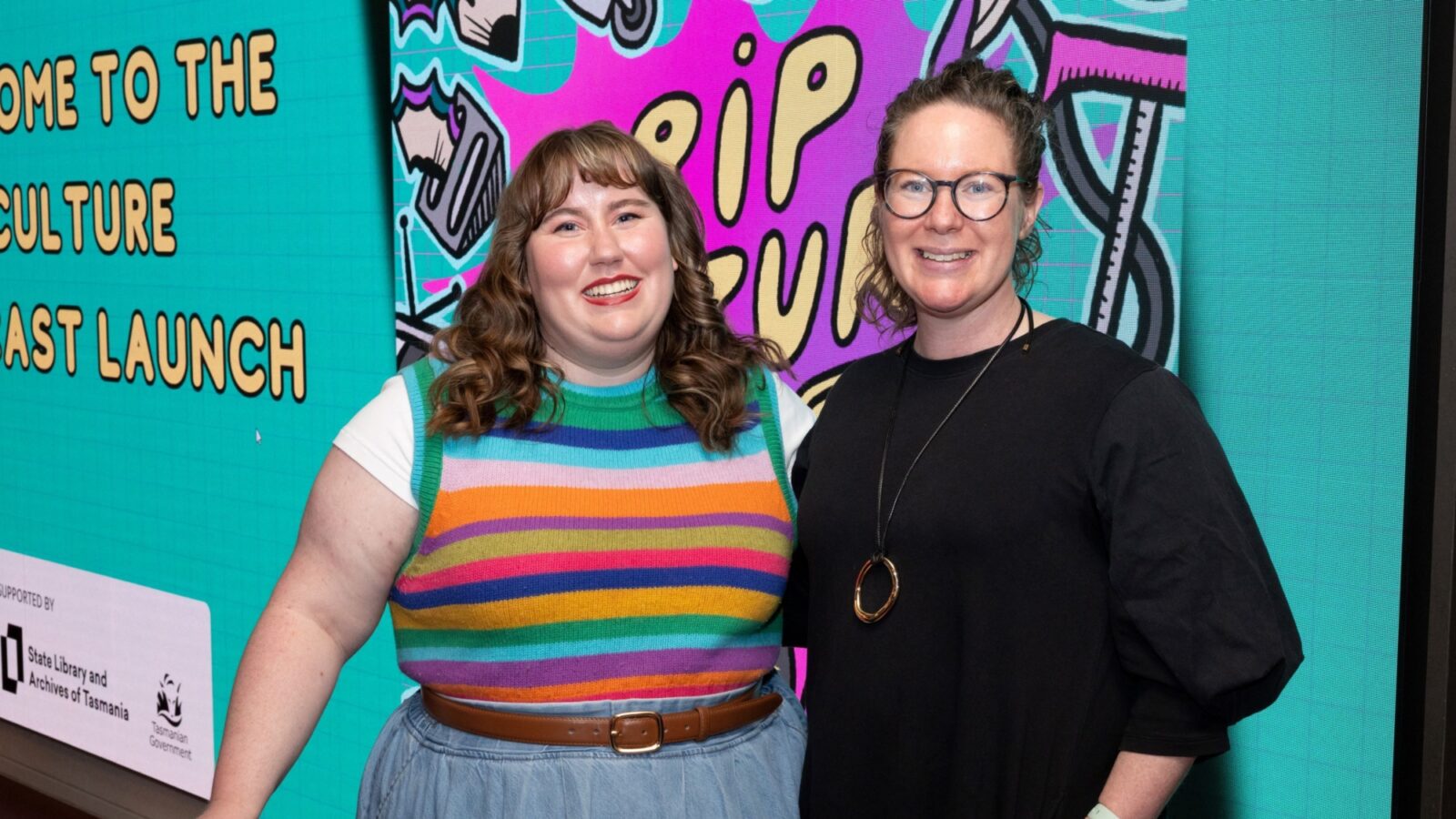
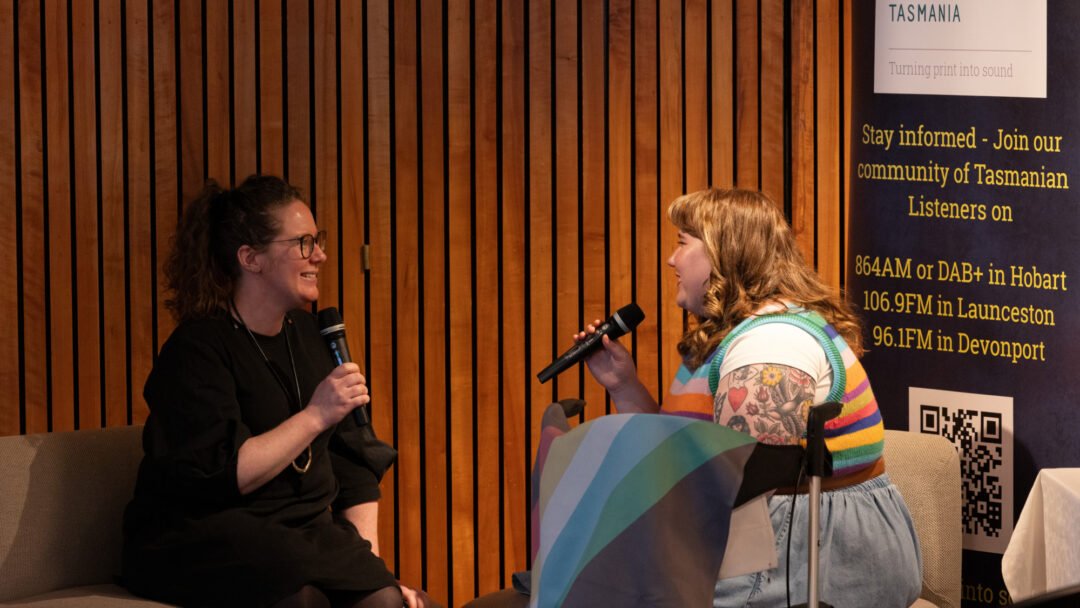
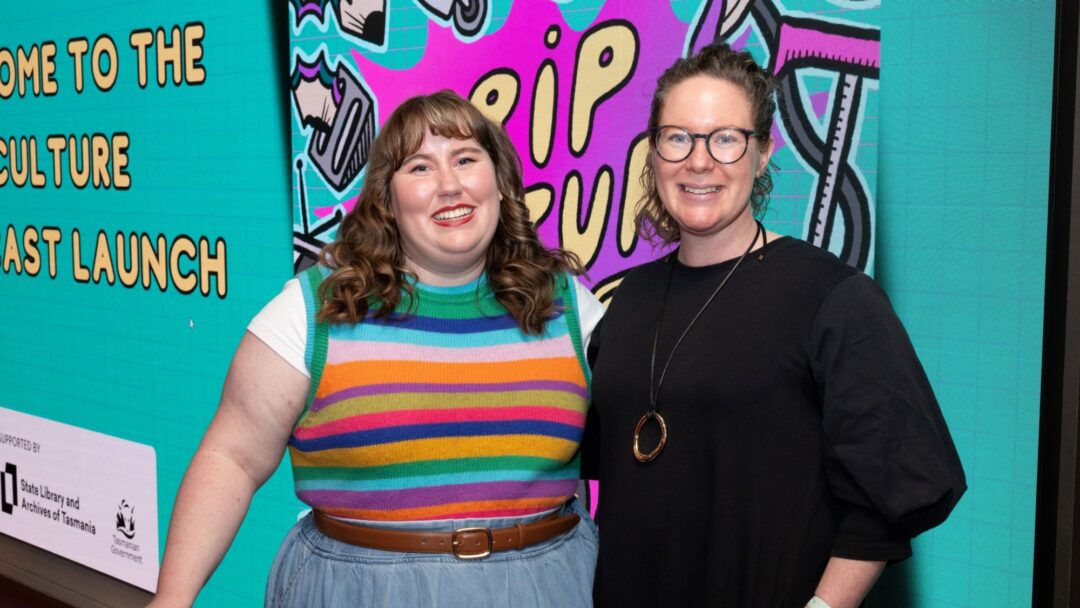
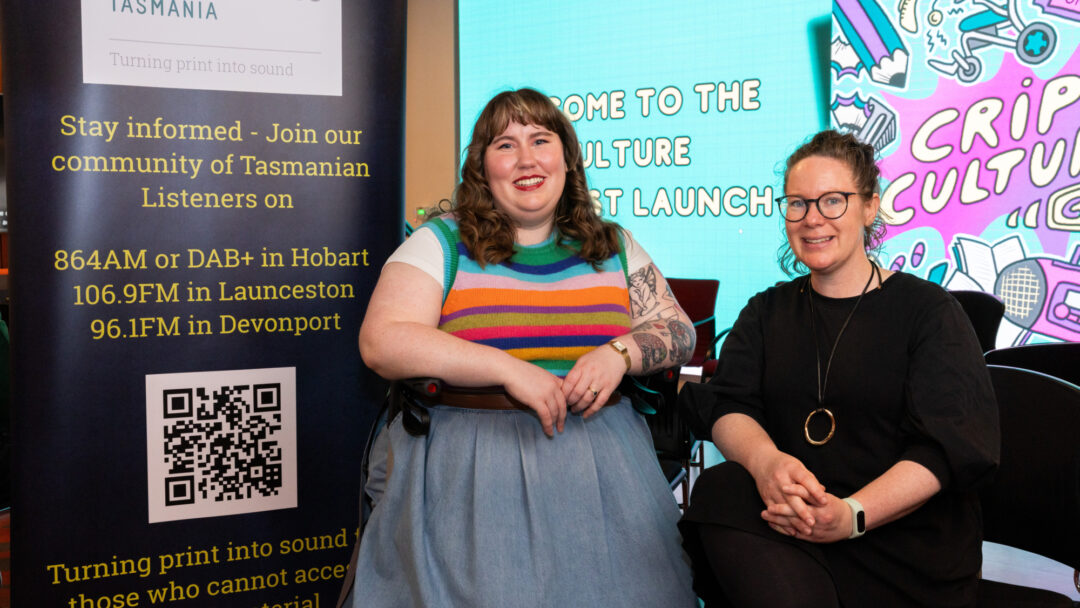
Hosted by Fiona Murphy and Rosie Putland.
Produced and mixed by Honor Marino.
Cover art by Judy Kuo.
Music: Moments Like These — Simon Folwar (Uppbeat), License: BEB32FWJ6WULT877 & My Tiny Love — Soundroll (Uppbeat), License: VPFSMMM3K2C71ONF
Opening theme: [opening music with syncopated beat, sounds of a typing keyboard and layered voices]
Synthetic voice: Culture, Crip Culture.
Fiona Murphy: Well, welcome to the Crip Culture podcast.
Rosie Putland: I just love this idea of disability culture and crip culture
[music fades]
Andy Jackson: I’ve tried, in a lot of my writing to kind of open up some space for other people to come in. Because even though, you know, even those people who aren’t disabled, I think they, too, have some knowledge of some of the things that we experience, I don’t think it’s entirely black and white either. I think there’s ways for it, for which people can, yeah, have some I mean, empathy is not exactly the right word, but it’s some kind of bodily knowledge of what being treated as other is like.
Rosie: Hello and welcome to the Crip Culture Podcast. I’m Rosie Putland, a disability influencer and storyteller.
Fiona: And I’m Fiona Murphy, an award winning writer and the author of The Shape of Sound, a memoir about deafness.
Rosie: This podcast was recorded on stolen, unceded Aboriginal land. First Nations peoples are the world’s oldest storytellers, and their voices continue to guide us.
Fiona: Crip Culture celebrates disability arts, culture and creativity. In this season, we’re exploring the publishing industry and asking questions such as, what is it like being a disabled author? Is the pathway to publication accessible? Today, we are chatting about creativity and collaboration, and we’re asking the question, do you need to disclose your disability?
Rosie: Joining us is award winning poet Andy Jackson and Micheline Lee. She’s a human rights lawyer, essayist and the author of The Healing Party. Micheline tells us that she didn’t start her creative career as a writer.
Micheline: I was a painter, so my main art form had always been as a painter and printmaker for about 20 years. That was my my main art making form. But because I have a progressive disability, I just couldn’t handle a paintbrush anymore. And then I looked at other forms of of making art, and I did try digital art, but didn’t love it. And then I thought I would try writing. And that was I started that just in 2014 when I first started writing, I was an unknown, and I was very fortunate to be published. My novel wasn’t about disability. I wasn’t, nobody knew I had a disability because it just came out, the novel came out through Black Inc, my my publisher. And they did actually put out in a media release draft disabled author, and I asked them to take that out, and in all the information I provided in bios or Q&A’s, I didn’t mention my disability, and I don’t think it was not mentioning in my bios, wasn’t a deliberate thing. That was more that that the novel wasn’t about, there were no disability themes in the novel. But when it came to the media release saying that I was a disabled author, I did make a deliberate decision there that I didn’t want that because I didn’t want to be judged as a disabled author, but but just an author and an at that stage as well, I was quite fearful of being categorised, particularly starting out as a first time writer, and so there were some problems. So there it, there was quite a lot of publicity after the novel was released, and I remember turning up at for interviews and and they weren’t prepared for somebody with with a disability, which made some people feel uncomfortable.
Fiona: Poet Andy Jackson also felt uncertain about exploring his disability in his work.
Andy: I think when I first started writing poetry, when I first started getting up on poetry, open my greetings and reading my work, there wasn’t anyone that I knew who was speaking as a disabled person, and so I didn’t either for probably, a couple of years at least.
Fiona: But then, completely out of the blue, an idea popped into his head.
Andy: You know, I first started writing in the late 90s, and was around 2002 I think, when I’d written a poem called I have a hunch, and the poem starts with this phrase. I have a hunch that curvature can be aperture. So this idea, and it just the phrase, just came into my head when I was driving one day. And the idea really was that, yeah, being different, being physically deformed or other, is not a problem in itself. It might even be an insight into the way things are, and it might even be part of the way the universe operates, that it operates out of difference and things that are bent and seemingly wrong you know, from a human point of view. So the poem itself was all about that. So I thought, all right, I’ll get up and read this poem. And in a way, I think I underestimated how big that was for me to read it out lines like that, to own my own deformity or my own difference and say this is who I am, and to say that this has a value.
[sounds of a pub, chatter, drinks being poured.]
Andy: Yeah, it was received well, this is, you know, get a small pub in Brunswick back in the early 2000s when gentrification hadn’t quite happened yet. You know, the front bar was full of the old guys, the old Greek men, who were sitting there drinking their uzzo or whatever, and the poetry was out in the back room. And you know, 20 or so people applauded politely, and it was received well, but leaving that room after giving the reading and going to the bathroom, I just felt really quite overwhelmed, and had to have a little cry to be able to kind of release the tension of, oh my god, what did I just do? I think so much, so much of the time we do things that are significant before we realise that they are significant.
Rosie: Disclosing that you’re disabled can be a deeply emotional and even frightening experience. Micheline tells us how her family’s beliefs informed how she viewed disability.
Micheline: I grew up with quite a bit of shame around disability, my parents always, you know, felt that was a huge tragedy, or, or when they became fundamentalist Christians, that it was a sign of being possessed by the devil, or when, when we were living in Malaysia, that it was a sign of of a curse. Oh, and when I say we, it’s because I have a brother and sister who also have a disability, and then two sisters who don’t have the disability. It’s so I and of course, there’s social structures that also then the message that having a disability is not normal and it’s defective and and you know, you always have to fight your your way through. Yes, so I really wanted to write about disability to face some of my own demons. But also, you know, I as I’ve, I’ve also worked as a lawyer for I worked while I was working as an artist, I also worked as a lawyer, and I chose to do human rights law, and so I was working through all of that stigma, anyway, working in, you know, race discrimination and and disability discrimination, but also working in legal centres and looking at all different forms of of inequality, yeah, and by I think by the time I came to writing those stories, I was really prepared to to to go in more deeply.
[soft piano music]
Fiona: The night Andy stood on stage and recited his poem, felt like a revelation.
Andy: And I think that probably gave me a sense that actually, there’s something powerful happening here. There’s something about the nature of not just what I’m saying, but also the dynamic between the writer and the reader or the audience, where that’s quite a powerful space to open up the possibility of other people connecting with you, is, is incredibly powerful, I think, probably now more than ever, but it was powerful for me back then. And knowing now that there are so many more disabled writers out there, it’s really reassuring. I feel like there’s such a kind of you know, that your voice isn’t going out into a void. It’s there’s other people who are hearing it, and it’s powerful for them.
Fiona: This powerful feeling has continued to inform Andy’s creative practice.
Andy: I don’t want to just write for the sake of writing. I want it to be meaningful on some level, but also to be kind of, yeah, human, to be playful, to be sensitive, to be awake to the world and what’s happening. Yeah, it is a litmus test. I want to write work that has a kind of life that can exist outside of my body and be kind of humming around in someone else’s body,
Rosie: And while Andy and Micheline are now more open about their disabilities, Micheline tells us that one of the hardest barriers to navigate is other people’s attitude.
Micheline: In the art world or in any context, really, when people think disability, their expectations are so low, and in the art area, they’ll think, oh, they’re doing art for therapy or, or it’s going to be a memoir, some kind of inspirational story about how they’ve overcome their disability. Or, you know, there’s all these stereotypes that you have to wade through.
Rosie: Micheline tells me about a time she had to wade through stereotypes.
Micheline: The novel was a finalist in in several awards and in one of the awards when it came to the awards ceremony and we had to go up to receive the finalist awards. I- a judge, actually came up to me afterwards and said to me, oh, if only I’d known you were disabled. And then I said, yes, and if you did what would have been the consequence? And she didn’t answer, because I think it struck her herself that that she had just spoken out spontaneously like that, but not really thought it through.
Fiona: We asked Andy if he thinks the industry has changed since he started writing in the late 90s.
Andy: There’s so many more opportunities than there were, but I still think, you know, this is where the writing community is not separate from the community itself, from the economics and the politics of the world. So for people who are disabled, you know, we’re more likely to be poor, we’re more likely to be disadvantaged, geographically, under housing stress, all those things. So what little, what opportunities there are, are so much more meaningful for people who are poor and, you know, marginalised. So, yes, I do think there are more than there used to be. And we’re probably in a situation where, yeah, we’re starting to think more about journals, for example, that might be for disabled people, but also publish all sorts of work. The work doesn’t have to be about disability. And I think that’s really exciting that you know, seeing a couple of journals do that where, yes, we want to publish disabled people, but we don’t care what you’re writing. Write what you want.
[music rises]
Rosie: While Micheline was initially fearful of being categorised as a disabled author, she now chooses to write about disability.
Micheline: So I think a writer is always trying to find ways of communicating ideas and helping people look at things in a new way.
Rosie: This includes helping more people understand the NDIS, which she wrote about in her long form essay, lifeboat. It’s a gripping read that draws on her own experience of disability and expertise as a human rights lawyer and storyteller.
Micheline: You know, we have inherent disadvantage as people disability, and we might need a support worker for that. But then there’s the social disadvantage, it’s the fact that society has been built for able bodied and so you need accessible public transport, accessible forms of communication and what we found with the NDIS is that that they were focusing on the individual and neglecting the broader changes, and also that the way they were focusing on the individual was quite inequitable, where they expected the person with a disability to be empowered by being a consumer, by being able to buy services and navigate markets and navigate very complex administrative procedures, so that people, particularly people with cognitive impairments who didn’t have, you know, parents or other carers who could help them with all that suffered. And then for people who didn’t qualify for the NDIS, but still have some disability because they don’t meet the stringent criteria. Of the NDIS, then they ended up with nothing. And so we, we saw this, what they have called this lifeboat situation, where if you can scramble on to a lifeboat, then you’ll get your individual supports. But, but, you know, the rest is like this vast, unfriendly ocean that hasn’t yeah, and and we found that the supports that were within the community have actually been eroded. And so we’re really working on bringing that broader and social side of inclusivity back in and enhanced. And so concepts like like that, I was trying to really get across in a way that would speak to not just your human rights lawyers and not just people with disabilities who live it but to your average person.
Fiona: Making complex forms and subjects accessible has also been a driving force in Andy’s creativity.
Andy: I think it’s really important for me to write poetry that is kind of accessible. It can be a bit of a swear word. In some poetry circles aren’t accessible, as if it’s kind of simple or straightforward. But I also want to write work that is, you know, people can enter into it, but also once they’re in there. Oh, hang on, this is unfamiliar. It’s a bit unsettling. It’s not clear and straightforward or black and white. I like poems to be an embrace, but also to be a little bit uncomfortable as well, because that’s, you know, that’s what it’s like to be alive I think.
Fiona: While it’s been over 20 years since Andy stood alone on that stage in Brunswick, and while there are still barriers stigma and prejudice within the industry and the world at large, a movement has started, Andy no longer stands alone. In fact, he recently brought together a group of disabled poets from across Australia.
Rosie: Together, they created a Raging Grace, an anthology of poems writing and are about disability.
Andy: A real fierce spirit of resistance that I think was there in the group, this sense of knowing what the injustices are and really feeling them on a bodily level, but also having this real deliberate poise about it as well, That it’s not just about anger, it’s also about joy and pleasure and imagining a better world and being able to somehow embody that within the community, which was just kind of really thrilling.
Rosie: To learn more about what happened behind the scenes of making Raging Grace. Check out our next episode, which features an interview with Esther Ottaway, who co-edited the book.
Esther Ottaway: People had blood sugar, attacks, migraines and attended while lying down, and it felt gloriously like home.
Fiona: Both Micheline and Andy have experienced the fear and power that comes with disclosing their disabilities. It hasn’t been easy, but Andy says it best.
Andy: I think on some level, all writing, perhaps all living, is collaborative. To some degree, we need each other. We you know, we draw from each other and we give to each other.
[music rises]
Rosie: This is Crip Culture, a podcast about disabled creativity, craft and community. If you enjoyed this episode, please share it with a friend.
Fiona: Thank you to this episode’s guests, Micheline Lee and Andy Jackson. You can find links to Micheline and Andy’s work in the show notes.
Rosie: Crip Culture is hosted by Rosie Putland and Fiona Murphy. Our producer and editor is Honor Marino.
Fiona: This series was made possible with funding from Arts Tasmania and Print Radio Tasmania.
Rosie: And if you want to keep creating culture with us, follow us on socials @CripCulturePodcast and subscribe wherever you get your podcasts.
Continue listening
Our guests are Laura Pettenuzzo and Dr Scott Avery.
Where are all the disabled authors?
Crip Culture Podcast by Fiona Murphy, Rosie Putland
Episode 1
•21 mins
Audio
In this episode we talk to author Micheline Lee and poet Andy Jackson.
Is it risky being an openly disabled author?
Crip Culture by Fiona Murphy, Rosie Putland
Episode 2
•19 mins
Audio
In this episode we talk to author Kylie Maslen and poet Esther Ottaway.
What does accessibility actually look like in the publishing industry?
Crip Culture by Fiona Murphy, Rosie Putland
Episode 3
•31 mins
Audio
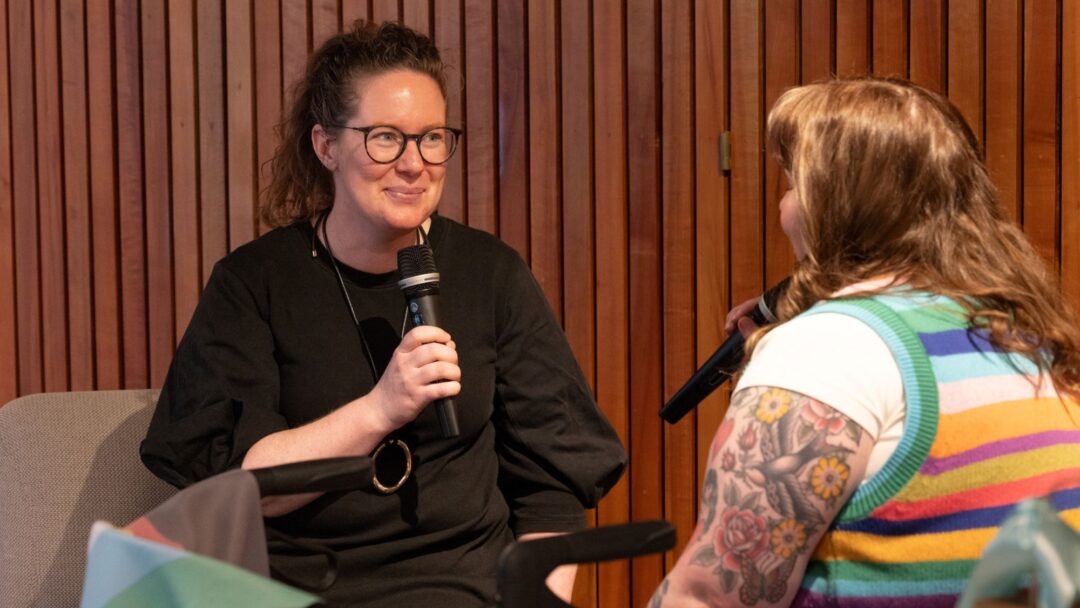
In this episode we talk to Kay Kerr and Beau Windon.
What does a sensitivity reader actually do?
Crip Culure by Fiona Murphy, Rosie Putland
Episode 4
•32 mins
Audio
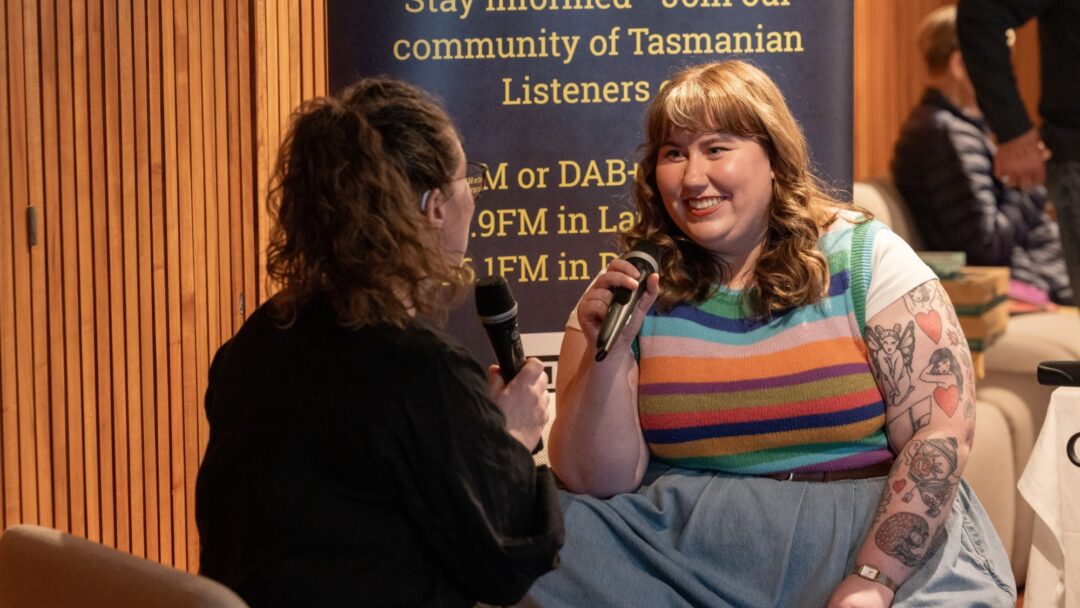
In this episode we talk to journalist Matilda Boseley and author Olivia Muscat.
Is it getting easier to build and sustain a writing career if you’re disabled?
Crip Culture by Fiona Murphy, Rosie Putland
Episode 5
•29 mins
Audio

In this episode we talk to authors Carly Findlay and Gayle Kennedy.
What is it like going on a book tour as a disabled author?
Crip Culture by Fiona Murphy, Rosie Putland
Episode 6
•28 mins
Audio

In this episode we talk to crime writer Ashley Kalagian Blunt.
Do disabled people have to write about disability?
Crip Culture by Fiona Murphy, Rosie Putland
Episode 7
•15 mins
Audio