Audio
Is it getting easier to build and sustain a writing career if you’re disabled?
1 season
Episode 5
29 mins
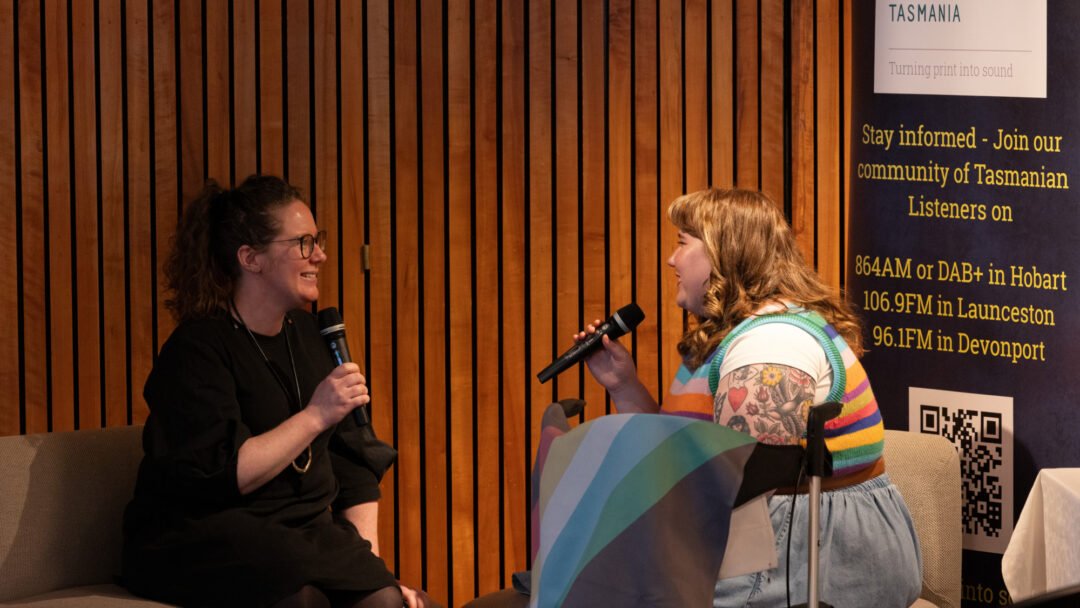
In this episode we talk to journalist Matilda Boseley and author Olivia Muscat.
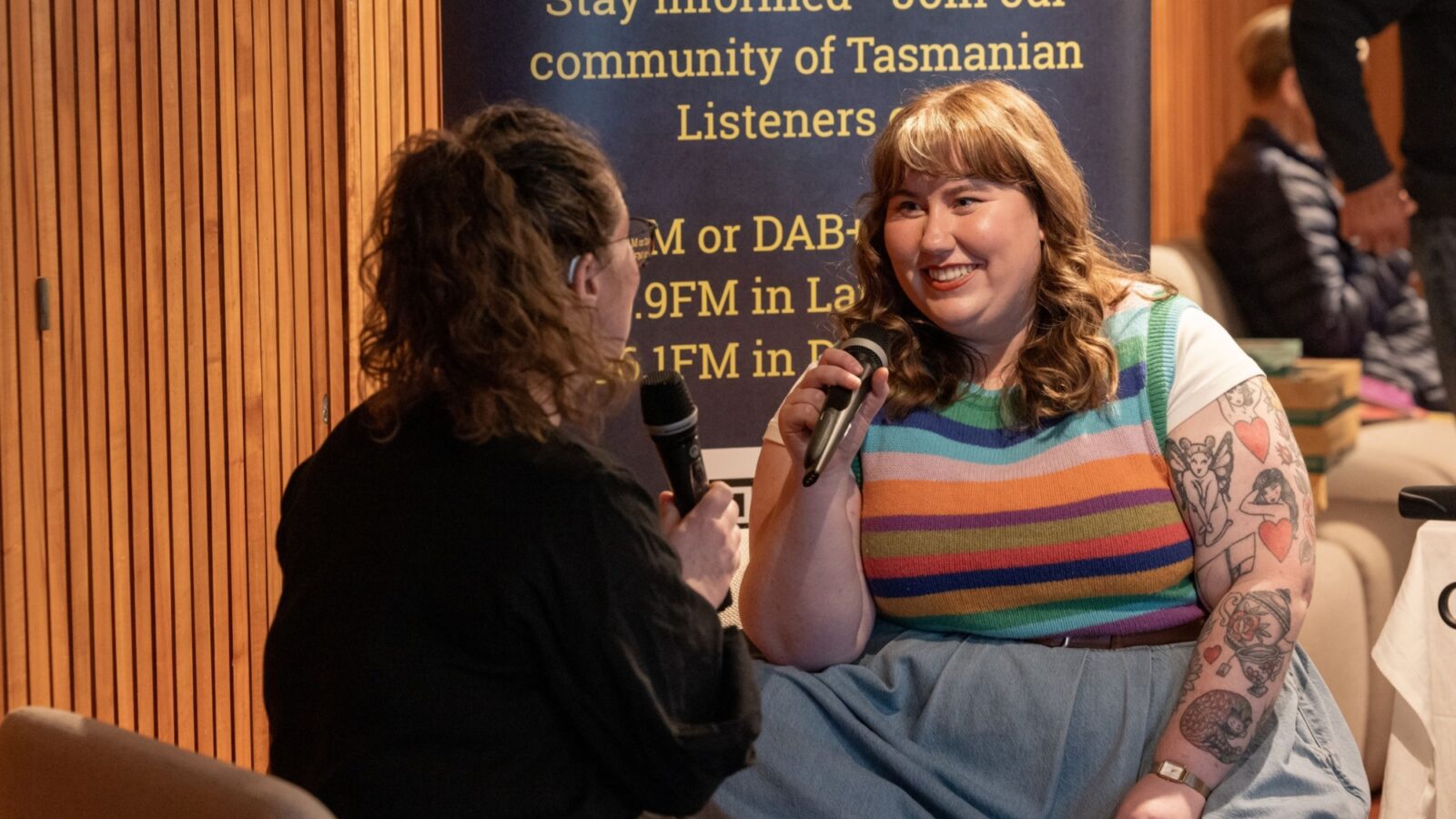
This episode’s guests
Matilda Boseley is an award-winning social media reporter and presenter for Guardian Australia. She has spearheaded the publication’s popular TikTok channel where she writes and hosts their short-form news explainers. Her work on the platform has won her a Quill Award for Innovation in Journalism and was nominated for a Walkley Award for the same category. Named Walkley Awards’ 2019 Student Journalist of the Year, Matilda has also worked as a reporter and assistant chief of staff at 7 News Melbourne and as a breaking news reporter for The Age newspaper. She regularly reports on issues affecting young people, women and mental health and her first book, The Year I Met My Brain, documents her experiences and discoveries after being diagnosed with ADHD at 23 and investigates the hidden prevalence and costs of ADHD among adults. Now, she’s written The ADHD Brain Buddy: a treasure trove of practical tips, activities and scientific insights to help you make it through the hard days, utilise the great ones and reflect on the impact ADHD has had throughout your life. All in the pursuit of making your world easier to navigate – and way more fun.
- The Year I Met My Brain by Matilda Boseley
- The ADHD Brain Buddy by Matilda Boseley
- Follow Matilda on Instagram
Olivia Muscat is a totally blind writer, performer, and disability arts activist. She uses her love of colour, whimsy, and music to tell stories that make people want to examine their attitudes to disabled people and to difference in general. She is the author of My Name Is Jemima, which was selected as a New York Public Library book of the year for 2025. Also in 2025 she premiered her autobiographical play Is Anyone Even Watching? as part of Melbourne Fringe, where she won the Change Maker award and the Outstanding Newcomer award. Her novel for younger readers Annie and Maeve are Definitely Not Friends is set for release by Fremantle Press in autumn 2026.
- Olivia Muscat, Author Website
- Follow Olivia on Instagram
- Follow Olivia on Substack
- My Name is Jemima by Olivia Muscat
Credits
Hosted by Fiona Murphy and Rosie Putland.
Produced and mixed by Honor Marino.
Cover art by Judy Kuo.
Music: Moments Like These — Simon Folwar (Uppbeat), License: BEB32FWJ6WULT877 & My Tiny Love — Soundroll (Uppbeat), License: VPFSMMM3K2C71ONF
Opening theme: [opening music with syncopated beat, sounds of a typing keyboard and layered voices]
Synthetic voice: Culture, Crip Culture.
Fiona Murphy: Well, welcome to the Crip Culture podcast.
Rosie Putland: I just love this idea of disability culture and crip culture
[music fades]
Olivia Muscat: I used to think that that was my job, like because I wanted to be a writer, and I have this very specific experience of my disability, it was my job to, like, use whatever writing I did to educate people, and I thought that was the only way, like I would have a career in writing at all.
Rosie: Hello and welcome to the Crip Culture Podcast. I’m Rosie Putland, a disability influencer and storyteller.
Fiona: and I’m Fiona Murphy, an award winning writer and the author of the shape of sound, a memoir about deafness. This podcast was recorded on stolen, unceded Aboriginal land. First Nations peoples are the world’s oldest storytellers, and their voices continue to guide us.
Rosie: Crip culture celebrates disability, arts, culture and creativity. In this season, we’re exploring the publishing industry and asking questions such as, what is it like to be a disabled author? Is the pathway to publication accessible? Today we’re chatting all about audio books, from reading them to creating them.
Fiona: Joining us is award winning journalist and author Matilda Bosley and playwright and author Olivia Muscat.
Matilda Bosley: I genuinely think my life would be a lot harder if I didn’t have access to things like podcasts and audio books. And I don’t think I realised this, you know, growing up, but now that I know about my ADHD diagnosis, I’ve realised how much of a kind of accessibility tool they are for me, in terms of, it helps me sleep, because otherwise I, you know, can get wrapped in worry and panic and things like that when I’m going to bed. It helps me get through boring tasks that other people might find a bit easier. I can be on the tram listening to audiobooks or doing the dishes or tidying or and often actually books are the thing that kind of allows me to do other things. If there’s chores I don’t want to be doing, or there’s, you know, boring commutes that I’d be really, you know, really dreading otherwise, audio books fill in that gap and allow those things to be pleasant. So really, they’ve kind of been used as a tool for me. How can reading help me do the rest of my life? It kind of sometimes I describe it almost as like, if my, if getting something done there was like a bunch of potholes in the road, the audio book or the podcast or that little bit of entertainment, almost just kind of fills up the potholes with enough distraction that I, you know, enough distraction to fill the potholes that I can actually sort of travel smoothly along and do what I need to do [Sound of filling a pothole with a shovel]. To be honest, the rise of smutty books becoming popular has meant that my commute to work has become deeply uncomfortable at times when I am not expecting it to you know that that’s something they don’t warn you about. So there’s been a few, okay, we’re gonna pause and come back to that one. You know, “Iron Flame” is maybe not for the, you know, Route 96 in the morning [Tram bell dinging].
Rosie: Olivia, people say on BookTok that audio books don’t count as real reading. What do you make of that?
Olivia: People on BookTok can go eat some expired cheesecake. It’s such an antiquated take that I almost don’t have thoughts on it, because I think it’s so ridiculous, like telling stories existed before reading ever did, for starters. And I think if we’re limiting the definition of reading to taking in typed or handwritten words with our eyes, then we’ve got real problems and like, I hate when people give like, dictionary definitions of words and like argument to that, because it’s like, yeah, definitions of words change a lot of the time currently, thanks to things like BookTok and I would, I always challenge people to argue with me that I haven’t read any books in a year when I usually read like nearly 200. I’ve still taken in all that same information [laughs].
Rosie: Yeah, yeah. As a fellow audio book reader, it makes me so mad. I’m just like, how about we just stop being ableist, guys?
Olivia: Yeah, like, it’s as simple as that, isn’t it? Just stop.
Rosie: Olivia tells me some of the ways she enjoys reading, including listening to a screen reader whilst reading braille.
Olivia: because, like, my braille reading, I started really late, so it’s not my preferred, medium because it’s slow. And if there’s one thing I can’t stand, it’s being slow, but it’s my way of keeping it at least in my brain, and something I use on a fairly regular basis.
Rosie: When you read your audio books, what speed are you reading on? What’s your preferred?
Olivia: I love this question. My preferred like my default speed these days is double speed, so two times speed.
Voice speaking at two times speed: It is a truth universally acknowledged, that a single man in possession of a good fortune, must be in want of a wife. “My dear Mr. Bennet”, said his lady to him one day, “have you heard that Netherfield Park is let at last?” Mr. Bennet replied that he had not. “But it is” returned she; “for Mrs. Long, has just been here, and she told me all about it”. Mr. Bennett made no answer. “Do not you want to know who has taken it?” cried his wife impatiently. “You want to tell me, and I have no objection to hearing it.”
Olivia: If I really want to savour something, I will read it at not like standard recorded speed. That rarely happens these days, because I’ve found that actually that’s not savouring anymore. That’s tedium. I can’t listen to normal human speech [laughs]. But if I’m reading a book and I’m like, okay, come on, I want to finish this. But like, also I want my life back, I will put it up to three, which is like the maximum on most audiobook players.
Voice speaking at three times speed: It is a truth universally acknowledged, that a single man in possession of a good fortune, must be in want of a wife. “My dear Mr. Bennet”, said his lady to him one day, “have you heard that Netherfield Park is let at last?” Mr. Bennet replied that he had not. “But it is” returned she; “for Mrs. Long, has just been here, and she told me all about it”. Mr. Bennett made no answer. “Do not you want to know who has taken it?” cried his wife impatiently. “You want to tell me, and I have no objection to hearing it.”
Olivia: I finished something on three times speed this morning, because I was like, “Come on, let’s get this over with”. Like, if it gets better, maybe I’ll slow it down. But also, I just want it to be done.
Rosie: No, I love that. I relate that so much. Does that differ from your screen reader speed? Are your screen reader speed and your audio book speed? Like, in line?
Olivia: Yeah, they differ. My screen readers way faster.
Rosie: Yep.
Olivia: Yeah, way faster. Because, like, when I’m like, getting through emails or whatever, it’s just like, I don’t need to enjoy this! I just need to get the information as fast as possible.
Rosie: Yeah, yeah, no, I 100% agree I use a screen reader, in my work as an accessibility consultant, but also I’m dyslexic, so I sort of use, like a very customised, modified version of a screen reader, because I don’t necessarily need all the navigation parts of it, but I totally agree I listen much faster when I’m listening to emails versus listening to audiobooks. So obviously, sometimes people, when they hear a screen reader for the first time, they go: “Oh, that’s a very robotic voice, I wouldn’t like that.”
Robotic screen reader voice: Welcome to the Crip Culture podcast.
Rosie: The response to that is around, well, having a more robotic voice, makes sure that you can hear that annunciation even at those faster speeds. And some people have talked about AI voices for audio books. How do you feel about that? Would you want a robot voice for your audio books? Or are you happy with human voices for audio books and robot voices for your screen reader?
Olivia: Okay, a complex question, very complex. Well, the thing is, I do use a robot voice for books.
Rosie: Okay.
Olivia: Sometimes, but my own, by my own choice, because sometimes eBooks are cheaper, or the, you know, there you know, there is no audio book version. So I go for an ebook, and either I read that, like with my phone screen reader or my iPad screen reader, whatever, or sometimes I’ll connect it up to a Braille display and have both Braille and synthetic speech at the same time, and I think that is a great accessibility tool. And I have been using synthetic speech for so long now that I block it out, like, to me, it’s like as if a sighted person was reading a print book, and like, hearing their voices in their head. I’m not like listening to synthetic speech. I’m sort of processing that as if it were just text, but in terms of recorded audio books, I don’t think AI has a place. I’m one of those people. I’m like, bring back cassette tapes. No, not really [laughs]. It’s, it’s, that’s, there’s something about having an audio book that’s narrated by a human, that that’s someone’s job, like it’s so complicated, but I do not agree. If we want narrators, there’s a reason, like the capacity to synthetically absorb a book already exists. We have audio books because they’re narrated by professionals. And that’s my, my take on that you want an audio book because it’s a human.
[Music fades in]
Fiona: Matilda is the author of the book “The Year I met my Brain”, she was determined to make the print and audio versions of her book accessible for ADHD brains.
[Music fades out]
Matilda: I really wanted it to kind of reflect my own sort of brain in terms of, like, it’s quite visual, and there’s pictures and there’s diagrams, and there’s interesting things, and there’s breakout boxes, and there’s fun little facts, and there’s little detours that you go on, and then you get sort of back, and then it’s crafted, I think, in a way, you know, that I just sort of brings a little bit of joy and interest to the process. And, you know, often it’s discussing really, especially sort of later in the book, it gets into some very serious stuff about, you know, health outcomes and the way that ADHD interacts with the carceral system, and the way that sort of racial bias influences and disadvantages people with ADHD and, but still, you know, even if it’s not like fun and joyous and here’s like, a little fun fact, in that moment, it’s still broken up. It’s got charts, and it’s got pictures, and it’s, you know, got enough to that it can keep you going, and it doesn’t just feel like this absolute chore, and this block of text that feels really inaccessible, and I think reading the audiobook myself, besides, like, just kind of being a failed theatre kid, so wanting the chance to do it as, like, just like a little performance, I think it was also really, really beneficial, because I had the licence to be able to sort of change little things on the fly, just like slight wording, things to flow and decide where the breakout box should go in the flow of this conversation, and make those executive decisions. So because the book isn’t like, yeah, isn’t traditionally formatted, that was really helpful, that I was the person in that booth, able to sort of adapt on the fly, I guess.
[Music fades in]
Rosie: Audio books in general have grown in popularity over recent years. Is it exciting or frustrating that audiobooks have become so popular? Like has it changed access for blind and low vision readers in any meaningful way?
[Music fades out]
Olivia: I have the biggest smile on my face because I just, I love this question, because it is great and it has improved access because, you know, most of the time nowadays, if a book comes out that I want to read, there’s an audio book, and it’s available on the release date, and I can get it instantly. But, and like, you know, even, even before this meteoric rise of audio books and audio content in general, or like, on demand audio content, I should say. You know, even if, when a book had an audio book, it was like delayed and it was hard to find and it was hard to get, and it was really expensive, like, prohibitively expensive, but there is still some sort of element of frustration, like, that was mine first. That was, that was my accessibility thing that people have kind of just jumped on as this, like, full way to read in the car. And it shouldn’t frustrate me, and it’s not any sort of logical frustration that I would ever want to wind it back like where we are at with audio books now, it’s not what I’m saying at all, but it’s this thing of this like, oh, it’s, it’s my access in a way that’s palatable for other people, so it’s okay.
Fiona: What is it like having access requirements when working as a writer?
Matilda: As a Journo, it’s often I’m going to make a video about a topic I have a couple of hours, or maybe an hour, if I’m lucky, to get really up to speed on that topic. It might be something that I haven’t been covered before, covering before, and I’ve found it often a lot easier, especially because this is usually happening first hour in the morning when, like, my ADHD meds are still kicking in, to just put on the sort of voice-to-text and listen to the articles, as I, you know, play a sort of really mindless game on my phone that I don’t need to be thinking about [Arcade video game sounds], or I crochet sometimes as I’m doing it, or I’m getting dressed and getting ready, I’m often reading, and I’m often having all those articles read to me. And, you know, I do go back because there is, like, a level of technicality and needing to get absolutely things precise, it’s asking a little bit less of my brain to be doing two things at once than one, which seems odd to people who don’t have ADHD, but is absolutely the case for me [Arcade video game sound with level complete jingle]. One of the big theories about ADHD, about what explains not all, but many of the symptoms, is that, in your prefrontal cortex, essentially, might not be functioning completely typically. And the prefrontal cortex is how I describe it, because it’s kind of difficult to conceptualise. Is the lady at the front of the brain office who’s filling out all the paperwork and getting the memos to where they need to be so all the departments know what they need to be doing [Typing, writing, paper shuffling sounds]. And, you know, she’s getting in all the impulse memos and deciding what to shred and what not, and then she clears off a desk and start something new. And that little lady is Ethel. And I really found, I mean, it started just like, as like, oh, okay, I need a sort of functional metaphor to explain what executive functioning is. But what I found as I was writing it is that imagining that part of my brain as this lady who, and, you know, the thing is with ADHD brains, like maybe the, you know, dopamine biscuits and the noradrenaline coffee are running a bit dry, and she’s really overworked, and it’s very overwhelming, and she’s just holding on for dear life. And what that kind of really helped me do, honestly, and it’s something that I reflect on in the book I’m writing at the moment, because she comes back, is that imagining it like that helped me really take this sort of story of self-incrimination and blame, and why can’t you be better? And why aren’t I doing better and this, and then kind of having a lot of empathy for, you know, this little woman who’s like, dealing with a lot, and she’s still going, and she’s still determined, and she’s trying to help me as much, and it helps me have compassion. It’s for myself by, you know, by externalising that a little bit like, who am I to be yelling at this poor lady who’s just doing her best and it’s really, it’s been a really powerful tool for me to, actually, you know, stop this constant level of self-incrimination [Soft piano music fades in]. Part of the reason I love my job and probably gravitated towards being a journalist is I get to jump into something new every day, and I get to read a bunch of stuff and then collate it together. And, you know, I’ve been spending a lot of time throughout my life trying to take big, sort of amorphous ideas and then figure out how to communicate them to the people around me, and that was a different version of it. And then it’s, yeah, new every day, and it’s this tight deadline, and I work well under that pressure, and then I get to put it out, and it’s this reward. And I realised that, like journalism was, again, every ADHD is very different, but for me, it’s kind of almost the job that you would build if I was building a job from scratch to suit my brain.
Fiona: Matilda has learned to ignore generic writing advice. Instead, she’s figured out ways to make it work for her brain.
Matilda: Understanding, first of all, like, do you work better with bits of time or tasks? You know, I’m going to work for an hour or 20 minutes, and then I’ll be done, or I’m going to complete this thing, and then I’ll be done, and I’m much more task based. And then, do you work better in long stretch, intense stretches, and then have, like, a proper, you know, maybe an hour break, and then work for another two or three hours. That’s what works best for me. Or do you work with, yeah, short intense bursts and then a short break, and then a short burst, and finding that work style has been, like, really groundbreaking for me and my mental health while writing. Because I do think that often we sort of give this advice to ADHD is that is so often, like, what if you just didn’t have ADHD? Like, do not have ADHD, what about you be really organised and use a planner all the time and just work exactly when you say you’re going to work and then you’ll be fine. It’s like, okay, great. Let me put that into place. So, finding what works for me, listening to my mind of like you know, not just powering on no matter what you know, there’s learning about the sunk cost fallacy in terms of when my brain is ready to work or not, and then when it is ready to work. Listening to that too, and keeping going and riding that wave has been massive.
[Music fades in]
Rosie: So, I know that you do a lot of editing, and I want to ask you about what it’s like to edit someone else’s work when you’re blind, and I can make a guess about this, but do documents come to you in an accessible format?
Olivia: When I make sure I ask about three times first, yes. Like, yeah, it’s just, it’s one of those things where you have to ask and you have to outline that maybe some of the ways, Um, you give, like, I give or receive feedback or comments or whatever. I can’t just use tracked changes or whatever. So, like, I’ve often come up with my own systems, you know, about how to give or receive feedback and comments. And I don’t want to jinx it, but like, Google Docs seems to have made some, like, accessibility strides in, like, the last couple of months. There are these features that didn’t seem to be there before. My fingers are crossed. I really don’t want to jinx it, and then, like, they’re gone tomorrow, but that has made editing and collaborating already a lot easier and a lot more streamlined, because I seem to have added all these, these screen reader options, which make it a lot more simple.
Rosie: Yes, I’ve actually seen those when I’m doing editing in Google Docs as well. I’m excited about it too, and I have fingers crossed as well.
Olivia: Just don’t disappear! One day it wasn’t there anymore. I was like, Hey, I don’t know what, and it was really funny. I just emailed my agent because I’d been sent my manuscript for my novel with, like, all the edits, and we were going to do that. Okay, this is what we’re going to do, and it’s different, if you could do this, and I sent her an email, like, we don’t have to worry about any of that. There’s all these new, cool stuff. When I can just look at the comments without having to open the thing, and it’s so great. And then I opened the document the next time, and they were all gone. And I think it was just a weird glitch, and it’s back now, but I was like, oh my god, really, after I’ve just enthused at length about it, it has to disappear, so, and I have this weird sense of, like, disability imposter syndrome, when I say I can do something and then, because of technology letting me down or whatever, then I can’t do it anymore. It’s like, well, they think I’m lying now, like I’m just making excuses. There’s part of me that goes, if I just, like, played around with it a little bit longer, like, could I have figured it out? Was it a weird like, keyboard shortcut or way of tabbing or arrow into something that I didn’t try and it’s like, no, like, that shouldn’t all be on me. It’s not always all my responsibility to make things work. Um, Yeah. So, it’s a hard one to deal with, especially when, you know, in a professional context, it’s like, I want to be professional. The technology is not letting me.
Rosie: In 2025, Olivia’s first children’s book was published. It’s called, “My name is Jemima”.
Olivia: Not a day in the life, but kind of just like a reflection on the life of a guide dog, from the perspective of my guide dog. And it’s, you know, aimed at, like young, young kids. It’s very simple. It’s got the really beautiful pictures that I did not draw. And it came about really because, you know, I go a lot of places with my dog, and he and I will often run into, run into? No, not run into, but, you know, meet children along the way and their parents and kids will ask me, “Oh, can I pat your dog?” And I have to say, I’m sorry, you can’t. She’s working, and that’s the end of the conversation. They don’t ever actually get to find out why. It just seems like, oh, that mean lady won’t let me pat her dog, and why did she say her dog is working? So yeah, it’s kind of the follow up conversation I wish I could always have, which is, yeah, it’s really, it’s been a nice journey for me, and it’s kind of like a bit of a an ode to my dog, because to me, she is so special.
Rosie: In 2026, her novel, “I Don’t Want to be your Friend”, will be hitting bookstores. I asked her why it’s important for her to write stories that centre experiences of blind and low vision folks.
Olivia: Because there weren’t any. But I, I’m just still really desperate. And I don’t use that word lightly, I’m really desperate to see like some accurate, interesting, nuanced, joyful representations of blind and low vision lives and people, that’s really the only reason. You know, part of it is just this incidental thing of I want to write, and a lot of my experience is being a blind or low vision person, depends on which part of my life we’re talking about, and so that’s what I’m going to write about. So it’s like that sort of incidental representation of disability, which I think is important, but you know, you still rarely see, like positive representations that are written or created by people with lived experience, and it’s it does harm. I’m having a particular experience right now with, and I don’t want to name or shame or anything like that, but with a sensitivity reader, an authenticity reader, as I prefer to call it, and it’s just it’s not good. Like we’re still having people with no knowledge, no lived experience, completely outside the community. Trying with the best of intentions, like genuinely the best of intentions to do good work, but are doing really harmful stuff and writing really harmful stuff, and you we got to keep pushing back against that and speaking out against that, because that’s not okay. So as long as we keep making space, and like making space for more disabled creators and writers and stories and everyone, yeah, it’s hard because everyone in the disability community and everyone in disabled creative spaces knows this. That’s not new, if that this is not new information to anyone. Um, but we got to keep holding other people and other organisations accountable.
Rosie: Yeah…
Olivia: And as long as we keep doing that, yes, I have hope. Of course, I have hope, like the fact that, I get to write a novel that is like hating Alison Ashley, but with blind kids, that gives me hope, yeah, and seeing other people do great work in whatever space it is, if it’s TV or theatre or film or books or non-fiction spaces, journalism, whatever, that always gives me this spark of hope, like I love when I see a piece of disabled art that I don’t like. And that seems counterintuitive!
Rosie: No, I know what you mean! I know what you mean.
Olivia: It’s, it’s just like, great. It’s not for me, and that’s great, because we need varied stuff. We need different stuff, and as long as we hold that art and that creativity to also a really a high standard that gives me hope.
Fiona: And for Matilda, she has found moments of joy even beauty, since meeting her brain.
Matilda: One of my sort of close longtime friends also got diagnosed maybe sort of a year after me, and then I remember sort of this moment of us having just a coffee catch up. And it was after she was diagnosed, and we kept doing that same thing, of would interrupt each other and be like, Oh my god, I’m so sorry. Okay, go on. And then there was this moment of both of us like, realising we’re like, oh, we actually don’t need to be apologising for this. We’re both on the same page. This is how we’ve been wanting to communicate all this time. And we just kind of both felt like we were doing the wrong thing. So we had been censoring and changing our behaviour, and then just having that moment of, like, just, you know, vomiting out everything we wanted to talk about, and jumping in and changing the topic and doing all this, and just having, you know, this really, this amazing conversation. I can’t even remember what it was about, just mundane things, but like in this sort of much more like freed way, where we just weren’t apologising for being ourselves anymore. And it was, I don’t know it was a really beautiful moment.
Fiona: For Matilda, Access looks like diagrams and dopamine biscuits. For Olivia, it’s top speed audiobooks, Braille and the right to joy without explanation.
Rosie: Together, they show us that access isn’t the opposite of creativity. It’s what allows it to flourish.
Fiona: But access built by individuals can only go so far. The real test is whether the industry chooses to build with us, not around us.
Rosie: Because it’s not getting easier by accident. It’s only getting easier when we hold the system accountable. This is Crip Culture, a podcast about disabled creativity, craft and community. If you enjoyed this episode, please share it with a friend.
Fiona: Thank you to this episode’s guests Olivia Muscat and Matilda Bosley. You can find links to Olivia and Matilda’s work in the show notes.
Rosie: Crip Culture is hosted by Rosie Putland and Fiona Murphy. Our producer and editor is Honor Marino.
Fiona: This series was made possible with funding from Arts Tasmania and Print Radio Tasmania.
Rosie: And if you want to keep creating culture with us, follow us on socials @CripCulturePodcast and subscribe wherever you get your podcasts.
Continue listening
Our guests are Laura Pettenuzzo and Dr Scott Avery.
Where are all the disabled authors?
Crip Culture Podcast by Fiona Murphy, Rosie Putland
Episode 1
•21 mins
Audio
In this episode we talk to author Micheline Lee and poet Andy Jackson.
Is it risky being an openly disabled author?
Crip Culture by Fiona Murphy, Rosie Putland
Episode 2
•19 mins
Audio
In this episode we talk to author Kylie Maslen and poet Esther Ottaway.
What does accessibility actually look like in the publishing industry?
Crip Culture by Fiona Murphy, Rosie Putland
Episode 3
•31 mins
Audio
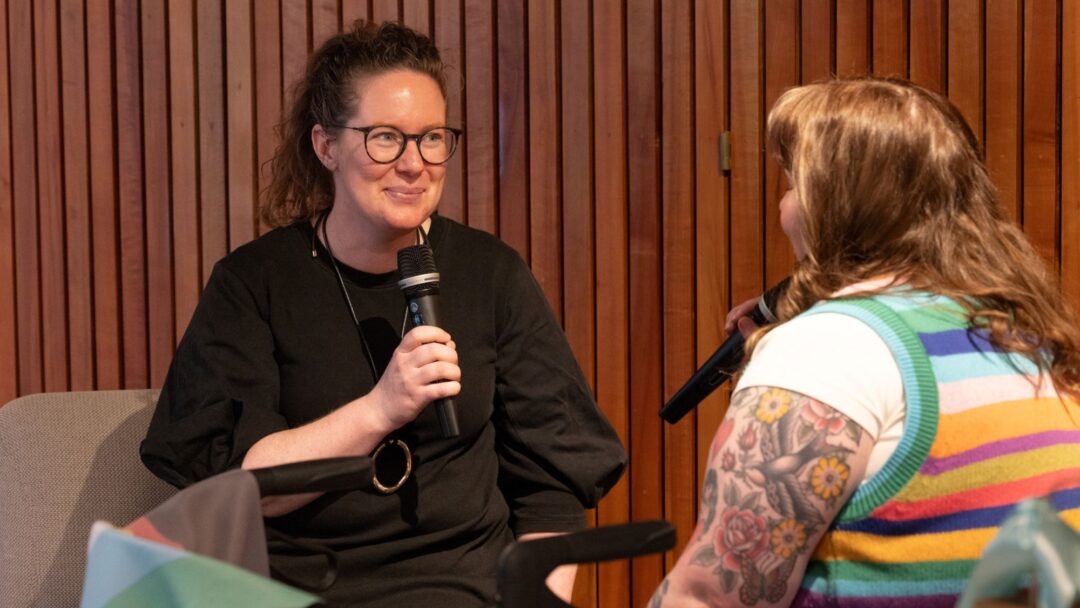
In this episode we talk to Kay Kerr and Beau Windon.
What does a sensitivity reader actually do?
Crip Culure by Fiona Murphy, Rosie Putland
Episode 4
•32 mins
Audio
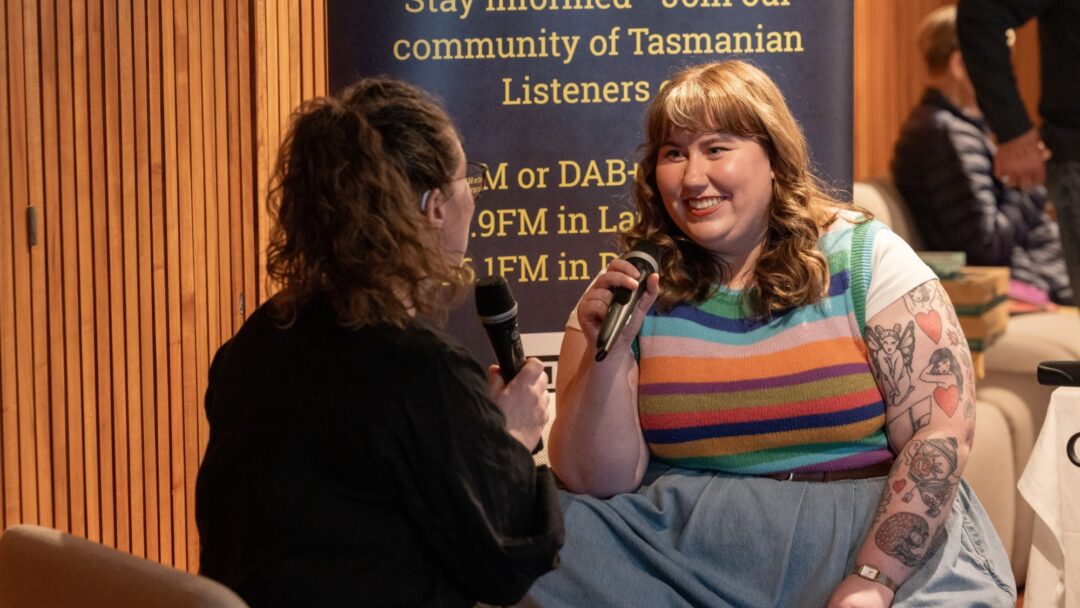
In this episode we talk to journalist Matilda Boseley and author Olivia Muscat.
Is it getting easier to build and sustain a writing career if you’re disabled?
Crip Culture by Fiona Murphy, Rosie Putland
Episode 5
•29 mins
Audio

In this episode we talk to authors Carly Findlay and Gayle Kennedy.
What is it like going on a book tour as a disabled author?
Crip Culture by Fiona Murphy, Rosie Putland
Episode 6
•28 mins
Audio

In this episode we talk to crime writer Ashley Kalagian Blunt.
Do disabled people have to write about disability?
Crip Culture by Fiona Murphy, Rosie Putland
Episode 7
•15 mins
Audio